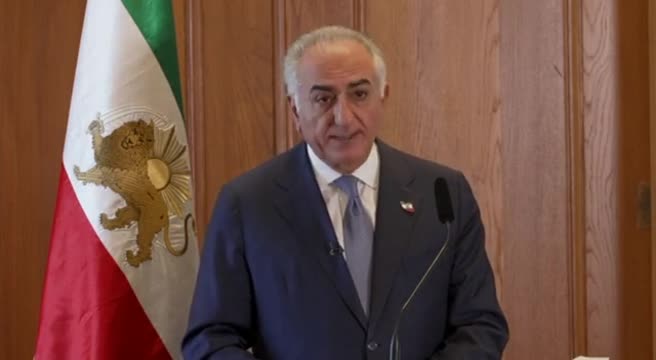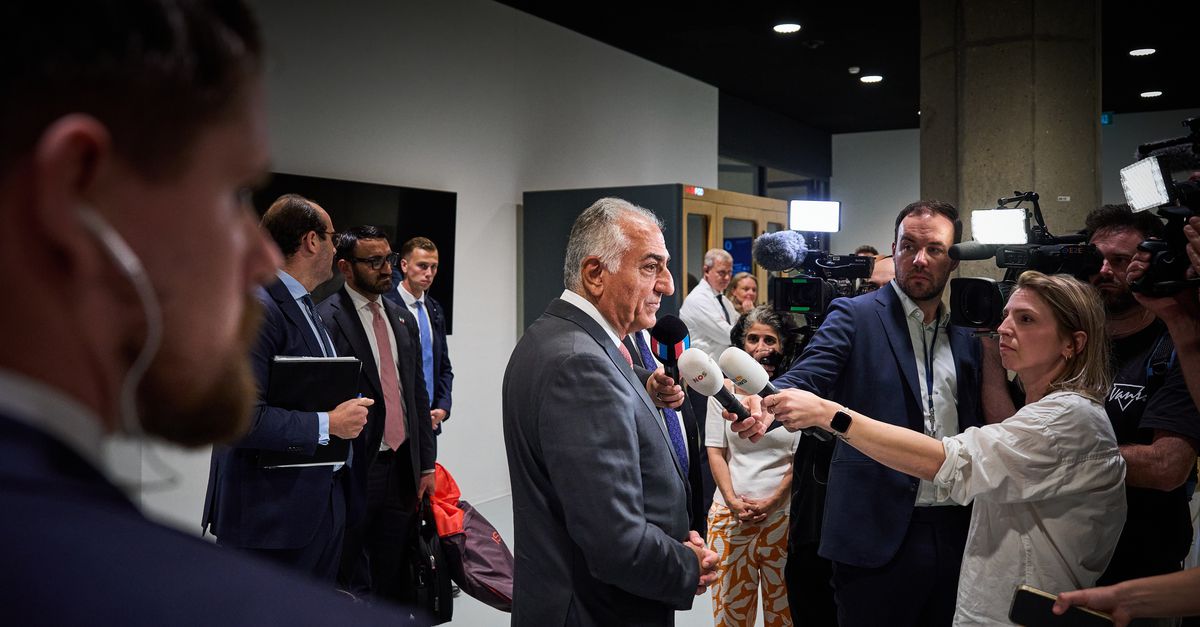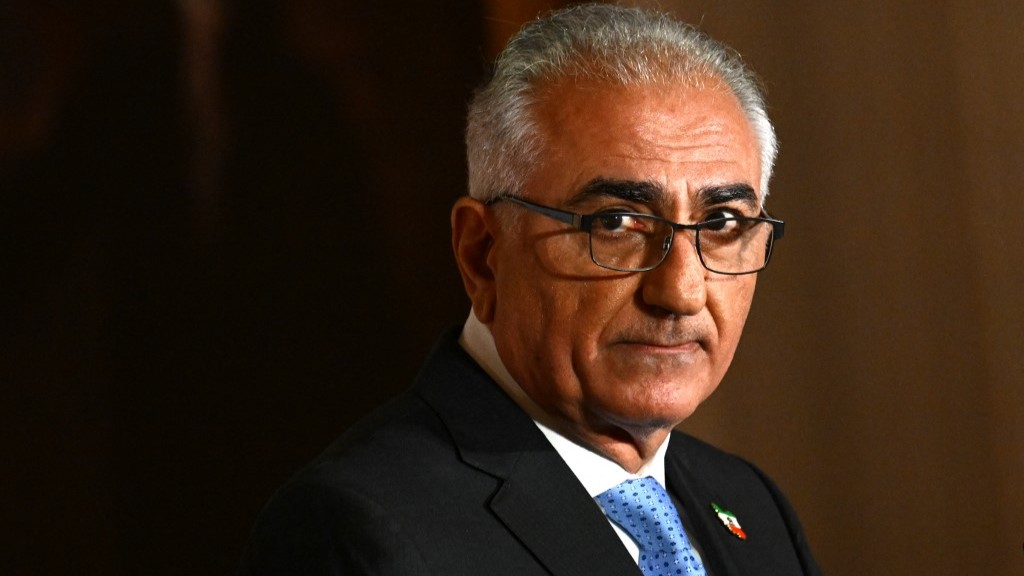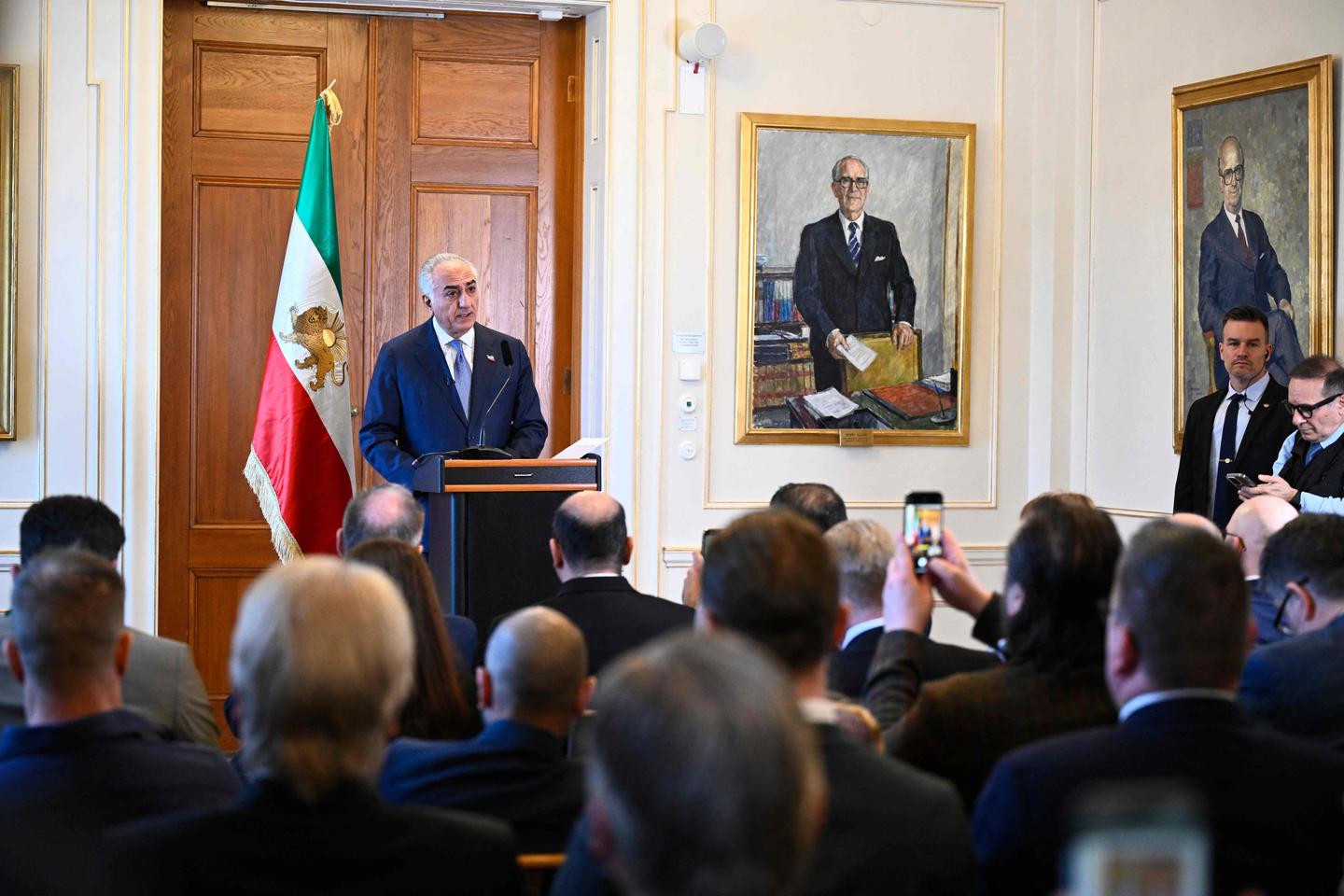
Reza Pahlavi, the crown prince of Iran in exile, during his visit to the Riksdag, the Swedish Parliament, Stockholm, April 13, 2026. FREDRIK SANDBERG/TT NEWS AGENCY/AFP
Should his visit have been welcomed or condemned? On Monday, April 13, Sweden's community of Iranian exiles was divided as Reza Pahlavi came to Stockholm to address Swedish lawmakers in Parliament. Pahlavi, a US resident who has been based in Paris since mid-February, is the eldest son of the last shah of Iran, who was overthrown by the 1979 Islamic Revolution. He was invited by the far-right Sweden Democrats party and the Christian Democrats, members of the governing coalition.
Pahlavi's visit elicited mixed reactions: three effigies that represented the leaders of these two parties, along with an effigy of Pahlavi, were found hanging from a bridge near Sergel's Square in the heart of the capital early that morning. They bore a sign reading "Genocidal torturers and lackeys." Police removed the effigies and a complaint was filed for "illegal threats."
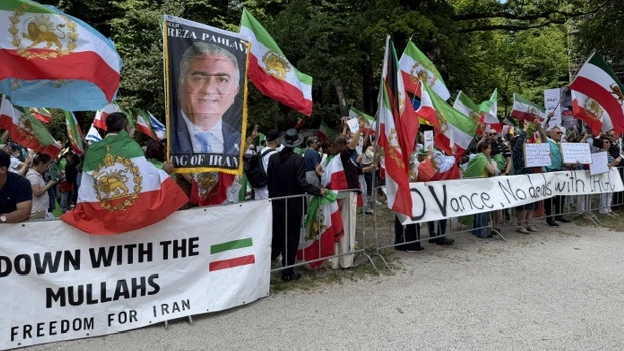
This act followed several days of intense debate in Sweden over an invitation that has stirred controversy both in Parliament and among the more than 87,000 Iranians living in the country. On Monday morning, several dozen protesters gathered in the streets of Stockholm.