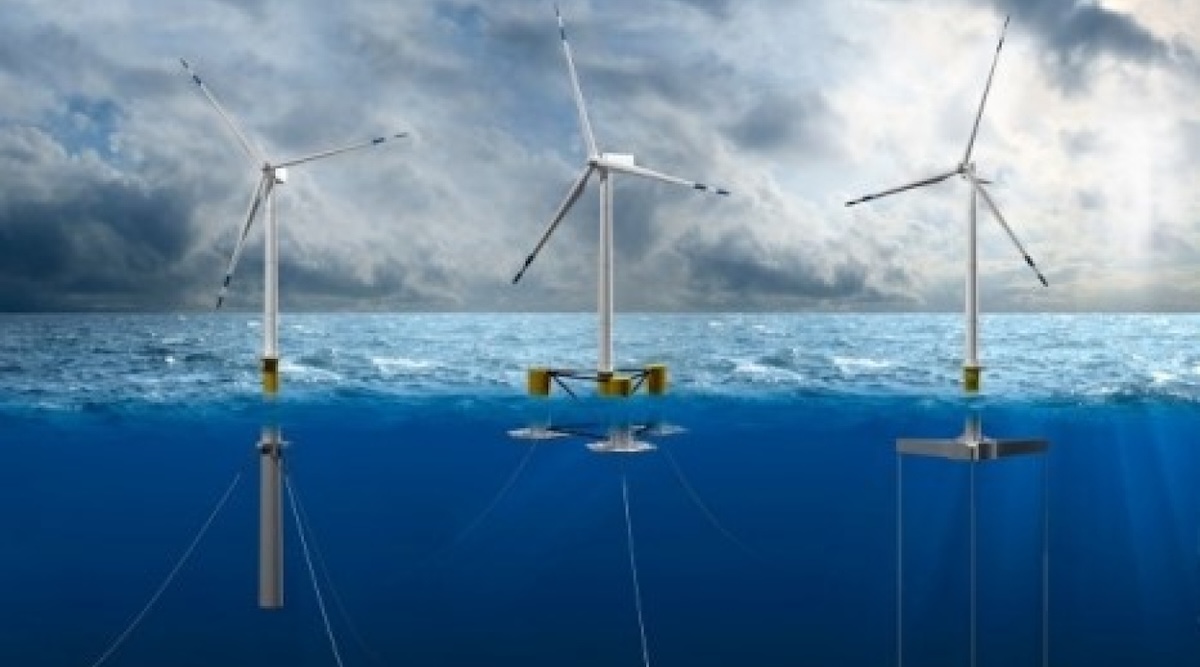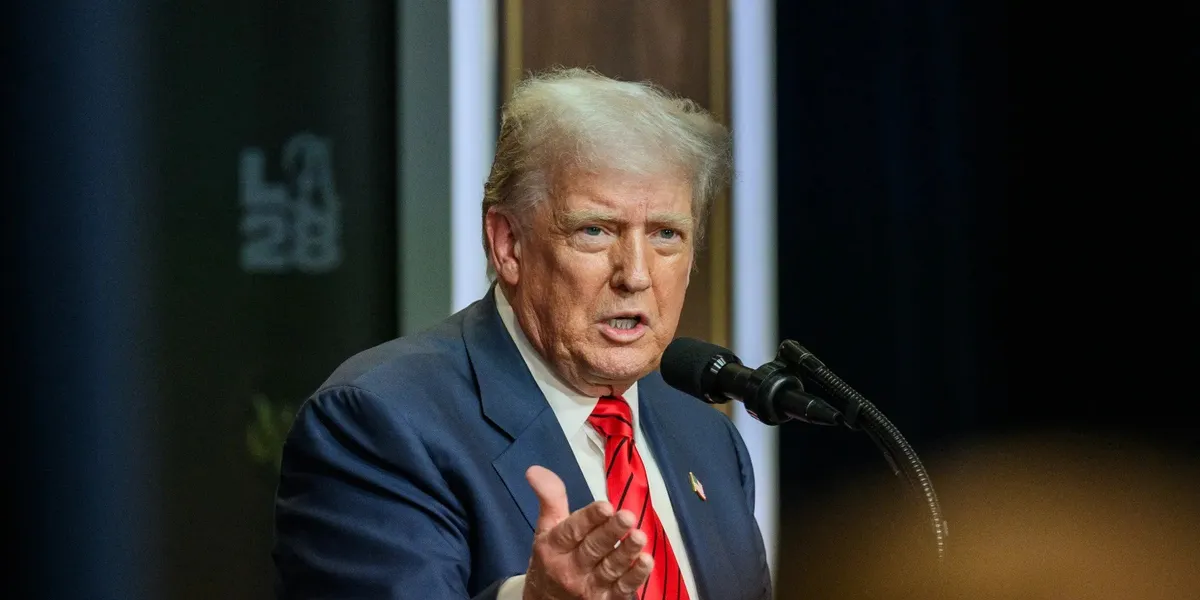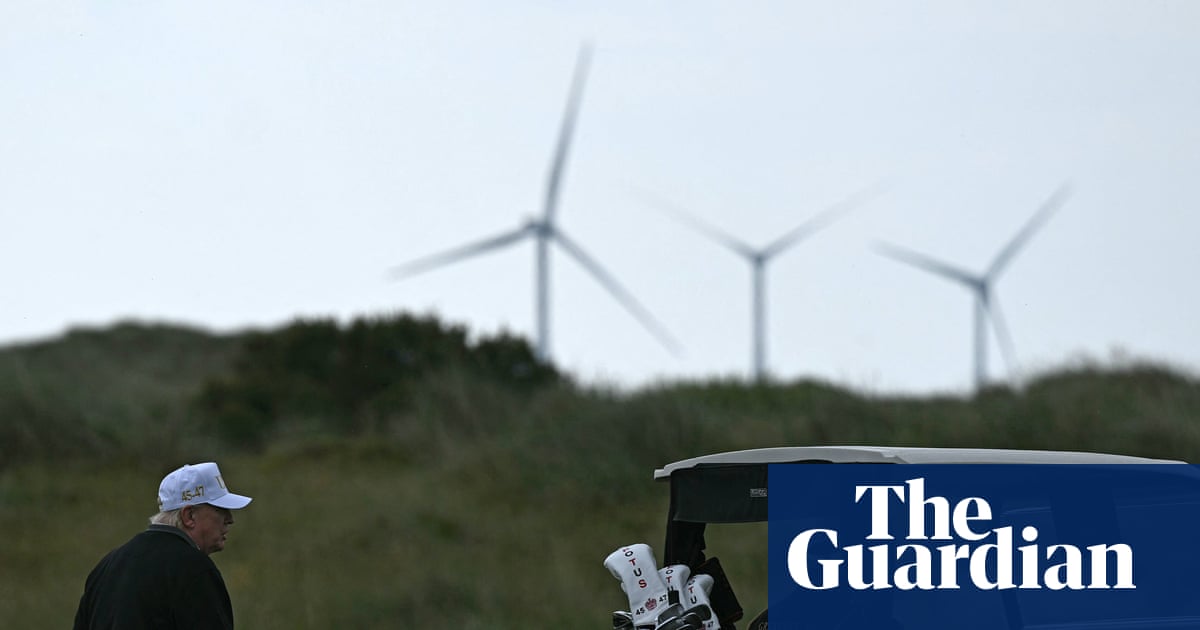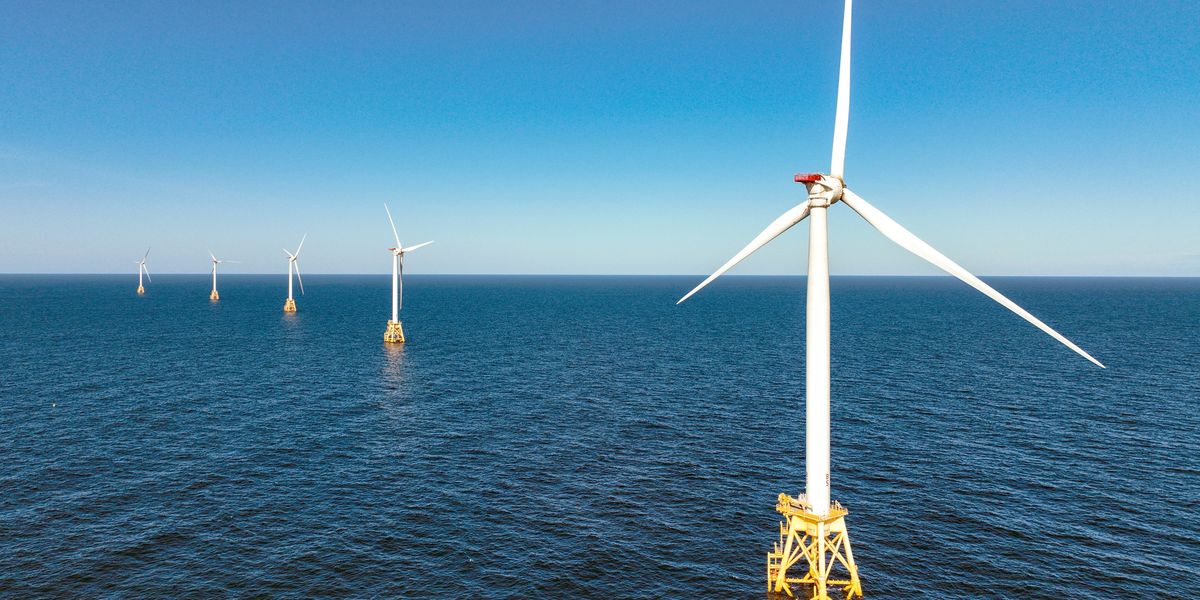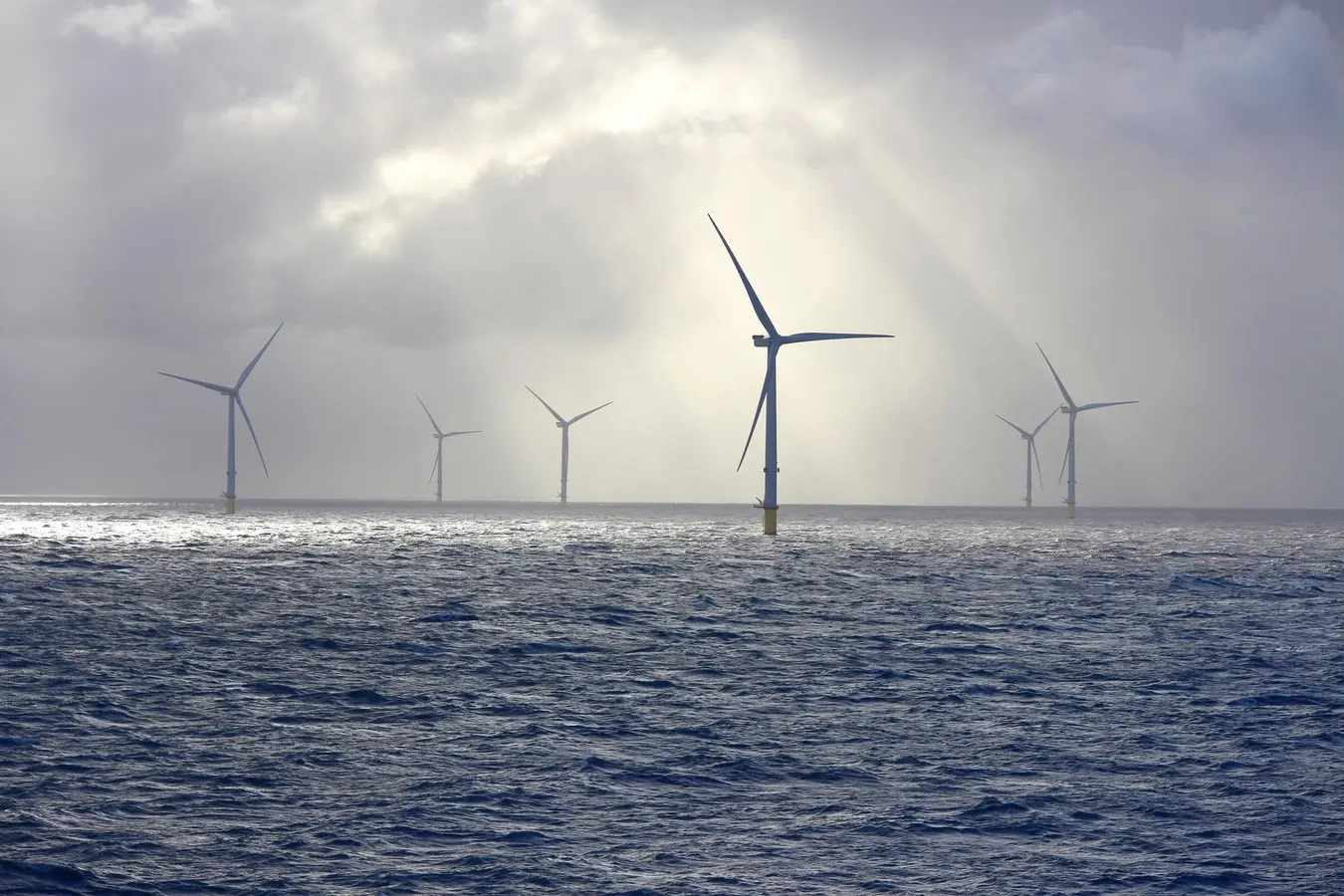
Current Climate brings you the latest news about the business of sustainability every Monday. Sign up to get it in your inbox.gettyPresident Donald Trump’s animus toward offshore wind has translated into aggressive efforts by his administration to kill several such projects. In March, the Interior Department even agreed to pay France’s TotalEnergies about $1 billion to walk away from plans to build wind farms off the coast of New Jersey, New York and North Carolina, ensuring those states don’t get a much-needed new source of electricity. The president’s party, however, appears to have a very different view, based on the findings of a new poll of 5,760 registered voters in 13 coastal states by Tarrance Group, a GOP polling firm, for Turn Forward, a nonprofit that advocates for offshore wind. The respondents live in states where ocean-based wind farms are planned, operating or are being blocked by Trump. The poll finds that rising electricity prices are a major concern for 70% of people surveyed. That figure includes 71% of Trump voters, while 73% of Democrats and 67% of independents share that view. As for offshore wind, it’s favored by 74% of all respondents, including 63% of Republicans surveyed. The overall approval figure is up from 65% in a January 2025 survey, suggesting that anxiety over pricey electric power is rising and changing how people feel about new options. “Voter support for offshore wind has steadily grown across party lines despite the intense politicization of energy policy,” Turn Forward Executive Director Hillary Bright said. Americans are worried about electricity prices and “are clearly saying that offshore wind is part of the solution.”At this year’s Forbes Under 30 Summit (April 19–22 in Phoenix), we’re bringing together leaders across climate tech, capital, and corporate sustainability to focus on one question:What does it take to deploy and scale climate solutions in the real world?As part of the sustainability programming, we’re hosting a series of conversations and gatherings focused on what’s actually working in practice.Registering now gives you early access to select events before they open more broadly. Capacity is limited and spots are already filling.Monday, April 20 Forbes Sustainability Community Meet-UpAn informal gathering for founders, investors, and operators across sustainability to connect and exchange ideas.Tuesday, April 21 Deploy & Scale: How Climate Solutions Actually Get BuiltA fireside conversation featuring Ida Hempel (Galvanize Climate Solutions) and Brennan Spellacy (Patch), followed by a curated networking reception.Wednesday, April 22 Growing and Going Strong: Earth Day Service DayA hands-on volunteer experience with Arizona Sustainability Alliance.Register here to secure early access at the discounted rate for newsletter subscribers.The Big ReadSandBoxAQThis Google Spinout Thinks AI Can Fix America’s EV Battery ProblemChina’s dominance in batteries is powering a global auto industry shakeup. The country didn’t just get better at making them. It got better at making a lot of them cheaply and fast enough to let automakers like BYD and Geely sell electric vehicles at prices that can look like a misprint next to U.S. and European models.Now, SandboxAQ, a moonshot company spun out of Google in 2022, is betting the U.S. doesn’t need to win by outbuilding China cell-for-cell. It just needs to come up with better battery designs. And it says its AI-enabled tech platform can help battery scientists accelerate their research to create new types of safer, cheaper solid-state batteries for EVs, military equipment and data centers.The Palo Alto, California-based company, which has raised $950 million from backers including Alphabet, Nvidia and AI scientist Yann LeCun, released a new version of its research platform, AQVolt26. The pitch: compress the earliest, most uncertain part of battery R&D—screening and evaluating candidate materials—so scientists can dump bad ideas quickly and focus their efforts on the ones that might actually ship. The goal is to slash development time to create new battery chemistries, which now takes 10 to 15 years, said Ang Xiao, who leads SandboxAQ’s materials science team.“It's hard to give an exact figure for how many years we can save, but I can tell you that for the discovery phase, we can reduce the time of that by 90% to 95%,” he told Forbes. “Our technology is only focused on the discovery phase, phase one. … But in the end, we will accelerate the entire development pipeline.”Read more hereHot TopicKate Brown and W.W. NortonMIT professor Kate Brown, author of Tiny Gardens Everywhere, on the environmental harms of grass lawns and benefits of urban farmingIn your book you note the problems of America’s obsession with grassy lawns. First of all, how big a water user is residential grass? It’s the largest user of water of any irrigated crop. We dedicate more land and irrigated water to turf grass than we do to corn, soy or anything else. Something like 158 million households are collectively growing a crop that you can't eat, that's bad for the birds and bees and poisons our local environments. Does grass have any benefit beyond being ornamental?It’s detrimental. The birds and the bees can do nothing with it, especially if somebody insists on only having turf grass around their home. Campuses across the country are poisoning their students with glyphosate so they can get rid of dandelions and clover. And that's what the birds and the bees are looking for, what the pollinators are looking for. We want our kids to play and roll around on the grass and then they come home with glyphosate on them. Pets come home with it. It's on the couch, it's in the carpets. We're poisoning ourselves.In addition to what we dump on it, it's a monocrop and it has all the problems of other monocrops. It's hard to sustain without chemical fertilizers and lots of water. Just like corn and soy were developed in the Green Revolution – high-producing plants, but they work best in field conditions. Which means they have lots of water, lots of fertilizer, lots of chemical protectants like pesticides, insecticides. Our strains of turf grass are developed for the same thing. So it's not an accident that they are thirsty and hungry little creatures. That's a monocrop problem, and it creates a lack of biodiversity. There aren't that many creatures that like turf grass. On the other hand, in rural or farm settings, you might have sheep, cows or deer going through the grass and they're poking their hooves in, aerating it. Then they're ripping up grass. They don't trim it. And that aerates it and that just makes it sponge-like. If you mow it, mow it, mow it, you make this really hard root structure that's like a carpet. Grass is as slick as asphalt. Water just pours off of it like on a parking lot. So it’s not replenishing aquifers?No. So instead, you have tiny gardens. You dig up that sod, that impenetrable sod that you can't eat, that's not good for birds or bees, it's poisonous, it’s a monocrop. And you put in some healthy soils that are rich with compost, which feeds microbes and worms and black soldier flies, all these creatures that are in the soil so the soil is alive. Then you put in plants, trees, berry bushes, lettuces, greens, whatever. And when it rains, those healthy soils soak up a lot more water, certainly far, far more water than rain, but also more water than clay soils or subsoils. That's great for flooding. They sequester a lot of carbon, more than any of our aesthetic alternatives. And of course, they can feed people.In terms of changing policy to allow homeowners to use their yards to grow produce, is this entirely a local government issue rather than federal?If this came up on the federal level, it could be with a federal right-to-garden law. What these “right-to laws” do is they would trump HOA regulations and municipal regulations. So they cannot tell you you can't grow food in private space or in a space that somebody else has agreed to let you grow food in. These vegetation restrictions really only started getting passed in the late 1960s, 70s and 80s. There was a real uptick in them with the growth of HOAs. … We could change it state by state. We don't have to do it municipality by municipality. We can change these with right-to-garden laws at the state level. What Else We’re Reading‘Climate change is kicking our butts.’ March smashes heat records for continental U.S. (Associated Press)Lee Zeldin touts EPA rollbacks at climate denial conference (Bloomberg)Inside California’s audacious bid to build the world’s deepest floating wind farm (Los Angeles Times)Trump guts the Forest Service ahead of wildfire season (New Yorker) California’s Salton Sea, billed as the ‘Saudi Arabia of lithium,’ still isn’t producing the stuff (New York Times)More From ForbesForbesMicroplastics ‘Lurking In Every Corner Of Our Lives’, Study FindsBy Jamie HailstoneForbesEnergy In Flux: How The Current Crisis Is Shaping The Future Of EnergyBy Ariel CohenForbesGerman Winemakers Rewrite The Rules Of Riesling In A Warming WorldBy Michelle Williams
Trump Hates Offshore Wind. Republicans Don’t
This week’s Current Climate newsletter also looks at a Google spinout using AI to create better batteries and MIT’s Kate Brown on the environmental impact of grassy lawns
1,487 words~7 min read