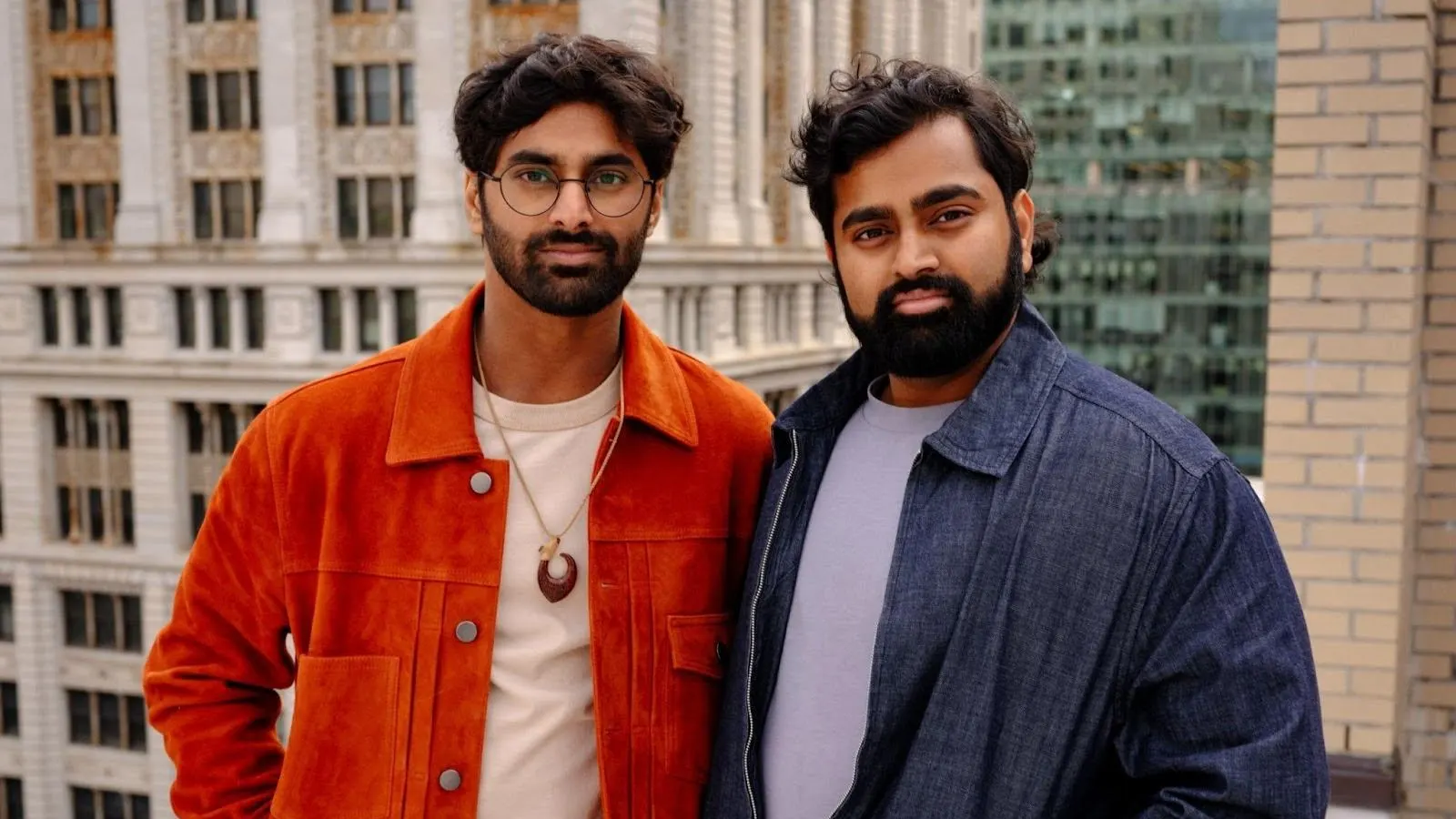
Think this is nice? It’s a version of the weekly Under 30 newsletter and would be even better in your inbox.Brothers and cofounders Abhijay Bhatnagar (left) and Arjun Bhatnagar (right)Courtesy of CloakedArjun and Abhijay Bhatnagar want to poison your data. That might sound aggressive, but it’s actually the safest thing one can do when it comes to personal data security. Because the more you give out different emails, phone numbers, credit cards, and passwords, “it confuses what is actually you,” said Arjun.The brothers and cofounders do it through an app called Cloaked, which creates new identifying information (like phone numbers and emails) for its users. The data privacy startup has raised more than $400 million dollars, including a $375 million Series B, led by General Catalyst and Liberty City Ventures, that closed last month. It all began in 2020 when Arjun, Cloaked’s CEO, uploaded all of his personal information—Facebook, Google Calendar, iMessage, banking, and even workouts and eating habits—onto a Mac Mini. He developed a basic language model to study his data. And because it quickly learned everything about him, it began functioning on its own as if it were him. “It started telling me things like ‘I noticed you missed your workout yesterday, do 15 pushups,’ or based on my spending habits, ‘let’s cut back on the Chinese food,’” he said. But the gravity of the situation changed when one day he picked up his phone to see that the model had a full text conversation with his then-girlfriend—saying “I love you” and sending her memes. It begged the question: “In the age of AI, what does security, privacy, and personal identity look like?” Arjun said. “I wanted to tackle that problem because it’s going to be the biggest question that humanity faces.”He started by creating a unique phone number, email and password for every new account a user might need—whether that’s logging into Amazon, ordering an Uber or contacting a realtor. From the start, Cloaked offered telecommunications services to its clients—like providing all of the technical purchasing, routing and managing of phone numbers (and similar email services). Those tools still exist in the app, but a person’s contact information is just one entry point into their identity. Cloaked plans to tackle financial data next. They're in the process of launching a credit card offering, CloakedPay, to be released this quarter.Cloaked has also transformed its customer base. It started as a consumer platform, but today enterprise clients include the likes of the Chicago Cubs MLB team, who were one of Cloaked’s first-ever B2B partners. “Athletes, high net worth individuals and celebrities are very big targets. We think about their physical safety all the time—like people knowing when they are or aren’t home, which leads to a lot of break-ins and robberies,” says Arjun. “But digital safety is now where the biggest risk factor is as AI is used to identify, target and personalize attacks.”Cloaked wants to be their digital defense. And the NFL wants their backup, too. The NFL Players Association’s licensing arm, NFL Players Inc., took part in Cloaked’s Series B as well. “We have invested some of our own cash, and we would like to have Cloaked available to all of our guys, because they have a real need for this type of product,” says Matt Curtin, president of NFL Players Inc. That not only means access for 2,000 current NFL players, but its more than 15,000 former players, too—making this a massive opportunity for Cloaked to turn one B2B client into a significant user base. But according to Arjun, that scale would never have been possible without sacrificing some growth early on. “One of the things that founders who are crossing the chasm from Series A to B to C need to understand is that you have to get one thing right before you have the right to do more things,” Arjun said. “Now, we’ve got money to keep scaling.”Want to hear more about Arjun’s journey—and how he landed that $375 million check? He’ll be taking the main stage at the Under 30 Summit to tell us more. Don’t forget to register here. See you next week,Alex & ZoyaOne Week To The 2026 Under 30 SummitThere’s about one week to go until the iconic Forbes Under 30 Summit in Phoenix, AZ—and this year’s lineup is stacked. We kick off April 19 with a special live performance from Don Toliver, then dive into two full days featuring Uber investor Bill Gurley, Airtable’s Howie Liu, Wonder’s Marc Lore, Olympic legend Michael Phelps, NBA champion Dwyane Wade, and stars including Madelyn Cline, Haley Lu Richardson, Audrey Nuna and Ashley Graham.Are you ready? It’s not too late to join us—register now. Can't join us in person? Register for the virtual experience today.Dr. Dre On Becoming A Billionaire: “I Don’t Chase Money. I Try To Make The Money Chase Me.”JAMEL TOPPIN for ForbesHe escaped the gang violence of Los Angeles to become a pioneering hip-hop artist and producer, then sold Beats Electronics to Apple for $3 billion. Here’s what Dr. Dre is doing next—and how he’s enjoying success. Read the full Forbes cover story here.The Local Spotlight: Forbes Under 30 Arizonacourtesy of Daniel WallWe’re bringing you the scoop on a new Under 30 Local community member. Up this week: 2026 Under 30 Arizona lister Daniel Wall, creator and founder of Behind The Wall, a media platform focused on interviews with leaders across music and entertainment. Since launching in 2019, it has featured guests like Benny Blanco, the Jonas Brothers, Coldplay, OneRepublic, Marshmello, Bruce Springsteen, Julia Michaels and Paul Anka. Wall has more than 2 million followers on TikTok, 1 million on YouTube, and 400,000 on Instagram.The following has been edited for length and clarity.What first pulled you into media and entertainment, and when did you realize interviewing was your lane?What’s interesting is I don’t know if I ever had a moment where I decided interviewing was my lane. I’ve always just been drawn to conversations and curiosity. I started making content when I was around 12 or 13, but my parents didn’t want me posting on social media, so I’d constantly have to take things down. Years later, I finally committed to it and started posting consistently, just because I loved it. I didn’t have a viral moment until around my first 150 posts, and honestly, I don’t feel like I really understood what I was doing until a few thousand in. At this point, I’ve made over 10,000 pieces of content. What kept me going was that I genuinely loved it. I was fascinated by the behind the scenes of music, film and media, especially the people who make it all happen. Songwriters, producers, directors, the ones who don’t always get the spotlight. For a long time, there were people who didn’t believe this kind of content would work, especially focusing on the behind the scenes. They didn’t think audiences cared how music or movies were actually made. I think the reality is people do care, it just hasn’t always been communicated in a way that allows those stories to really come through.I didn’t study journalism or learn how to ask questions in a traditional way—I was just deeply interested in the same industry I was trying to understand. Even now, I don’t really think of myself as a traditional interviewer or journalist. I just try to listen, stay present, and ask the questions I genuinely want answers to.What’s the significance of “Behind The Wall?”“Behind The Wall” is really about giving people access to something they usually feel shut out of. Growing up, I always felt like there was this invisible wall between the world I was in and the world I wanted to be a part of. You see the songs, the films, the artists, the success, but you don’t see how any of it actually happens, or how you’re supposed to get there. It feels distant. It feels like something only certain people get access to. And that never sat right with me.You posted 150+ videos before going viral. What made you stick with it?Honestly, I just really enjoyed it. At the beginning, there was no money in it and I never thought it would turn into a career. It was more like, “Wait, I can make videos about things I actually care about, and just keep doing it?” I was making videos about the behind the scenes of entertainment, but also just stuff I thought was funny. It felt fun to me, not like work. I do remember the first time something went viral, it got around 300,000 views, which felt crazy at the time. And then I tried to do it again, and the next video got like 7,000 views. And I remember thinking, “Okay… that’s not the same.” I think that’s the moment where most people stop. But for me, I didn’t really see it as failing. I just saw it as part of figuring it out. Over time, you start to learn what works, what doesn’t, what connects, what doesn’t. That only comes from doing it over and over again. Now I’ve posted over 10,000 videos and gotten over 4 billion views across platforms. Do you remember where you were when you landed your first big interview? Who was it with?The Coldplay story is much bigger than just an interview for me. I remember Chris Martin saying something at age 14 that really stuck with me. He said they’re not the best band in the world or the best musicians, but they go out there, give everything they have, and go for it. That idea shifted my mindset. It made me feel like anything is possible if you’re willing to show up and give it everything. After hearing that, I wrote down, “I will sing on stage with Coldplay.” It felt unrealistic, but I held onto it.At the same time, I had medical issues since birth, spending time in and out of hospitals. There were moments when life felt paused and that dream seemed distant. But I held onto it.Years later, after consistently making content, Coldplay became aware of what I was doing. I was invited to their show, went backstage, and sat down with Chris Martin. I asked him questions I cared about, from his creative process to what drives him. At the end, I told him the story and asked what it would take to sing on stage with them. He said, “100,000 likes.” Then, “I want you to hold me to that.”From that moment on, I treated it like it was real. I spent months preparing, working with vocal coaches and training consistently. Nine months later, I walked on stage and sang “Everglow” with Coldplay in front of thousands of people, during a moment where two people were getting engaged. But what it means to me goes beyond just performing. Because I know what it feels like to be in a hospital room, dealing with something out of your control, feeling like your life is paused while everything else keeps moving. In those moments, it’s easy to feel like your dreams are out of reach. So if that story can reach someone in that position right now, someone who feels held back by their circumstances, and remind them that their dream is still possible, that they can still become who they want to be, that means more to me than anything. Because that’s what that moment proved to me.How much of a great interview is preparation versus being present in the moment?It’s honestly both, and I think you need them for different reasons. I’ve built a lot of what I do around preparation. I’ll go and watch as many interviews as I can, study someone’s work, and really try to understand who they are before I ever sit down with them. A lot of the time I’m thinking, “What are the questions I wish someone would have asked?” or “What haven’t people really gotten into yet?” But at the same time, the best moments never come from that. They come from being in the moment. At the end of the day, it’s just a conversation, and if you’re too focused on what you planned to ask next, you miss what’s actually happening right in front of you. There are moments where I’ll see someone’s energy shift or their eyes light up when they start talking about something, and that’s when I know there’s more there. What’s your one piece of advice for someone trying to win the internet or go viral?The first thing I’d say is you have to redefine what that actually means. A lot of people think winning is views or followers, but I don’t really see it that way. In a conversation I had with Gary Vaynerchuk, something that stuck with me is that winning really comes down to providing value. At the end of the day, you’re not thinking about what you’re getting, you’re thinking about what you’re giving. That could be entertainment, making people laugh, telling a story, teaching something or just making someone feel understood. The other big thing is consistency. Most people are looking for one moment to change everything. But in reality, it comes from showing up over and over again and getting better each time. If someone wants to be a creator, I’d tell them to commit to whatever level of consistency they can actually stick to, whether that’s once a day or once a week and just keep going. You don’t win the internet by chasing attention, you win by consistently giving people a reason to care.Tell us about Arizona as your launchpad: How has living there impacted your career versus Los Angeles?Starting in Arizona forced me to focus on the work. I wasn’t surrounded by the industry. I didn’t have easy access to artists, labels or the typical paths people take in a place like Los Angeles. So instead of waiting for opportunities, I had to figure out how to create them. Arizona gave me space to experiment, fail, and improve without pressure. And I think that’s what allowed me to develop my voice. It taught me how to build something from nothing, instead of waiting for permission to be in the right place. At the same time, though, some of first interviews happened in Arizona with Coldplay, OneRepublic and Andy Grammer. Where do you want to take this next? What’s the long-term vision with Behind The Wall?I want to build Behind The Wall into something much bigger than just interviews. At its core, it’s about going behind the scenes of how great work actually gets made, starting with entertainment, music, film, TV, but eventually expanding beyond that. I don’t just want to be the one going behind the wall. I want to build a community where other people get that opportunity too. Where the next generation of creators can actually be part of those moments, learn directly from the people they look up to, and feel like they have access to something that usually feels out of reach. Over time, I see it becoming a full media company, documentaries, long-form content and a platform that brings people inside the creative process across entertainment. Finally, give us a hot take you have after being in the entertainment world.Most people think the entertainment industry is about talent, but it’s really about consistency. There are incredibly talented people who never get seen, and there are people who just kept showing up and figured it out over time. Most people don’t fail because they’re not good enough, they fail because they stop too early.
Cloaked Raised $375 Million To Poison Your Data—And The NFL Wants In
An inside look at how this Forbes 30 Under 30 data security company closed more than $400 million in funding. And why the NFL and the Chicago Cubs are investing.
2,601 words~12 min read