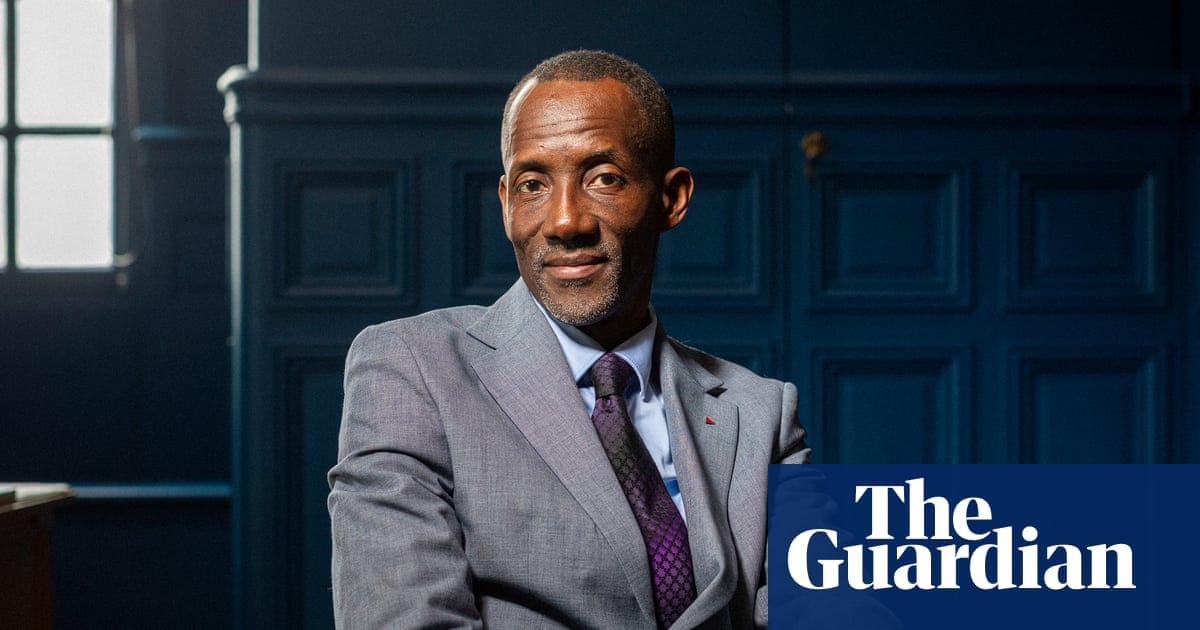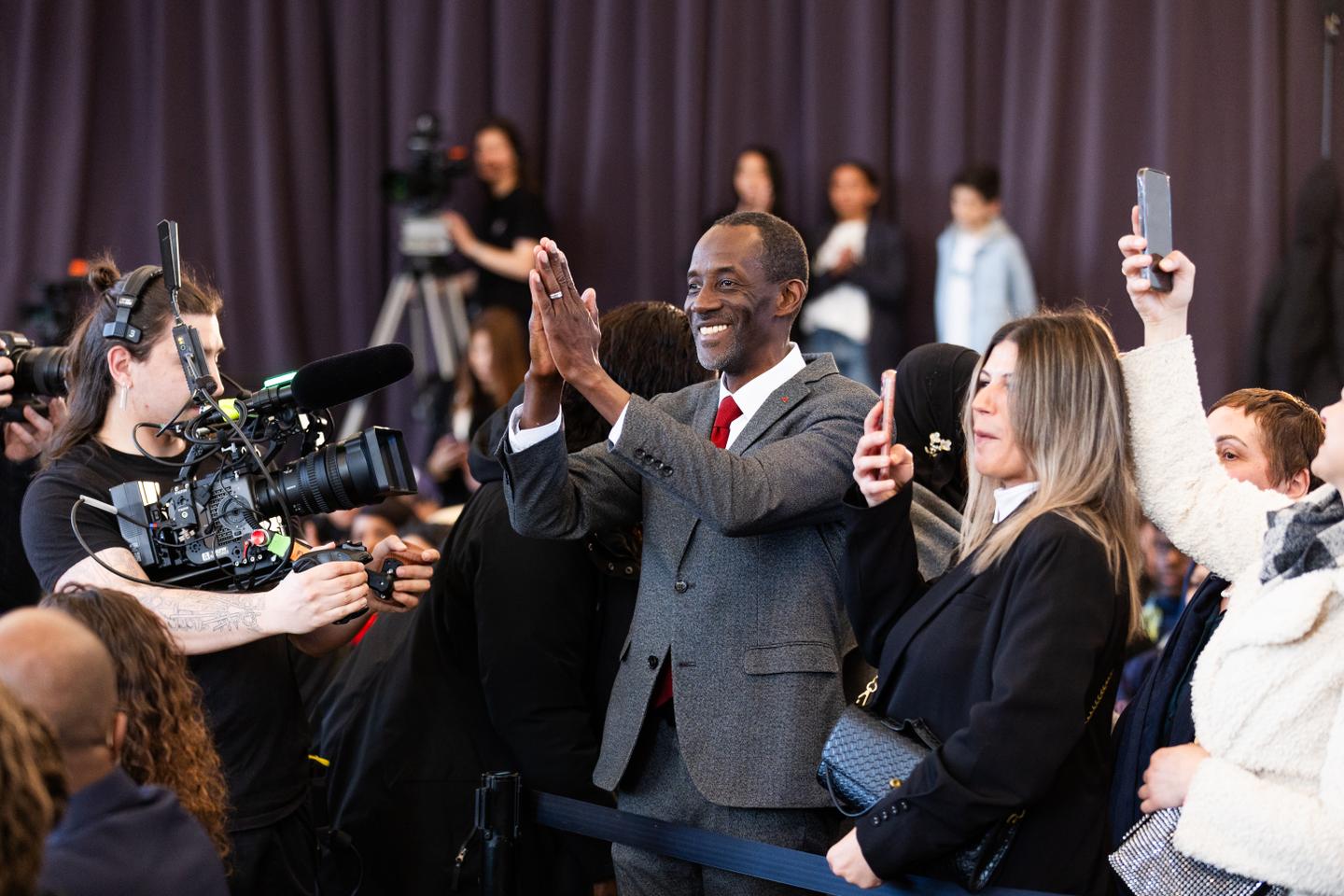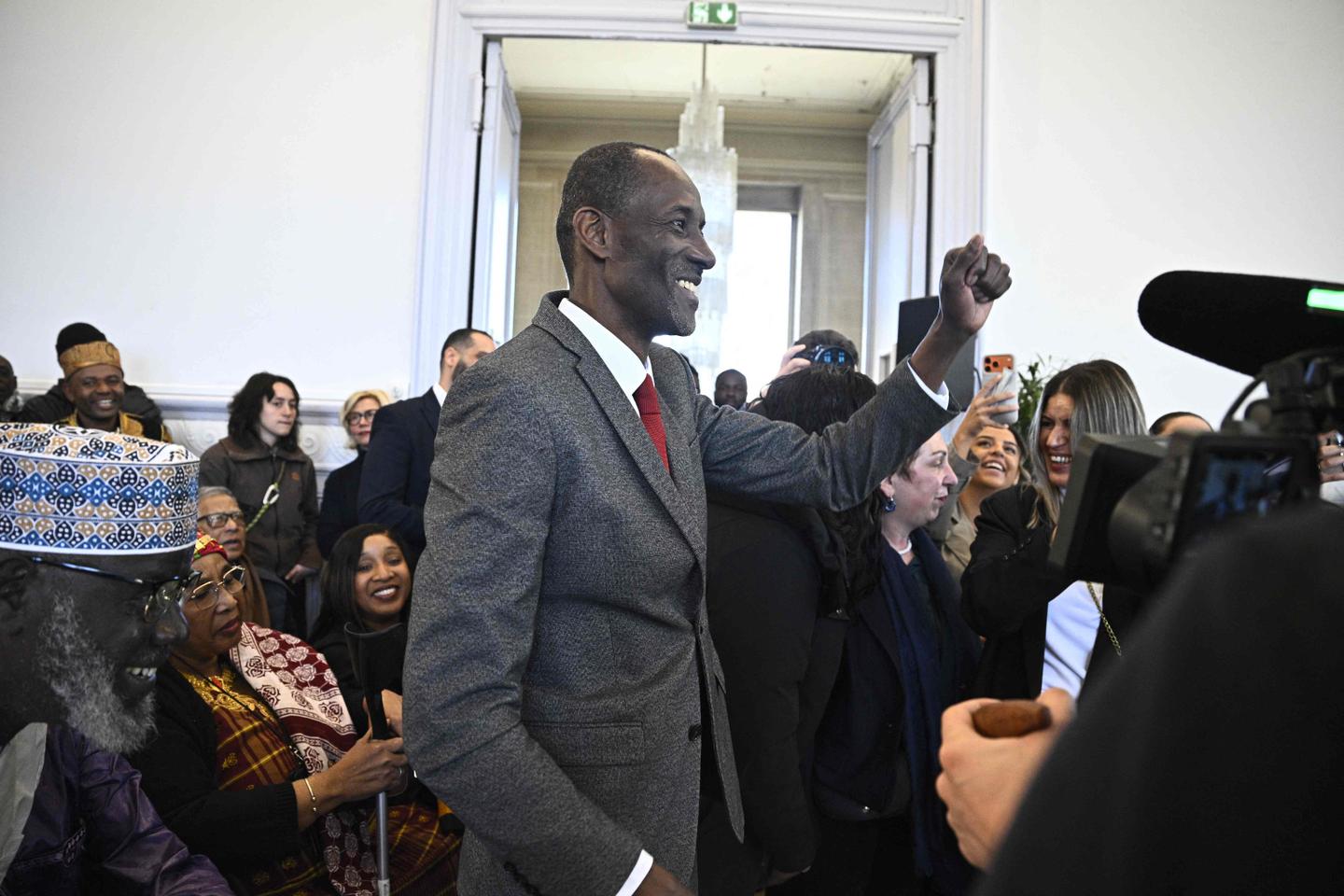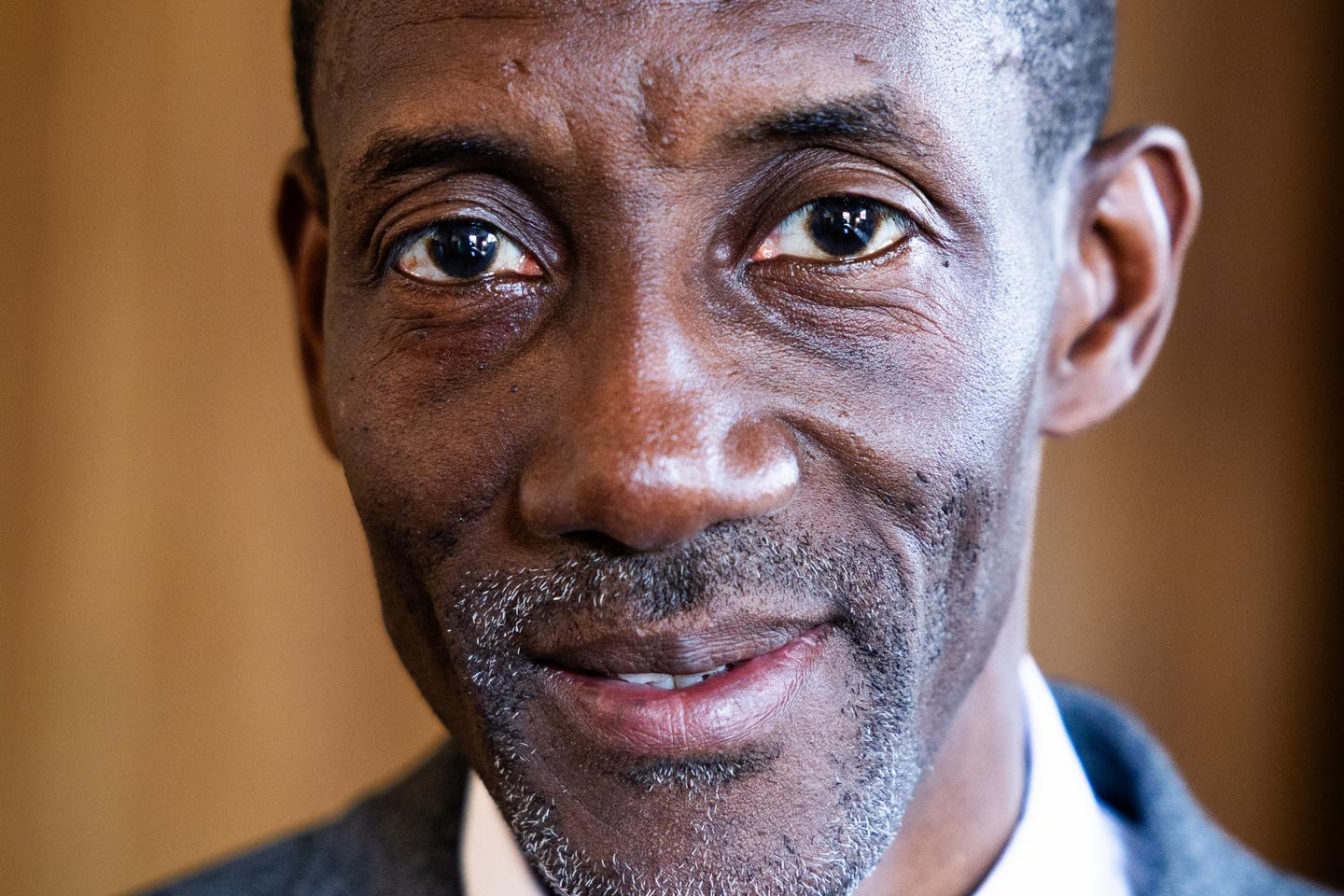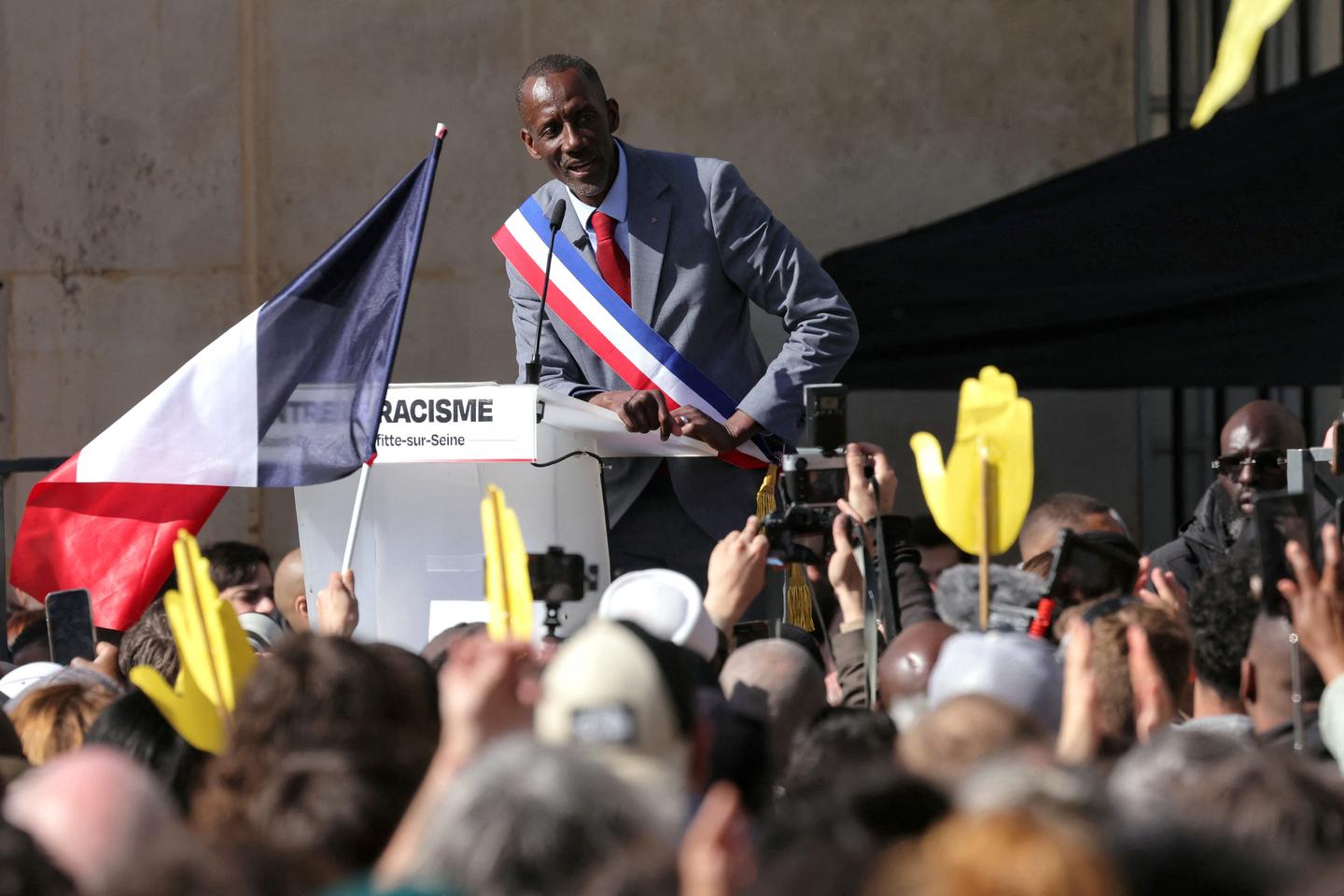
Bally Bagayoko, the mayor of Saint-Denis, during the anti-racism rally he organized in Saint-Denis, April 4, 2026. THOMAS SAMSON/AFP
A word in the air. Though he was just barely elected, Bally Bagayoko, the new LFI (La France insoumise, the left-wing populist party) mayor of Saint-Denis (Paris region), has been subjected to insulting and racist remarks. Bagayoko has been forced to defend himself against statements he never made, and has had to justify his qualifications, despite being a university graduate, a senior manager at RATP (the Paris public transport authority) and a city councilor in Saint-Denis for 25 years. "A textbook case," observed Maboula Soumahoro, a professor of American studies at the University of Tours. "The attacks and insinuations he has had to answer to while remaining calm are a perfect illustration of the 'racial burden' that weighs on racialized individuals."
The term emerged in 2017 in an op-ed written by Soumahoro that was published in the daily newspaper Libération. It describes the state of hypervigilance and adaptability developed by victims of racism, to the point of changing their behavior, affecting both their physical and mental health. According to the annual report of the French National Consultative Commission on Human Rights that was published in June 2025, this process begins at school for children of immigrant backgrounds who face "everyday racism" that is often "subtle" and "insidious." The report stated that this psychological pressure leads them "to constantly plan aspects of their lives to anticipate racism."