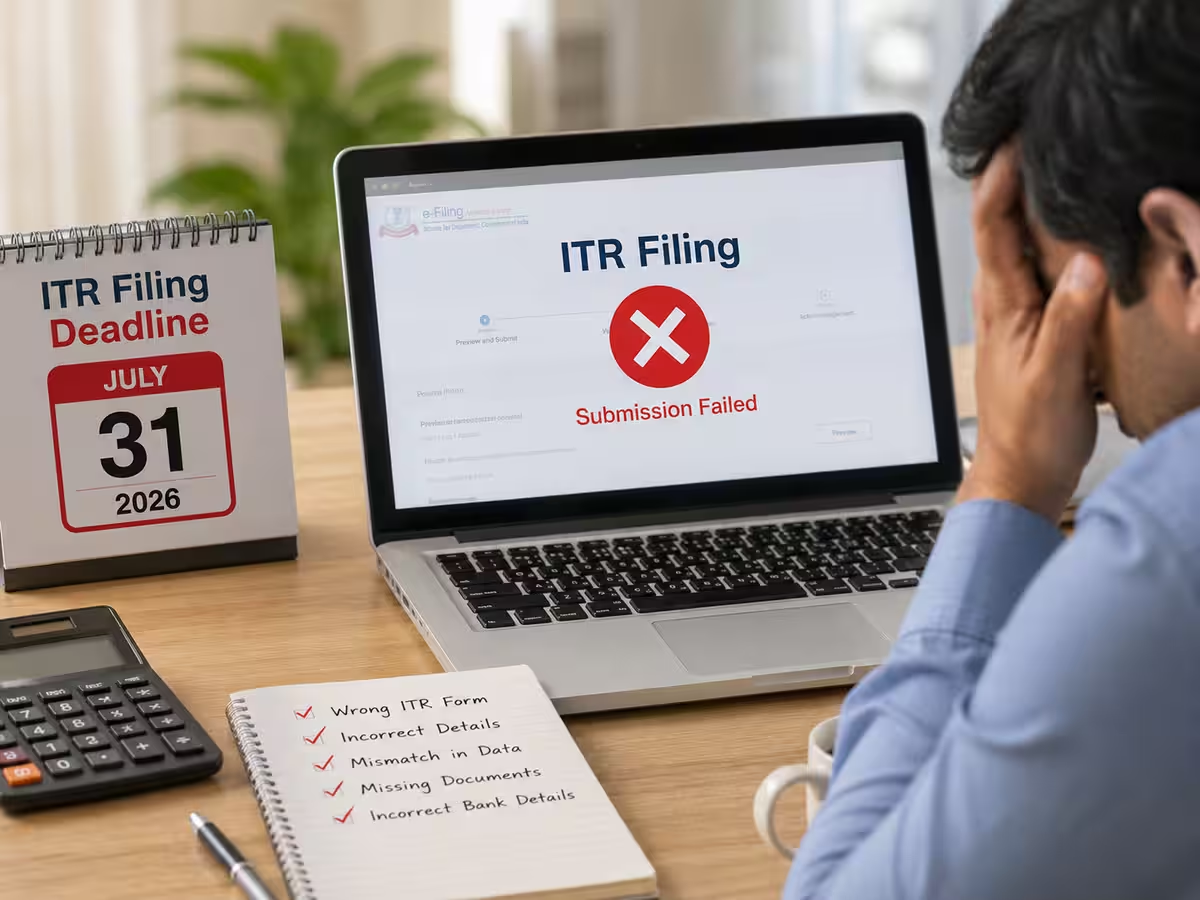
Don't leave money on the table—take the time to walk through your tax return before you file.GettyWith the end of the normal tax filing season approaching, it’s tempting to rush through your return just to get it done. That’s usually when mistakes happen. And while some errors are easy to fix, others can delay your refund or trigger follow-up problems with the IRS.Here are 11 of the most common tax filing mistakes—and how to avoid them.No. 1 Social Security Number GoofsOne of the most common mistakes is an incorrect or missing Social Security number (SSN). It sounds like an odd goof, but it’s easy to transpose digits or rely on (a faulty) memory, especially for your dependents. A single incorrect digit, or a name and number that don’t match IRS records, can cause a return to be rejected or delay its processing. This comes up frequently with dependents, where taxpayers may rely on memory instead of checking their actual Social Security card. SSNs are also critical for claiming key credits and deductions. Benefits like the Child Tax Credit, Earned Income Tax Credit, and education credits generally require valid Social Security numbers for you, your spouse, and your qualifying children. If those numbers are missing or incorrect, the IRS can deny the credit entirely—not just delay it. Practice tip: Before filing, take a moment to verify each SSN against official documents.No. 2 Name MismatchesName mismatches are another frequent problem, especially after major life changes like marriage or divorce. The name on your tax return needs to match what’s on file with the Social Security Administration (SSA). Even small differences—like a missing hyphen or a reversed name—can cause processing issues.The IRS matches the name on your tax return to SSA records, not to the name that you currently go by in daily life. That means if you’ve changed your name but haven’t updated it with the SSA, your return can be rejected or delayed. The fix to this problem isn’t on your tax form—it’s through the SSA. You’ll need to update your name using Form SS-5 and provide supporting documentation, such as a marriage certificate, divorce decree, or court order. Once the SSA processes the change, your records will align with IRS systems. Practice tip: Until your name change is processed, it’s best to file using the name currently on your Social Security card to avoid processing issues.No. 3 Using the Wrong AddressAddress errors don’t carry the same weight as SSN or name mismatches, but they can still cause unnecessary headaches. An outdated or incorrect address can delay important IRS correspondence, including notices or refund checks if you’re not using direct deposit. Keep in mind that changing your address with the U.S. Postal Service doesn’t automatically update your information with the IRS. Taking a few minutes to ensure your address is correct helps make sure anything the IRS sends actually reaches you.Practice tip: If you’ve moved recently, make sure your address is current on your tax return and consider filing Form 8822 to officially update your address with the IRS. No. 4 Choosing the Wrong Filing StatusFiling status is another area where taxpayers get tripped up. Filing status is one of the most important choices on your tax return, and it’s also one of the most misunderstood. The status you select—such as Single, Married Filing Jointly, Married Filing Separately, or Head of Household—affects your tax rates, standard deduction, and eligibility for certain credits. Importantly, your marital status (according to state law) is determined as of December 31 of the tax year—it typically doesn’t matter for filing purposes what you do before or after that time.Practice tip: Take the time to confirm that you meet the rules for your filing status to avoid costly mistakes.No. 5 Mixing Up NumbersMath errors still happen, especially on paper returns. Even small calculation mistakes can throw off your entire return. And, the IRS defines math errors pretty broadly to include simple, obvious mistakes—math errors, using the wrong line of the tax table, missing or mismatched Social Security numbers, inconsistent entries between forms, or missing required schedules and forms. If you make those kinds of mistakes, the IRS is allowed to immediately assess additional tax without going through the normal deficiency process. That can also limit your rights, including the timeframe to challenge that added tax.Practice tip: Using tax software or a professional can help reduce these errors, but it’s still worth reviewing your numbers carefully. No. 6 Misunderstanding Credits and DeductionsCredits and deductions can also be a source of confusion. Some taxpayers claim credits they don’t qualify for (especially if it’s a credit promoted by scammers), while others miss out on benefits they’re entitled to. Pay attention to income limits and eligibility rules, and avoid “double dipping” on the same expenses—for example, applying the same tuition costs to both an education credit and an exclusion from income of a 529 college savings account distribution. Errors can lead to reduced refunds, delays, or IRS adjustments after filing. Practice tip: Take the time to review the rules for each credit or deduction, and make sure your facts support the claim. And remember, if it sounds too good to be true, it probably is.No. 7 Relying on Your Old Tax Returns A new job, a move, a child, or changes in investments can all affect what needs to be reported to the IRS. It’s easy to carry over outdated information—like income, bank details, or dependent status—from one year to the next without realizing it no longer applies. Prior-year numbers can be a helpful starting point, but they shouldn’t be copied over without review, especially if there have been changes to the tax laws.Practice tip: Don’t get lazy. Using last year’s return as a template can be efficient, but only if your situation hasn’t changed. No. 8 Not Asking for Help Multiple income streams, gig or self-employment income, real estate, or more complex investments can quickly make a tax return more complicated than it first appears. Each type of income (including overtime and tip income) may come with its own reporting rules, forms, and potential pitfalls. It’s not just about entering numbers—it’s about understanding how those pieces fit together, from tracking expenses to applying the right tax treatment. As complexity increases, so does the risk of larger, more costly mistakes. Practice tip: If you’re feeling overwhelmed, consider that a sign and reach out for professional help.No. 9 Not Signing Your ReturnAnother common issue is failing to properly sign the return. An unsigned return isn’t valid and won’t be processed, and for joint returns, both spouses must sign. For e-filers, this requirement shows up in a different form—using a PIN. Entering the wrong PIN or confusing it with another identification number (such as an identity protection PIN, or IP PIN, a six-digit number that prevents someone else from filing a tax return using your SSN) can lead to rejection, so it’s important to use the correct one when submitting electronically. Practice tip: If the IRS issued you an IP PIN, use this instead of your self-selected PIN.No. 10 Forgetting Your Direct Deposit InformationIf you’re expecting a refund, entering the wrong bank account or routing number can create headaches. Direct deposit is fast and convenient—but only if the information is correct. A simple typo can send your refund to the wrong account or delay it while the issue is sorted out, so it’s worth double-checking those numbers before you file.This year, the IRS has also made some changes to the way that tax refunds are delivered. In previous years, if you didn’t provide direct deposit information, the IRS would immediately assume you wanted a paper check and mail one out. That’s no longer the case. Now, the IRS will temporarily freeze the refund until you provide direct deposit information, affirmatively request a paper check, or wait for an extended period. Practice tip: Include your direct deposit information when possible and double check the account numbers.No. 11 Not Watching the ClockFinally, timing matters more than many taxpayers realize. Filing late (without applying for an extension) can trigger penalties, and those penalties are typically much bigger for failing to file than for failing to pay. If you’re not ready by the due date, an extension can give you additional time to file—but not additional time to pay since any tax owed is still due by the original deadline. Whether you file electronically or by mail, paying attention to deadlines—and documenting when you filed—can help you avoid unnecessary penalties and disputes.Practice tip: The rules have recently changed so that most postmarks reflect the date of postal processing, not necessarily the date you popped your return into the mailbox. Make sure that you have proof of timely filing—options include buying postage at the counter, asking for a manual postmark, purchasing a Certificate of Mailing, or using certified or registered mail.ForbesA New Confusing IRS Notice Could Mean A Long Wait For Your Tax RefundBy Kelly Phillips ErbForbesIRS Warns Of New Tax Scams Linked To The One Big Beautiful Bill ActBy Kelly Phillips Erb
11 Common Tax Filing Mistakes And How To Avoid Them
A wrong Social Security number, forgotten direct deposit info, or misunderstanding a credit, can cost you money or slow down the processing of your tax return.
1,505 words~7 min read