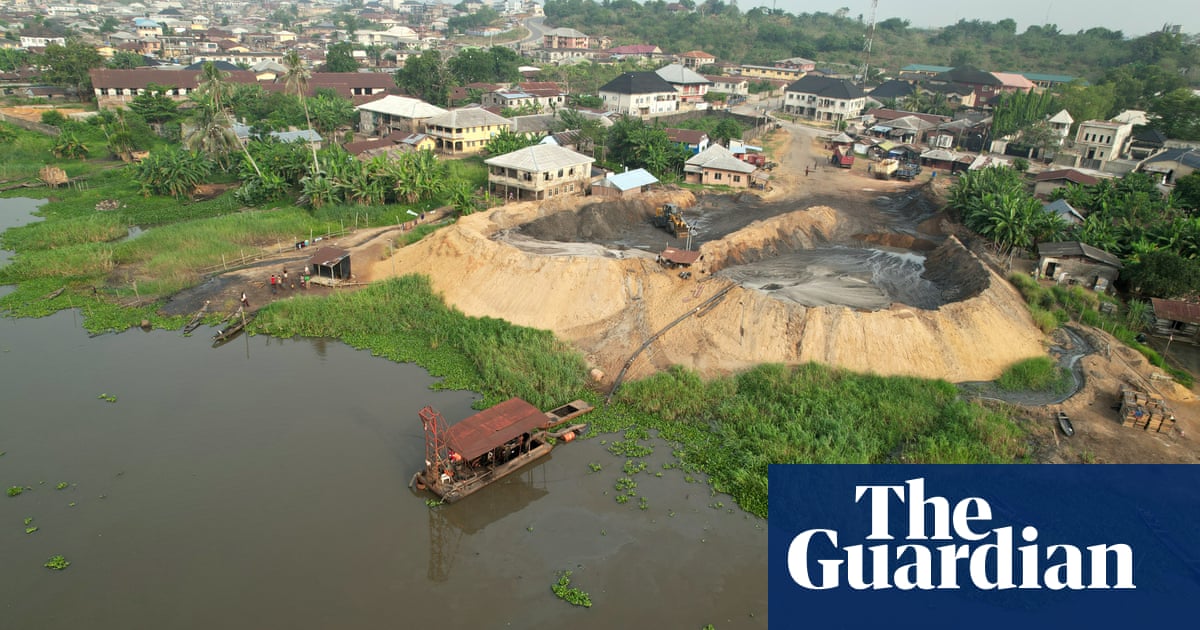
Taking sand from the Nigerian city’s lagoon to supply a building boom harms more than fish – it affects the entire food chain, erodes coastlines and is depriving fishing communities of their livelihoods
B
efore dawn, when the noise of Lagos’s danfo buses fills the air and generators rumble to life, the city’s lagoon is already stirring. Not from fish splashing or canoes gliding, but from the long suction pipes of the dredging machines, pulling up the lagoon bed and spitting out wet sand that will be used in the construction of high-rise blocks, housing estates and flyovers.
Sand dredging is regulated by the Lagos state government and the waterways authority but in a city of more than 20 million people, where sharp sand has never been in higher demand, not all dredging is being done by the book.
Unregulated dredging and mining have eroded the seabed by nearly 6 metres between the reclaimed Banana Island and the nearby Third Mainland Bridge, according to a study from the Nigerian Institute for Oceanography and Marine Research (NIOMR). That area is a roughly 5km stretch of central Lagos’s main lagoon channel linking the city’s island districts to the mainland.