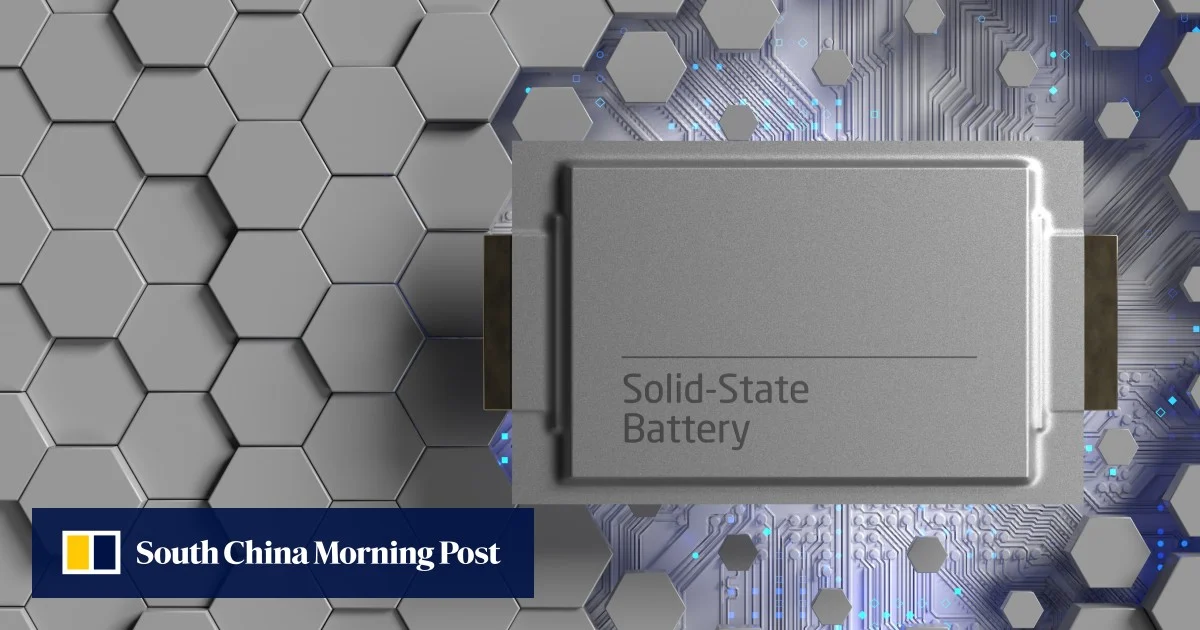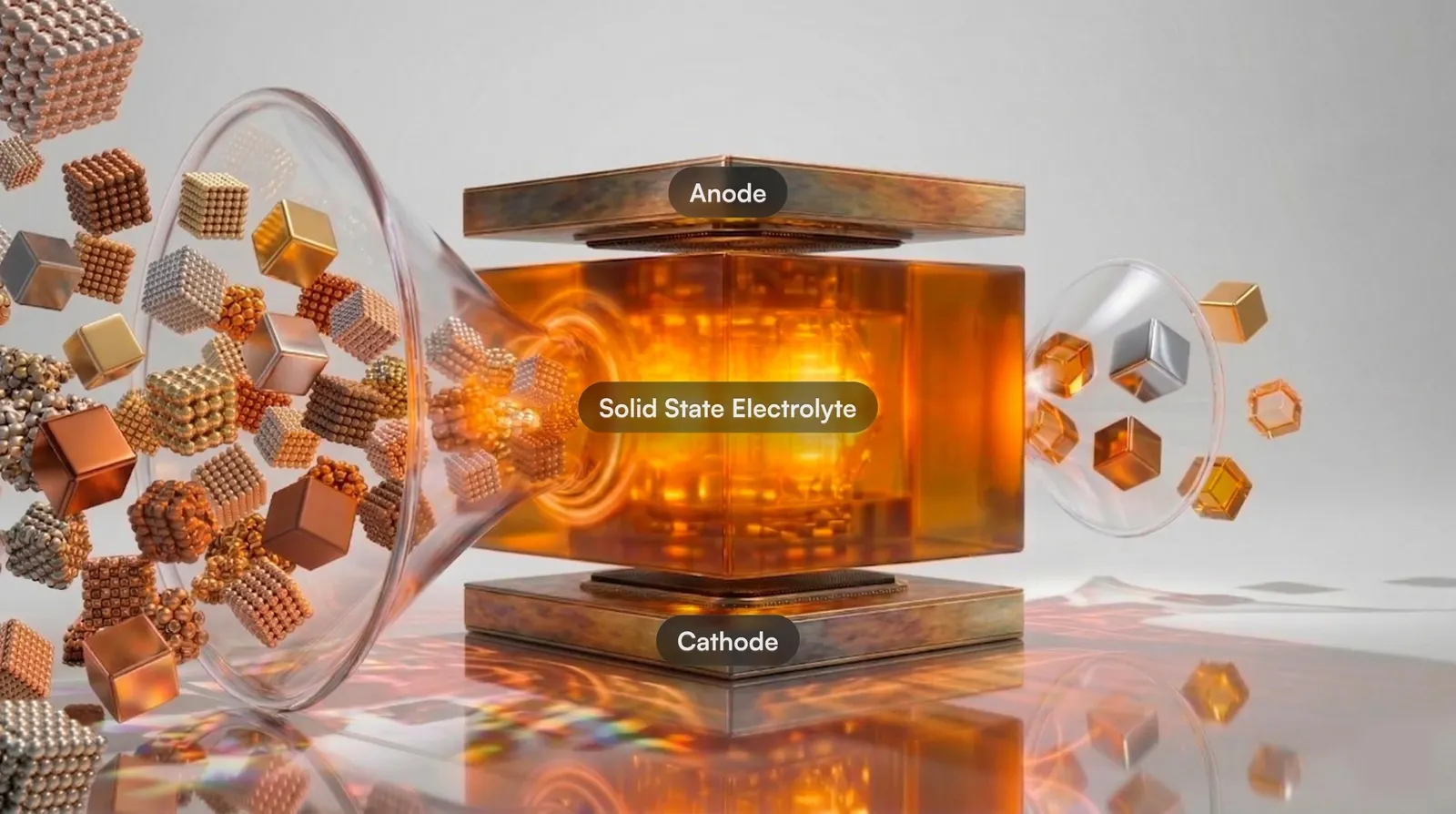
The AQVolt26 platform is designed to accelerate research on 4,900 promising halide-based compounds for use in solid-state batteries.SandBoxAQChina’s dominance in batteries is powering a global auto industry shakeup. The country didn’t just get better at making them. It got better at making a lot of them cheaply and fast enough to let automakers like BYD and Geely sell electric vehicles at prices that can look like a misprint next to U.S. and European models.Now, SandboxAQ, a moonshot company spun out of Google in 2022, is betting the U.S. doesn’t need to win by outbuilding China cell-for-cell. It just needs to come up with better battery designs. And it says its AI-enabled tech platform can help battery scientists accelerate their research to create new types of safer, cheaper solid-state batteries for EVs, military equipment and data centers. The Palo Alto, California-based company, which has raised $950 million from backers including Alphabet, Nvidia and AI scientist Yann LeCun, is today releasing a new version of its research platform, AQVolt26. The pitch: compress the earliest, most uncertain part of battery R&D—screening and evaluating candidate materials—so scientists can dump bad ideas quickly and focus their efforts on the ones that might actually ship. The goal is to slash development time to create new battery chemistries, which now takes 10 to 15 years, said Ang Xiao, who leads SandboxAQ’s materials science team. For the latest in cleantech and sustainability news, sign up here for our Current Climate newsletter.“It's hard to give an exact figure for how many years we can save, but I can tell you that for the discovery phase, we can reduce the time of that by 90% to 95%,” he told Forbes. “Our technology is only focused on the discovery phase, phase one. … But in the end, we will accelerate the entire development pipeline.”The company, chaired by former Google CEO Eric Schmidt, says it’s already generating revenue from its tech from customers, including battery developer Novonix and the U.S. Army, as well as other battery and auto companies it declined to name. It also won’t say how much revenue it expects this year. SandboxAQ’s battery strategy is to make money from fees paid by users of its research platform, licensing its tech to other companies or doing research on their behalf, as well as developing its own unique battery materials. With demand rising for batteries across EVs, energy and grid storage and defense applications, it’s chasing a market with real money behind it.“We see the battery market as a $500 billion opportunity this decade, expanding toward $1 trillion as electrification and AI-driven energy demand accelerate,” Xiao said. “Our focus is on the high-value segment of materials discovery and performance optimization.”Like Waymo, another Google Moonshot, Sandbox is using AI for physical applications rather than chatbots. In addition to battery tech, which is part of its chemicals and materials unit, it’s also focused on using AI for drug discovery and medical diagnostics, among other areas. Unlike OpenAI and Google’s Gemini, which lean on large language models (LLMs), Sandbox says its approach is built on large quantitative models (LQMs) trained on physics-based data and scientific principles.“LLMs are good at generating the text, but our solutions, our AI, will generate the synthetic data of materials,” Xiao said. Unlike conventional lithium-ion and lithium-iron phosphate (LFP) batteries used in electric vehicles, Xiao’s team and the SandboxAQ platform are focused on creating a solid-state battery cell that, ideally, doesn’t use lithium or cobalt and could be made with low-cost materials. Halides, naturally occurring mineral compounds contained in things like rock salt, fluorine and iodine, look promising as a cheap, stable, conductive option for a battery’s electrolyte (the material in a battery cell that transfers ions between the anode and cathode). Today’s electrolytes often rely on lithium salts, which can overheat and burn (and have done so in some catastrophic EV crashes). The company argues that moving to a halide-based electrolyte could reduce fire risk while also cutting costs.Though batteries using Sandbox’s tech likely won’t enter the commercial market for at least another five years, they could strengthen the U.S. hand against China in a category where scale and supply chains increasingly decide winners.“Battery innovation is only concentrated in just a few countries, such as China,” Xiao said. “To make more resilient supply chains, we have to advance battery technologies, especially by discovering new materials for the wide adoption of EVs. Hopefully, our data model can help do that.” More From ForbesForbesTesla’s Best Growth Story Isn’t Robotaxis—It’s BatteriesBy Alan OhnsmanForbesData Center Batteries Enter The Iron AgeBy Alan OhnsmanForbesGM’s New Battery Will Cut The Cost Of Its Electric Trucks By Over $6,000By Alan Ohnsman
This Google Spinout Thinks AI Can Fix America’s EV Battery Problem
SandboxAQ has an AI platform to help speed the development of safer, higher-powered, solid-state batteries for autos, the military and data centers.
774 words~4 min read