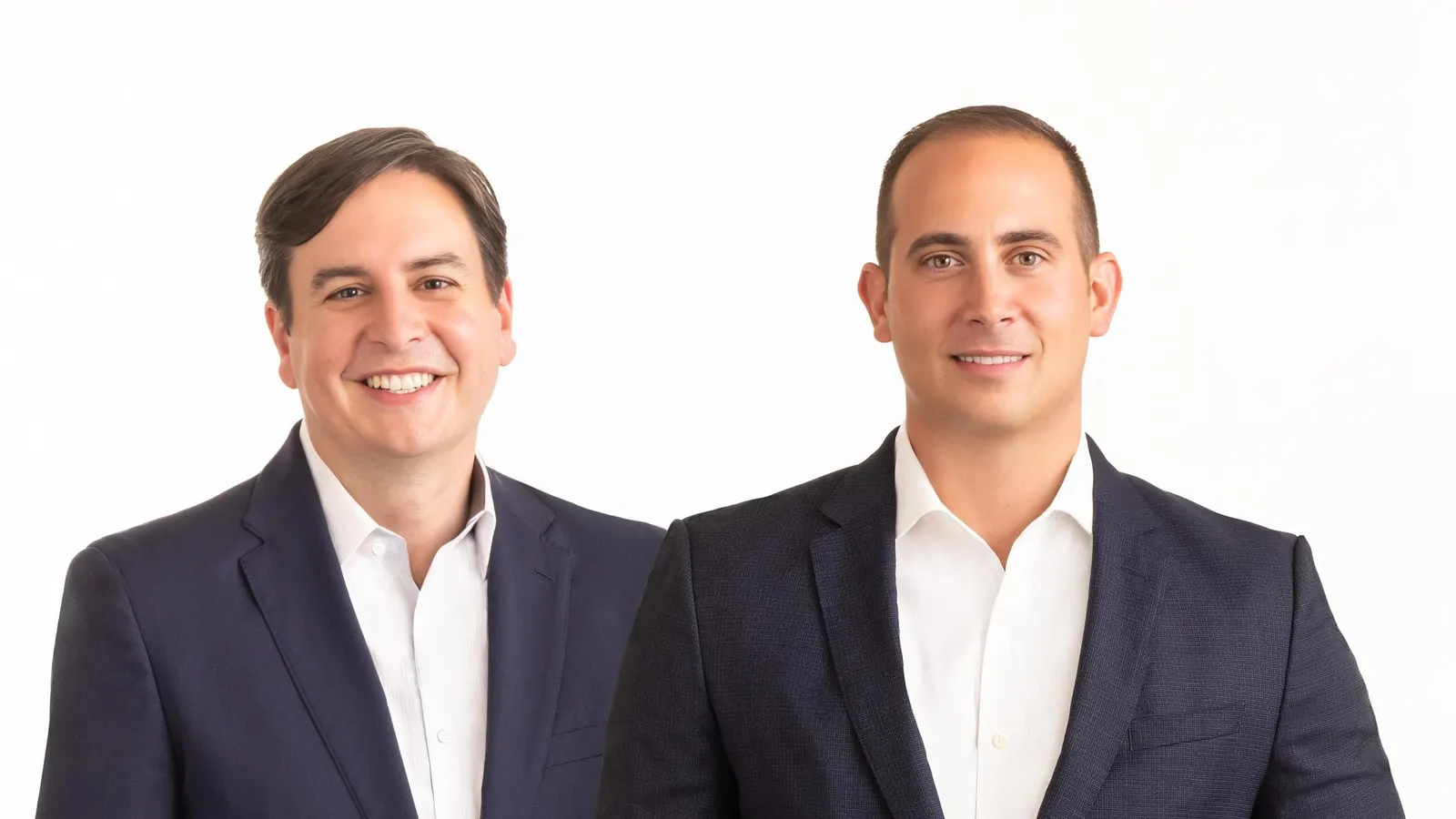
On a Saturday in late January, investment banker Alan Bressers received a call from a long-time friend and venture capitalist who had invested in Moltbook, a social network for AI agents that had launched just three days prior. Moltbook had gone viral overnight with more than one million visitors to its site in less than a week, mostly tech enthusiasts looking for a glimpse of the future, where machines message other machines in deep discussions without human interference. Even prominent AI architects like Elon Musk and OpenAI cofounder Andrej Karpathy were observers. “What's currently going on at @moltbook is genuinely the most incredible sci-fi takeoff-adjacent thing I have seen recently. People's [bots] are self-organizing on a Reddit-like site for AIs, discussing various topics, e.g. even how to speak privately,” Karpathy wrote on January 30 in an X post. It is no surprise that a flurry of companies wasted no time in approaching its founders with handsome offers. By the end of the weekend, Bressers and his business partner Brandon Hightower, cofounders of San Francisco investment bank Axom Partners, had negotiated and finalized a deal with Meta to buy Moltbook for an amount some estimate to be as much as $200 million. “The thing that made Alan and Brandon so effective was their repeat player context with Meta and several other players at the table,” venture capitalist and Moltbook investor Eric Wiesen says. “They really understood the motivations of the acquirers, what to ask for, what not to ask for, when to push, when to just take terms.” Axom Partners, an AI-focused boutique investment bank, was founded in 2023 by Bressers, 43, and Hightower, 40, after decade-long stints at investment bank Qatalyst, a technology mergers and acquisitions firm founded by Frank Quattrone that’s advised on $870 billion in deals since its inception in 2008. After working on high-profile transactions like Afterpay’s $29 billion acquisition of Square and Linear Technology’s $15 billion sale to Analog Devices at Qatalyst, the duo found a glaring gap in the market–specialists in middle sized and smaller AI-focused firms. Most of the established banks including Qatalyst, Goldman Sachs or Morgan Stanley would target the largest tech deals involving only the top 10% of VC portfolios. When Bressers started at Qatalyst in 2009, he took note of how under Quattrone’s leadership, the firm sought engagements on the leading edge of tech trends such as cloud computing. “AI was an important technology, but people weren’t acquiring based on that shift in tech yet. We knew this was going to start to happen and that it usually starts with smaller deals, so it stays off the radar of all the biggest firms out there,” Bressers says. In 2023, during one of the slowest years in M&A and just a few months after the launch of ChatGPT’s first model, Bressers and Hightower quit Qatalyst and started Axom.Their timing was good. Last year was a record year for AI M&A, reaching more than 1,600 deals worth $155 billion in disclosed value, according to Pitchbook data. Even more importantly for Axom, despite the mega-deals that made headlines in the last year—such as Google’s $32 billion acquisition of Wiz and Meta’s $14.8 billion acquisition of Scale AI—the majority of volume still remains in deals ranging from the $100 million to $1 billion size that Axom is targeting. Deal volume in this “middle-market” segment made up 49% of all AI M&A deal volume in 2025 at around $77 billion, according to Pitchbook. In June 2024, Axom closed its first deal selling analytics software Rockset to OpenAI. Since then, they’ve advised deals including OctoAI’s sale to NVIDIA for around $200 million, Voyage AI’s sale to MongoDB for $220 million, Eppo’s sale to Datadog for $220 million, Superhuman’s sale to Grammarly and Neptune.ai’s sale to OpenAI for $400 million. In less than two years, Axom has advised on 16 deals worth over $5 billion and are well positioned for what they predict will be a flurry of smaller deals that are less likely to attract government scrutiny.In the last four months, Meta, OpenAI and Anthropic have closed more than 10 acquisitions of AI startups, many of which were deemed to be aquihires, or acquisitions of talent. “M&A is one of the tools that all tech companies are trying to use to go faster,” Bressers says. “Buyers are willing to pay a premium today for what may be overvalued because they're making a bet on being the winner in AI.” That puts talented founders in a position with more negotiating leverage. It has also created the unorthodox mergers where founding teams are scooped up by giant companies for seemingly outrageous sums, leaving behind startups’ shells.“A lot of transactions right now are getting structured more as aqui-hires and the VCs don't like that because they're the ones that invested in these companies,” Hightower says. If the founders are getting great payouts from deals, but investors are not getting a return on their investment, then it hinders the success of the VC model. That means more aggressive negotiating: Hightower says the firm has on average nearly doubled the price from initial to final offer. Both Bressers and Hightower admit that their years at Qatalyst not only helped them hone their negotiating skills but perhaps more importantly helped them forge relationships with Silicon Valley's most respected denizens. Their reputation and results so far have captured the attention and started gaining the trust of Silicon Valley. “They don't necessarily do anything that other people can't do,” says Pat Grady, partner at Sequoia Capital. “They just do a good job of it—you have to tell the story, manage the process, make a million little decisions to get from end to end, and ultimately get people the outcome they want.”For founders like Rahul Vohra, whom Axom advised in selling his company Superhuman to Grammarly, bankers like Axom naximized the company’s value by bringing five new buyers to the table, helping him prepare for negotiations and providing reassurance during a process that more often than not falls apart. Likewise Axom introduced Tengyu Ma to a bevy of potential buyers when $20 billion (market cap) IT software company MongoDB approached him to buy his company Voyage AI. After convincing companies including Databricks and Snowflake to make competitive offers for the startup, Axom was able to negotiate a 90% increase on the initial offer to $220 million, marking MongoDB’s largest acquisition to date. From its offices in downtown San Francisco, Axom employs a dozen bankers and is engaged on 15 potential transactions currently. “We're talking to all the buyers on a very regular cadence so we know exactly what it looks like when an OpenAI or Anthropic or CoreWeave or Nvidia or DeepMind is actually interested in an acquisition,” says Bressers. In an effort to keep up with the frenetic AI deals market, the firm plans to add two new partners by the summer and three additional bankers by the end of 2026. Last May, Axom hired Buzz Black as partner from Morgan Stanley’s Menlo Park office where he advised on deals including Blackstone and Vista Equity Partners’ $8.4 billion acquisition of Smartsheet. Given the fee bonanza in AI deals, Axom competes for engagements with firms ranging from large boutiques including Evercore and Moelis to well established middle-market banks like Piper Sandler and Allen & Co. Sequoia’s Grady believes that as the AI euphoria and shopping frenzy wanes, Axom will need to go head-to-head with larger banks like Morgan Stanley and JP Morgan for engagements on mega deals. Says Grady, “This is the opportunity for them to prove themselves.” More from ForbesForbesAbu Dhabi’s Hidden Stake In One Of Venture Capital’s Biggest PlayersBy Iain MartinForbesWhy The Hormuz Blockade Is Good For Peabody EnergyBy Christopher HelmanForbesGeneralist Is Betting Its Robot-Training Gloves Will Usher In Robotics’ ChatGPT MomentBy Anna TongForbesAcclaimed Physicist And His Daughter Are Burying Tiny Nuclear Reactors A Mile UndergroundBy Christopher HelmanForbesThe OpenAI Graveyard: All The Deals And Products That Haven’t HappenedBy Phoebe Liu
Meet The Bankers Feeding Big Tech’s Insatiable Appetite For AI Startups
Nearly half of the $155 billion in AI mergers and acquisitions last year involved small and mid-sized startups. When Big Tech is deal shopping, San Francisco’s Axom Partners gets the call.
1,326 words~6 min read