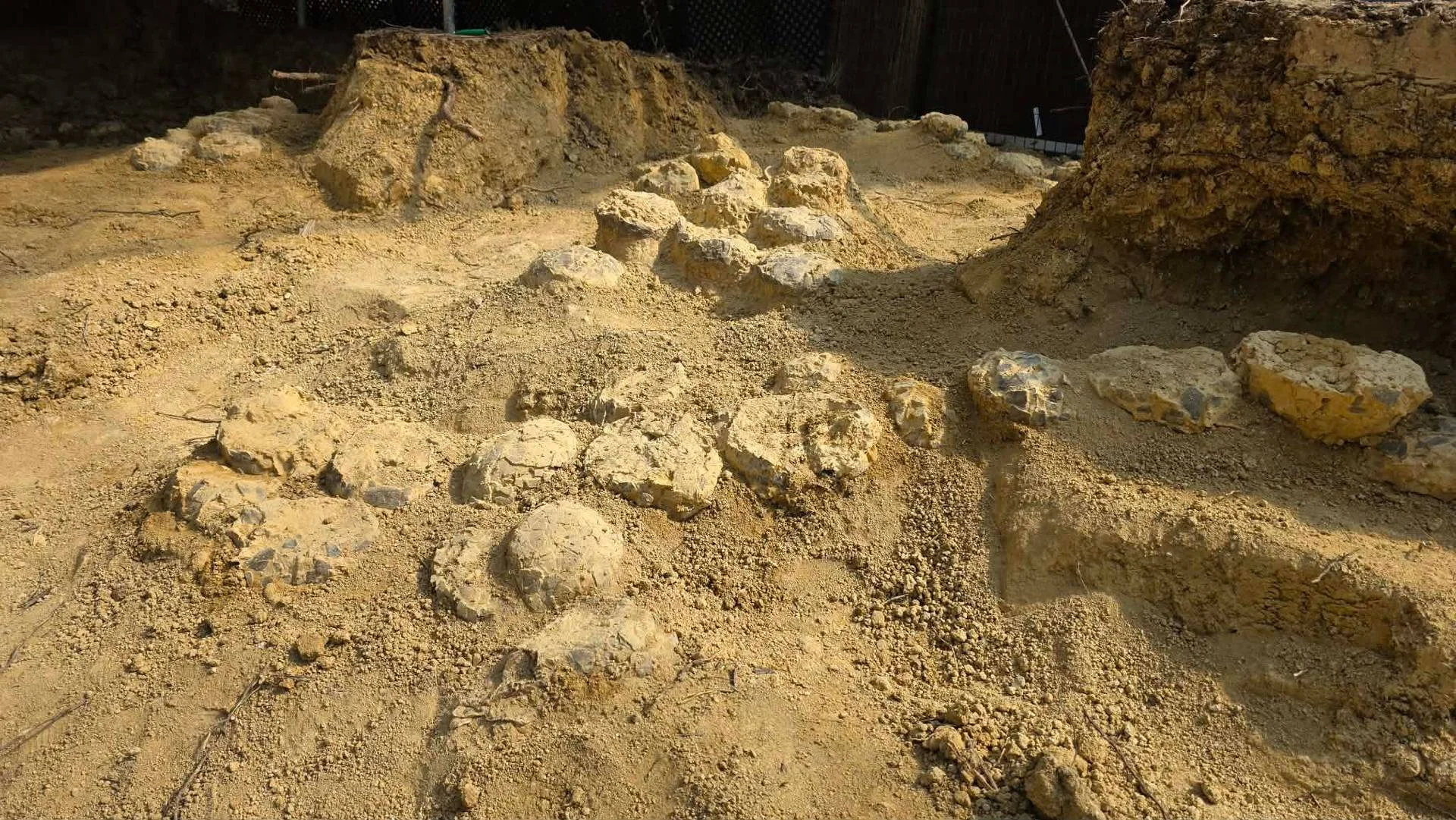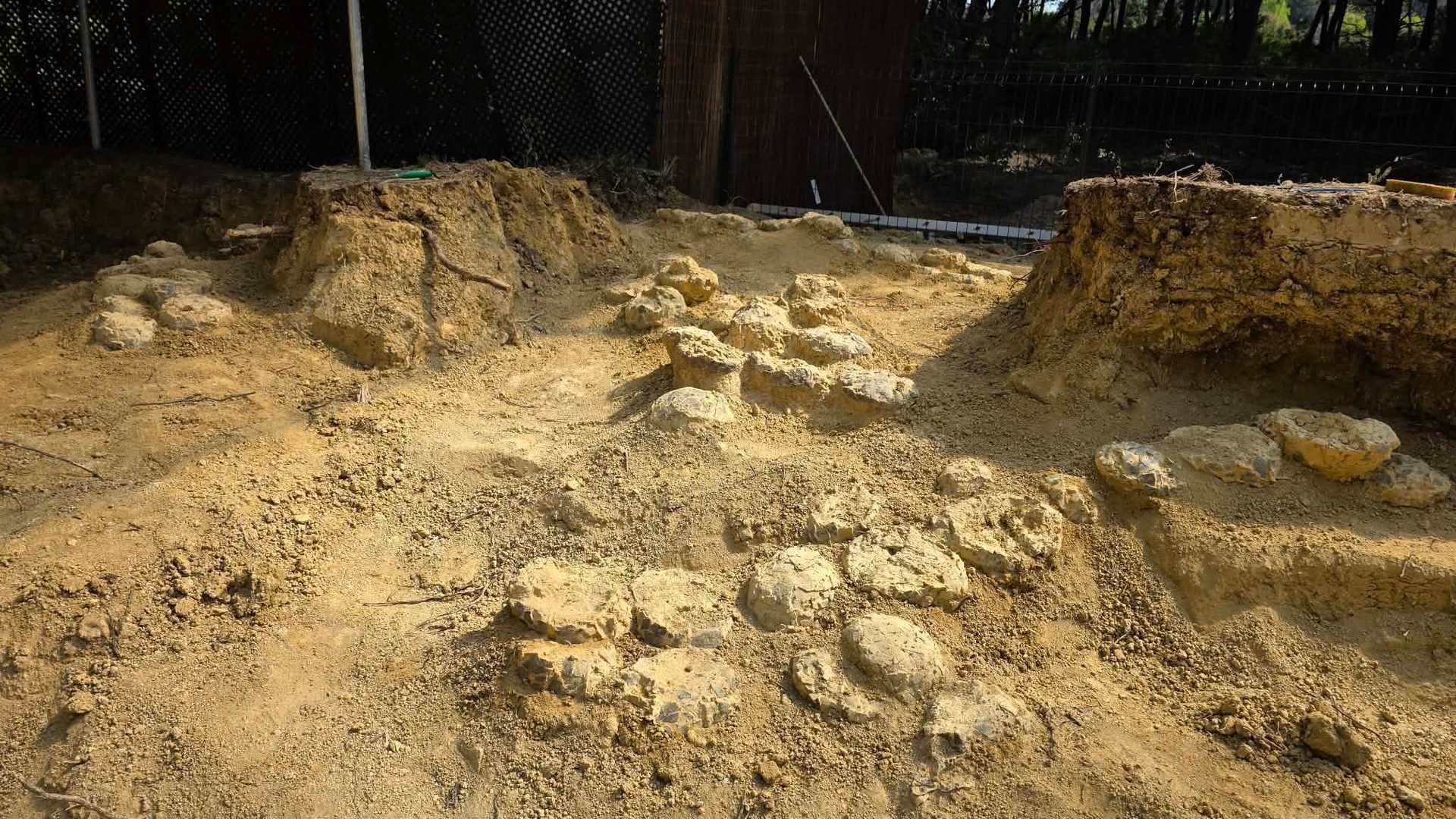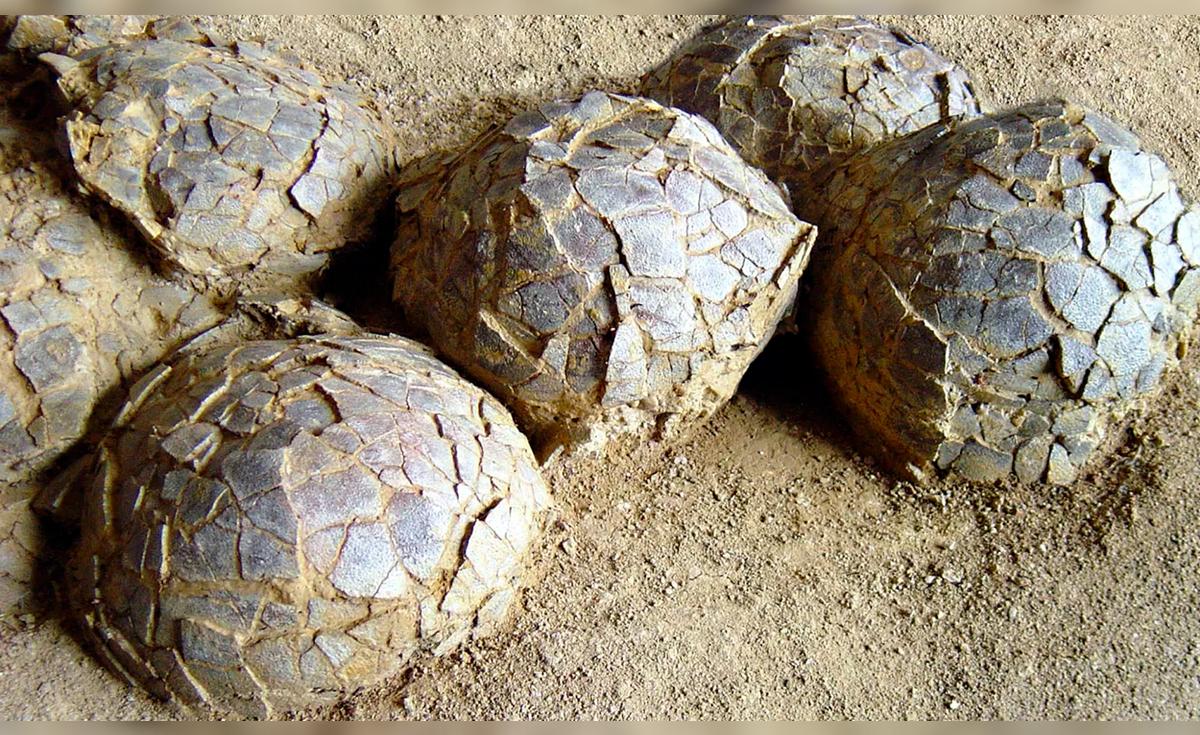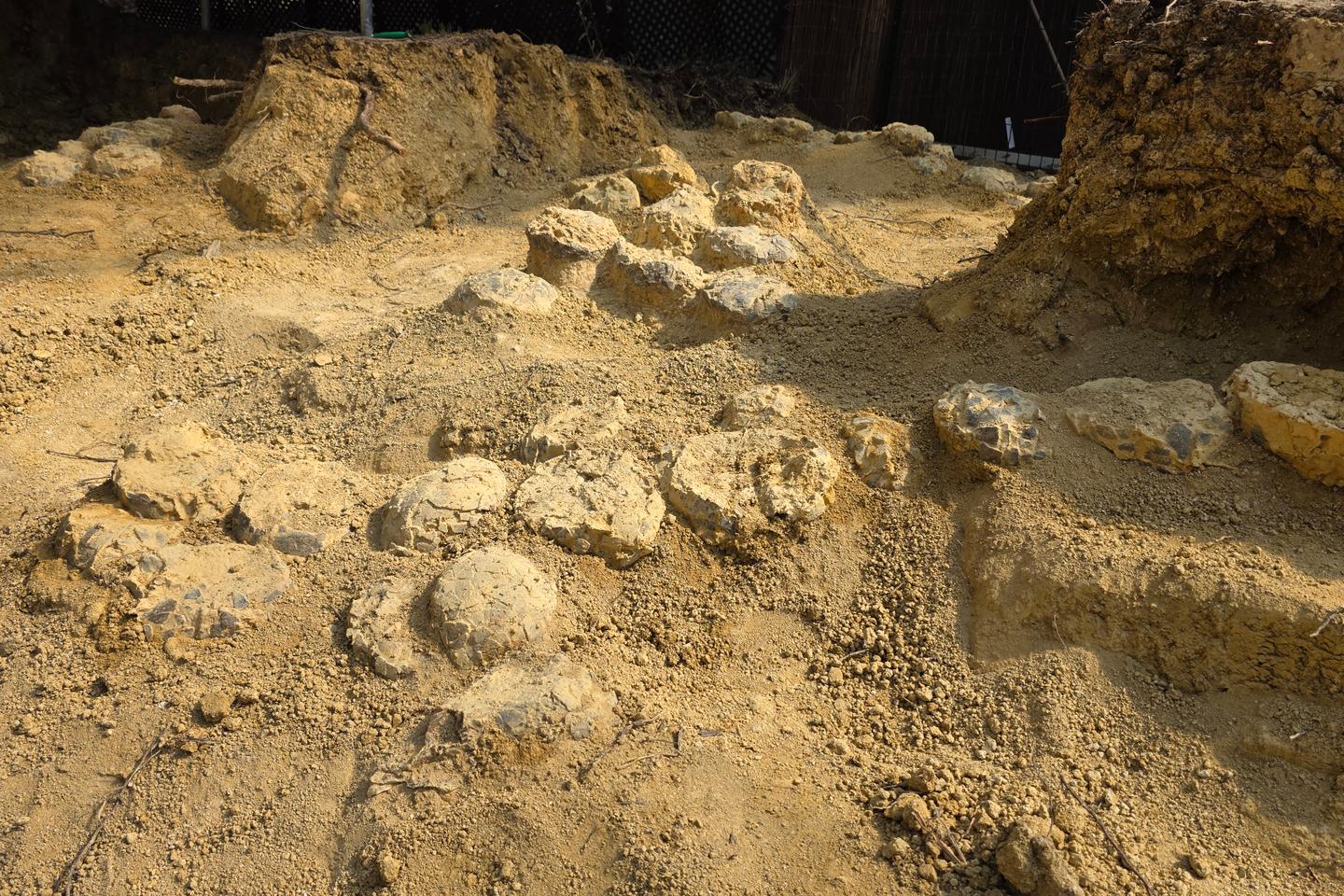
View of the excavation area in the Mèze region (Hérault), where about 100 dinosaur eggs from the end of the Late Cretaceous period were just unearthed. March 24, 2026. MUSÉE DES DINOSAURES DE MÈZE
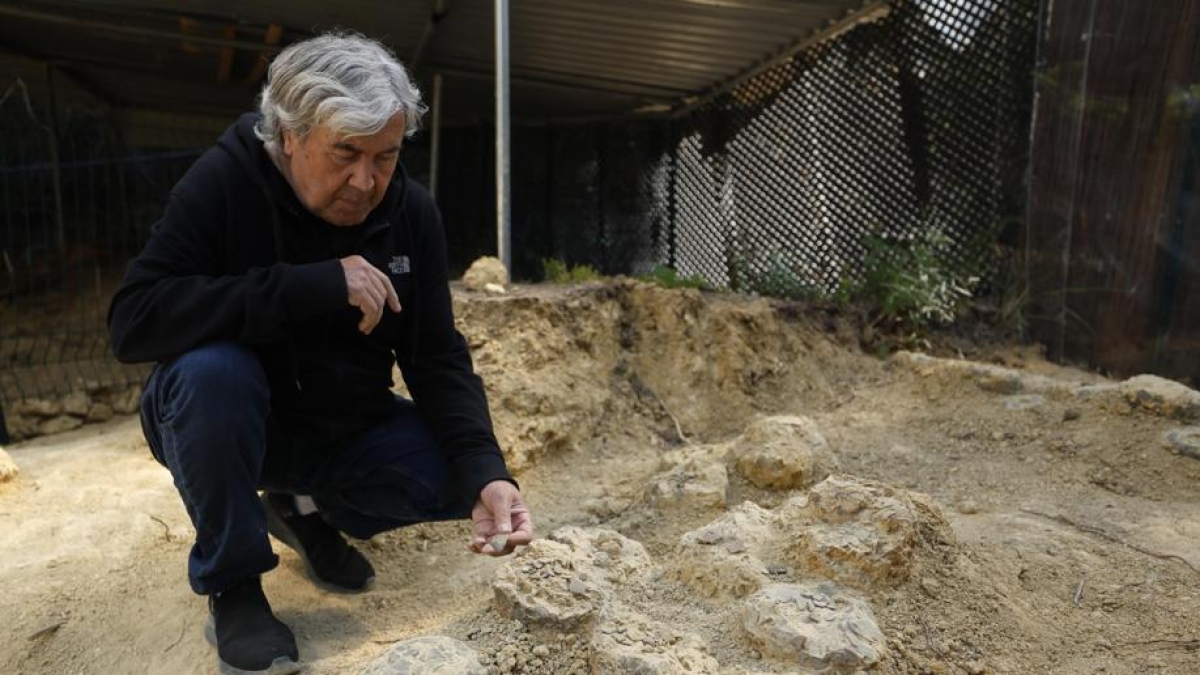
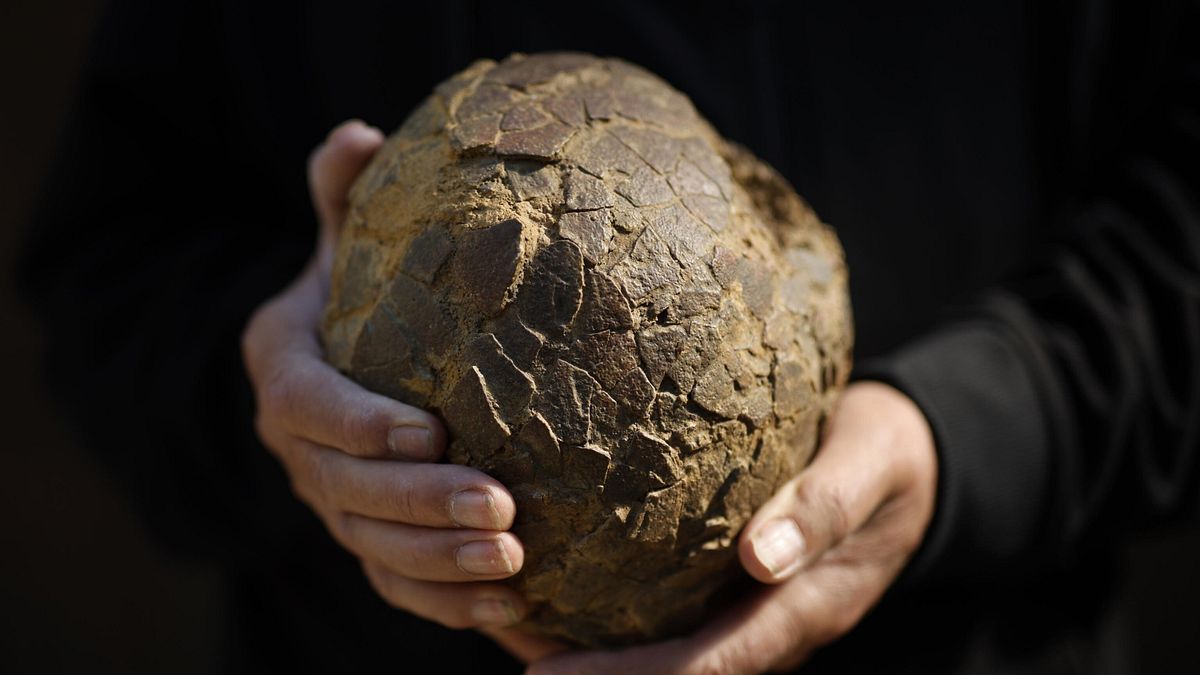
"For thirty years, we have found dinosaur nests with a few eggs, ten at most, but here, there are at least one hundred, and probably many more!" said Alain Cabot, geologist and paleontologist, owner of the Musée des dinosaures de Mèze (Hérault). He did not expect to uncover such a deposit when he launched a new excavation campaign in October 2025 within the six-hectare grounds of his park dedicated to these extinct animals.
"I had spotted some eggshells at the end of summer in this area that I hadn't really explored yet," he recalled. "We first found a nest that had been damaged by roots. But by digging a bit deeper, we came across rows of eggs." According to Cabot, this was an unprecedented configuration. Difficult weather conditions complicated the excavation work on the clay soil, which continued until just days ago. Another 50-square-meter area could prove just as rich.
It could rival other major deposits around the world – in Argentina, the Gobi Desert in China, the United States, or Spain – he said with delight.