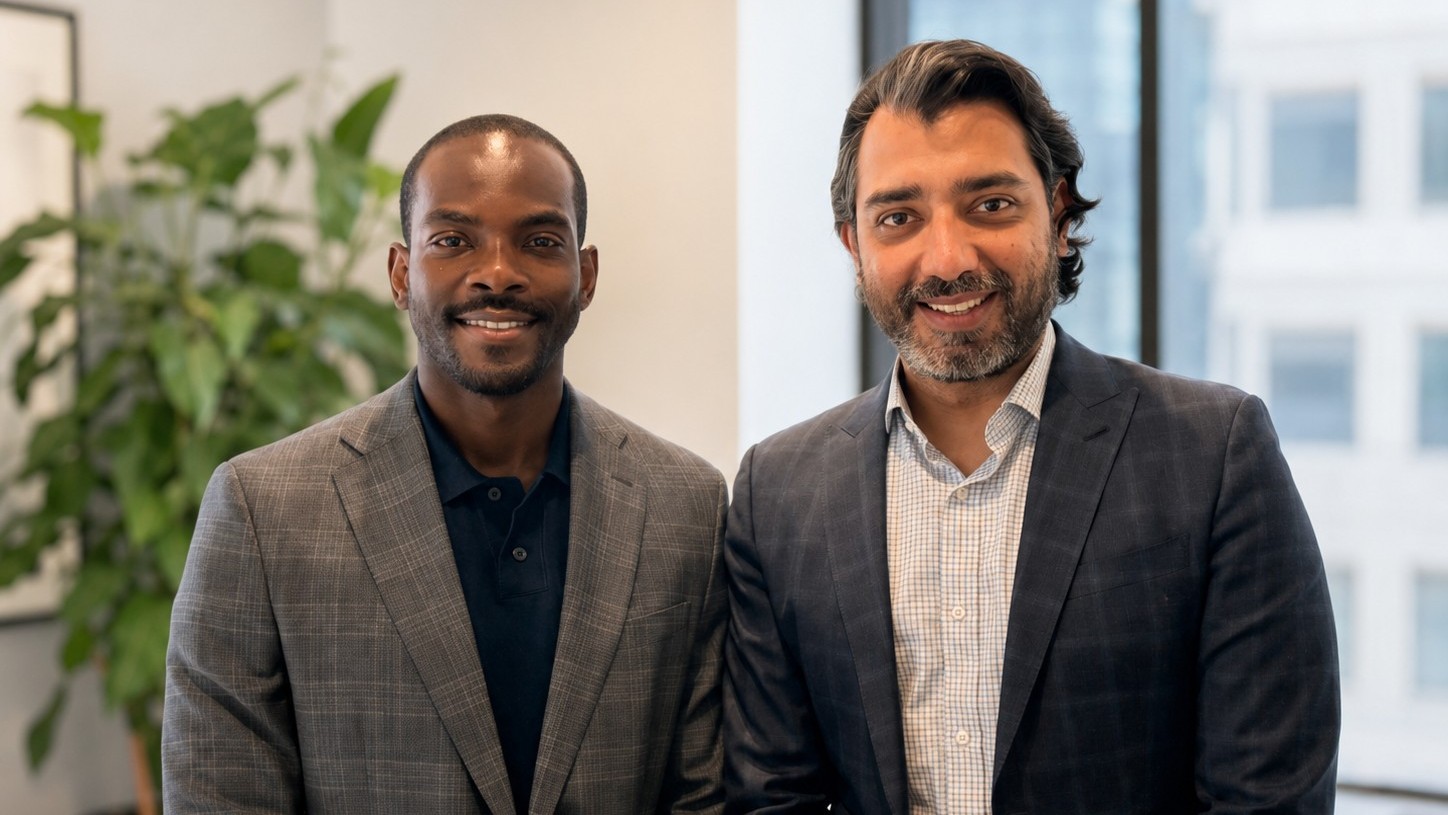
Think this is nice? It’s a version of the weekly Under 30 newsletter and would be even better in your inbox.Courtesy of ClaspHave you ever walked into a doctor’s office 15 minutes early, only to still be sitting in the waiting room long after your scheduled appointment time? Ever since the pandemic shook up the industry in 2020, health care organizations have struggled to maintain staffing levels to keep things moving. After all, workforce costs are high, and employee turnover is higher. But a solution is critical if we want to solve the 3.2 million-worker shortage in 2026 predicted by the American Hospital Association. Tess Michaels is here to help. The under 30 alumna and founder of Clasp pairs soon-to-be medical grads with companies looking to hire. Last week, the startup announced a $20 million Series B funding round led by Crosslink Capital and Digitalis Ventures. The funding has poured in because Michaels isn’t just a matchmaker. She’s developed a financial model that funds future clinicians’ school loans by linking them to jobs after they graduate. It’s like ROTC (or Reserve Officers' Training Corps, which trains students to become officers in the armed forces) for the healthcare industry, she says. After a Clasp student graduates and starts working at their matched company or organization, the employer will send loan repayments through Clasp’s platform for as long as they’re an employee, in addition to their salary. It might seem too good to be true: An employer simply pays back your student loans? But it works because retention is such a serious problem across healthcare, Michaels explained. When you look at nurses, for example, nearly half of them leave within two years of being hired, and other sectors of healthcare see turnover in the 20% range, she added. Sign-on bonuses are the current solve, but the math doesn’t work out reliably. “Studies show for every $10,000 you put into a sign-on bonus, you get like $2,800 back in value” she said. “But every healthcare system does it just because their peers do it, and it's kind of become the norm.”At first, Michaels just wanted to address the fact that the vast majority of federal student loans require a co-signer, which created a chicken-and-egg problem for people without wealthy parents or other financial support. So Clasp offers a structure where individuals can gain access to loans without requiring that co-signer, and instead using their future earnings as a proxy. Michaels worked with multi-billion dollar nonprofit organizations and bank partners to put up the money, and universities who understood their students had a high likelihood of getting a well-paying job to repay the loans. But that system pivoted when Michaels met with eyeglasses maker Warby Parker. They had a shortage of optometrists, and asked if Clasp’s relationships with schools across the country could help fill that gap. In a test with Clasp, they received triple the number of qualified applications to the roles they had available. “We realized we were onto something really special here, because now this is our mission on steroids,” Michaels said. “This is taking access to education and actually ensuring the outcome, and giving students the peace of mind to know they're going to be able to repay that loan.”Today, thousands of students have come through her startup’s doors, and Clasp now functions nationwide—with the likes of Northwestern Medicine, Memorial Sloan Kettering, Boston Children’s, as well as Warby Parker. Last year, they 4x’ed the number of health care employers using the platform.The new funding will go toward more expansion: They’re building the engineering and product teams that make the matchmaking technology, as well as the fintech and repayment functions. And they will keep investing in sharing the company’s mission—both through their network of TikTok influencers who are clinicians, and other brand marketing. “This fundraising round is really a special inflection moment for us,” Michaels said. “In health care, there are follower effects. Employers need to see case studies and proof to believe that it is worth taking the leap of faith to do something different than the norm—that’s what we’re doing here in a lot of ways.” See you next week,Alex & ZoyaWhat's New At The 2026 Under 30 SummitWith less than 4 weeks to go, momentum is building fast! We recently announced Multi-Platinum, Grammy-Nominated Artist, Don Toliver for a live concert performance. Plus, we've added new experiences from city crawls to night golf and pickleball. For those looking to take it further, registration is now open for the GA PLUS ticket offering additional experiences and exclusive access. Register now. Can't join us in person? Register for the virtual experience today.Inside The Race To Sell OnlyFansJose-Sarmento Matos/BloombergOnlyFans has been a money-printing machine for its secretive billionaire owner Leonid Radvinsky. Investors were puzzled by an obscure debt fund’s pitch to buy him out, until they learned of his terminal cancer diagnosis.The Local Spotlight: Forbes Under 30 ArizonaStemistry founder Dylan Capshaw with Phoenix Mayor Kate Gallegcourtesy of stemistryWe’re bringing you the scoop on a new Under 30 Local community member. Up this week: 20-year-old Dylan Capshaw, a 2026 Under 30 Arizona lister who runs Stemistry. Now operating multiple locations in Arizona, Stemistry is a retail concept that combines coffee, cocktails and a full flower bar where customers can create custom bouquets. (Coffee and carnations, anyone?)The following has been edited for length and clarity.You founded Stemistry at just 15 years old. What motivated you to get into entrepreneurship so early?I had been starting businesses long before I even knew what entrepreneurship was. I would identify a need, figure out a solution, and sell it. Stemistry was the first venture that really gained momentum, and it was incredible getting to learn so many lessons at such a young and influential time in my life.What motivated me most was the realization that I could create something from nothing. Once I saw that happen, I became obsessed with building, improving and growing.What almost broke the business in the early days?Employees.Stemistry started as an e-commerce business and grew from my bedroom, to my garage, to a warehouse, before eventually becoming a brick-and-mortar store. There were plenty of challenges during that growth, but none as difficult as hiring and managing employees two to three times my age at 15 years old.By the time I was 16 and still in high school, I had close to 10 employees across two different locations. Learning how to lead people older than me, set expectations and build a strong culture was incredibly challenging, but it also shaped me into the leader I am today. You’ve now scaled to multiple locations. What’s been your biggest learning lesson as a founder so far?Running one location is difficult. Running two locations is challenging. Running three or more locations feels like an impossible game of catch-up. Something is always broken, something is always out of stock and someone is always calling out. I find myself all over the Phoenix area every day, rushing to keep everything moving, and I love it.One quote I constantly remind myself of is: “Do what you do best, and delegate the rest.” It took me time to identify my strengths and weaknesses, but when I find an area where I struggle, I create a position and hire someone who excels there. As founders, we want to do everything ourselves. But the reality is that scaling only happens when you let go. Work on your business, not just in it.What’s a small decision you made early on that ended up having an outsized impact on your growth?Turning down the risk-analysis portion of my brain. Everyone told me that opening one new location per year was unrealistic, and they were probably right. But sometimes you have to be a little delusional to succeed.When you take big swings, you push yourself to perform at a higher level. Your competition is working every day to outpace you. If you don’t keep up, you fall behind. Sometimes, being a little delusional is exactly what you need to build something big.Would you expand outside of Arizona? What do you think makes the state attractive to young founders? Arizona has supported me for as long as I can remember. I got involved with my city’s Adopt-A-Road program at 11 years old. Later, I served on the Mayor’s Youth Council and continued working with local and state leaders throughout my journey building brick-and-mortar businesses.The City of Phoenix has consistently supported my growth, and Mayor [Kate] Gallego has attended grand openings and celebrated milestones along the way. That kind of support is incredibly motivating for young founders.I would love to expand out of state one day, but Arizona will always remain our base. It’s where everything started, and it’s a place that genuinely supports entrepreneurship.What’s something about Arizona’s startup scene that surprises outsiders?Phoenix is the fifth-largest city in the United States and one of the fastest-growing metro areas. With tens of thousands of new residents each year, strong job growth and thousands of new businesses opening annually, Phoenix has quickly become a hub for entrepreneurship and innovation.What surprises outsiders most is how fast things move here. Arizona has a strong pro-business environment, and local leaders genuinely want founders to succeed. Compared to other major cities, the ability to launch, build, and scale quickly here is a huge advantage.What advice would you give to young Arizonians who want to start their own business?Take advantage of the resources around you. Arizona has countless organizations dedicated to helping entrepreneurs get started, find mentorship and access capital.You’re living in one of the best places in the country to build something. If you’re willing to work hard, stay consistent, and take risks, the opportunities are endless.If a 15-year-old came to you wanting to build something big, what’s one thing you’d tell them to immediately stop doing?Stop comparing yourself to others. Comparison is the thief of not only joy, but also motivation. The internet is full of people showcasing success, and it can make industries feel saturated or impossible to break into.Every successful entrepreneur started somewhere. The hardest step is simply getting started. Tune out the noise, focus on your own path, and take action.What’s a trend in retail or hospitality that you’re adopting or closely watching? What’s one you think is overhyped? Retailers are increasingly adding coffee concepts because customers no longer just want to shop, they want to spend time in a brand’s world. Cafés increase dwell time, repeat visits and overall brand relevance. I think this trend will continue to grow, and it’s something worth watching closely.On the other hand, I think the “Instagram-first experience” is becoming overhyped. These concepts often generate buzz initially, but many struggle with repeat visits and long-term revenue. The industry is shifting toward experiences that provide real value such as community, events and meaningful engagement.
Clasp Raised $20 Million To Tackle Healthcare Burnout Through Student Loans
How this $50 million-backed education startup is fueling the healthcare industry. Plus, join us at the Forbes Under 30 Summit in less than 20 days.
1,797 words~8 min read