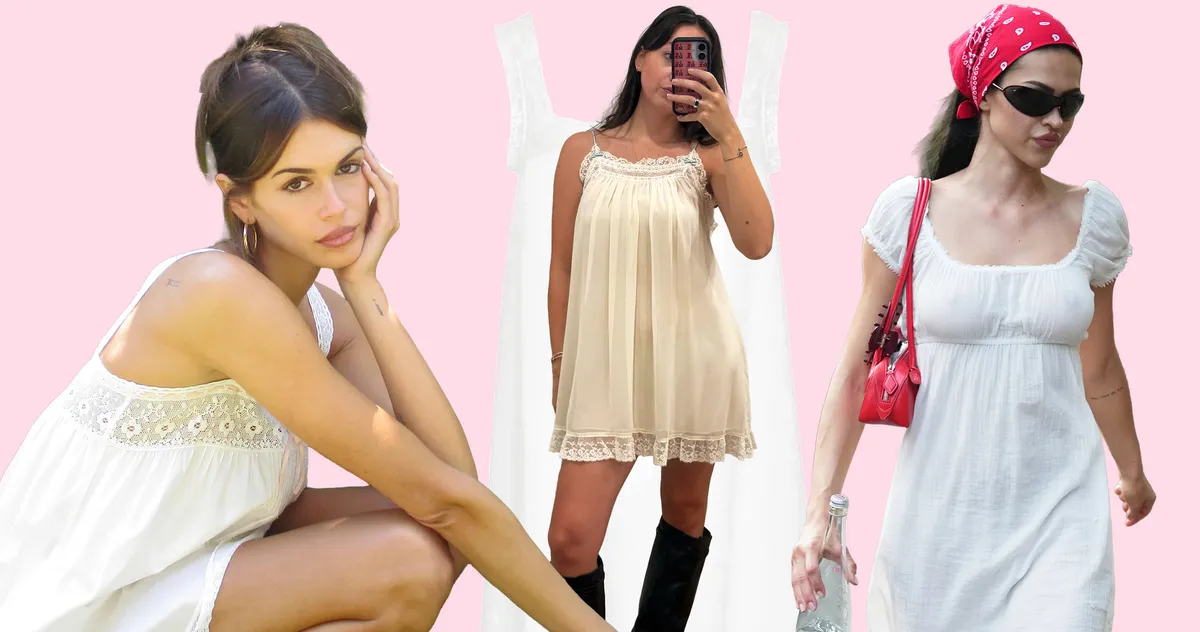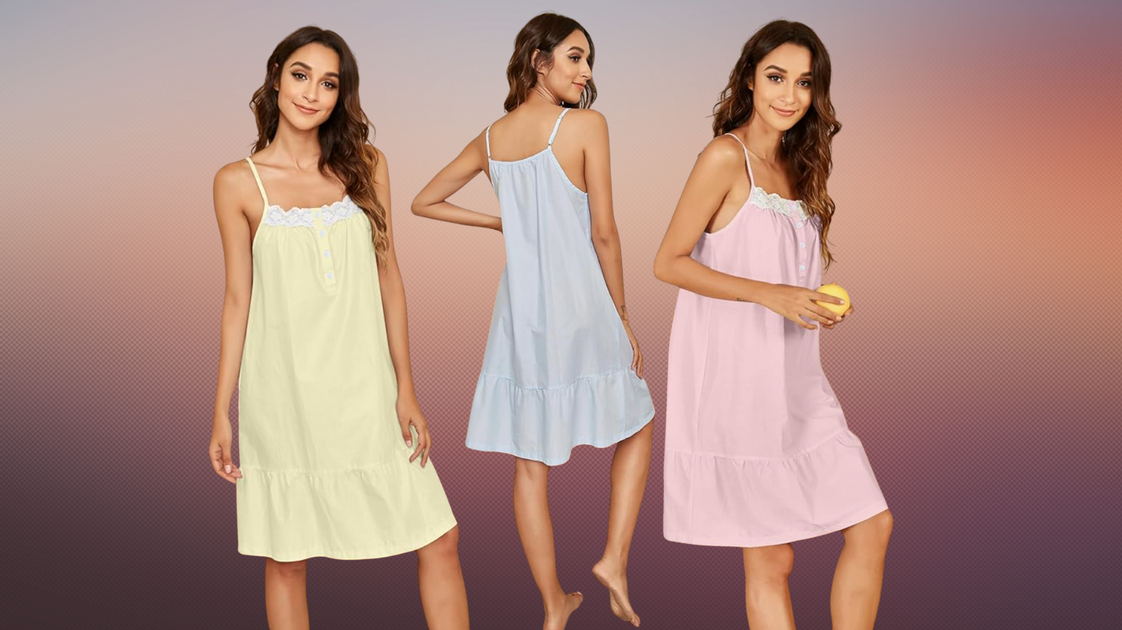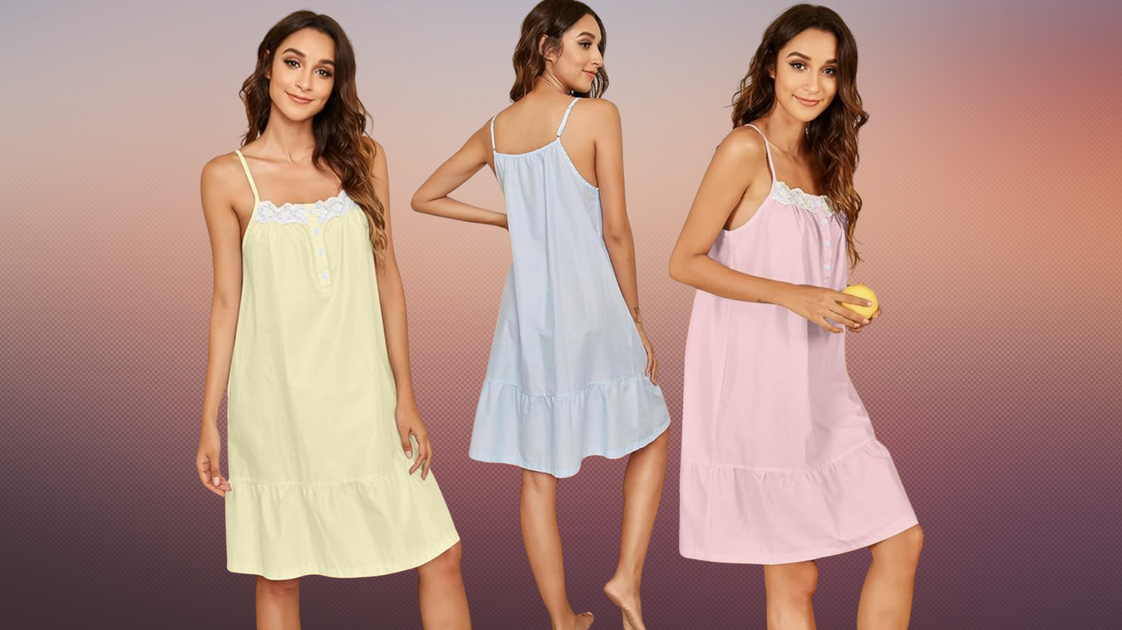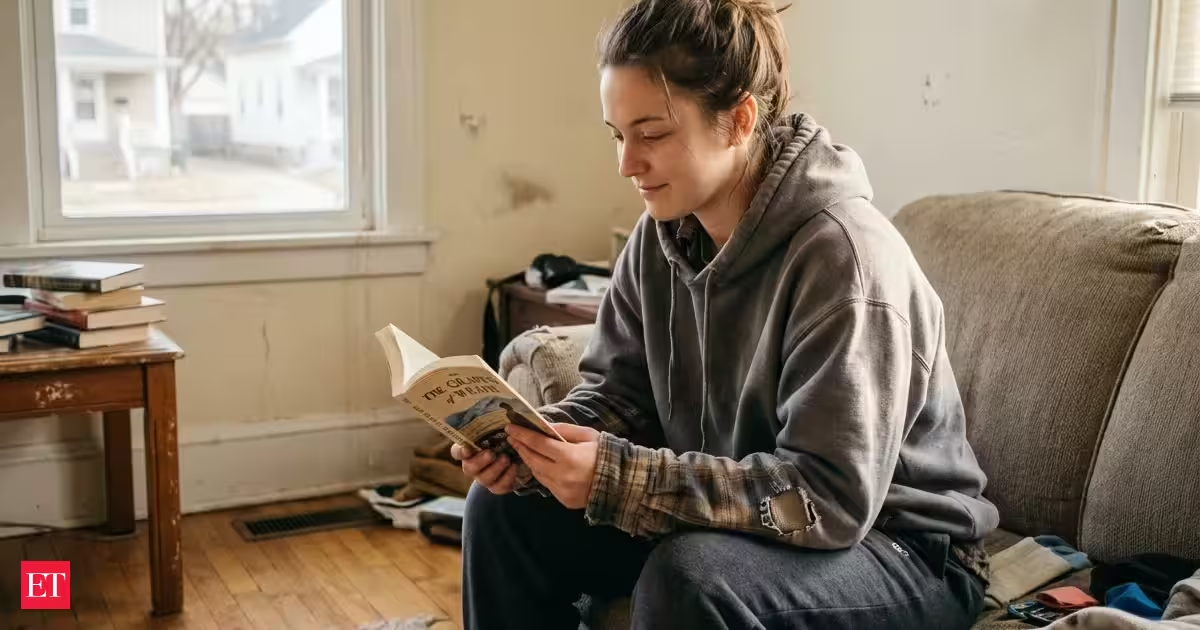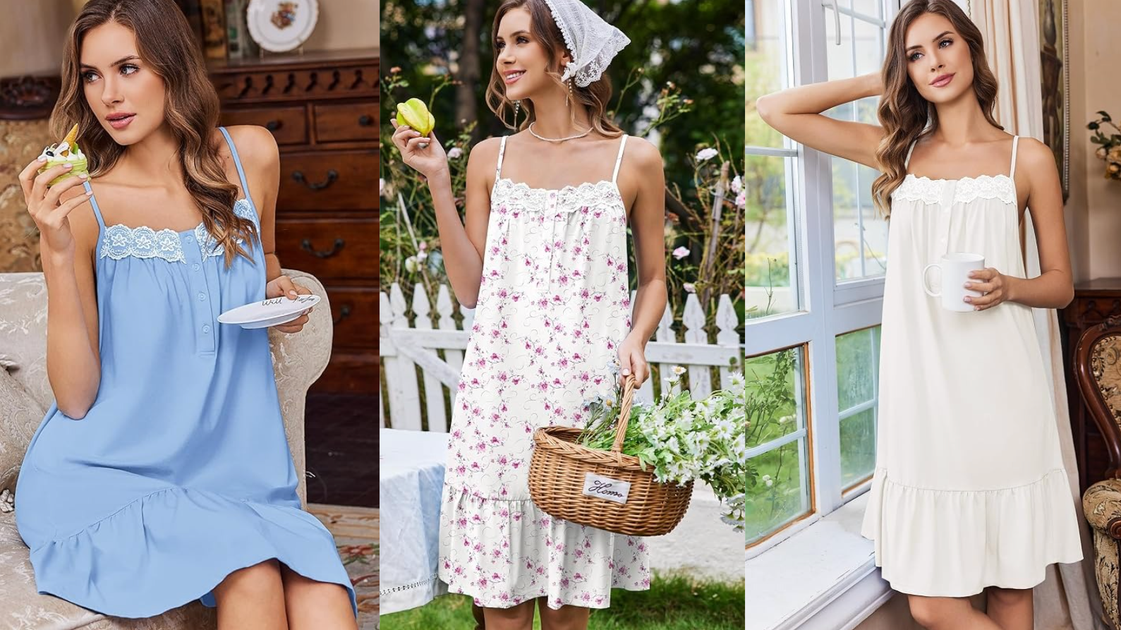
“Does she still wear the ‘give-up dress’?” my friend Matthew asked over beers.I wasn’t sure what he meant. I’d recently started dating Cece, and Matthew was dating her roommate. Seeing my confused face, he continued, “She wears a nightie like my grandmother would wear. It’s like she has given up trying.”Cece was wearing that nightgown. But who was I to judge? I was sleeping in whatever T-shirt and boxers I’d worn that day.A recent NapLab survey of more than 50,000 Americans found that 60% sleep in T-shirts. Only 22% opt for matching pajama sets. According to Jessica Meers, a behavioral sleep medicine psychologist, the choice of sleepwear isn’t usually about aesthetics. She identifies three patterns when patients describe what they wear to bed: comfort, closeness or control.heshphoto via Getty Images“During big transitions, people often renegotiate bedtime in two directions: more ritual for stability, or more simplicity for survival,” clinical psychologist Christina Chick said.“Sleepwear is usually less about style and more about what a person is trying to feel at night,” Meers said. People who sleep in whatever they wore that day are often showing depletion, not laziness. Even the small transition of changing for bed can feel like too much work, so they skip it. Then there are the people who cling to specific worn-out garments as if their sleep depends on it. And according to the experts, it might.One threadbare T-shirt from a 2008 dive trip in Belize has survived nearly two decades of wear. Its owner, Silvia Lupone, has no plans to retire it. Her partner wears coordinated sleepwear and thinks the shirt belongs in the rag bin. He “accidentally” moves it to the back of the drawer.“The shirt has been my companion through my divorce, career transition, and our relocation to Mexico,” Lupone told HuffPost. “It is not about fashion. It is about the specific way the cotton has softened over 18 years. It feels like a second skin. At our age, we have spent enough time being ‘on’ for the world. I need the version of myself that exists without any need to gain approval from others when the lights turn off.”There’s a clinical term for garments like Lupone’s shirt. Christina Chick, a clinical psychologist and instructor at Stanford University School of Medicine, calls them “portable safety cues.” Chick said, “Your brain and body learn, ‘When I wear this, I can soften and power down.’” Meers has her own term for this kind of attachment: “effort-off permission.” An old shirt becomes a kind of time stamp, Meers says, representing “a safer era, a relationship, a place, or a version of them that felt more grounded.” Sometimes the attachment isn’t rooted in emotional memory at all. It’s pure nervous-system conditioning. Nikki Lindgren grew up in rural Minnesota, where snapping turtles casually wandered through the yard, terrifying her. She became convinced one would end up in her bed, so she started sleeping in socks to protect her feet. Even at 42 and living in the San Francisco Bay Area, that childhood fear still dictates her bedtime routine.Darya Komarova via Getty Images“I’ve worked with naked sleepers who are deeply disconnected from their bodies and silk-pajama wearers with rich erotic lives," said Giulia Davis, a licensed marriage and family therapist.“Even if the room is hot, I have to wear socks,” she said. “I cannot fall asleep without them.” The socks must be basic, think 1980s cotton. Bombas versions with arch support don’t work, and socks that are too loose don’t work either.“I’m not even sure anyone’s ever cited a snapping turtle in a house, let alone a bed!” Lindgren said, laughing. But she still won’t take them off. Individual quirks are one thing. According to Giulia Davis, a licensed marriage and family therapist, sleepwear gets more complicated when someone else is in the bed. She sees a common dynamic in the couples she treats.“What looks like a pajama issue can sometimes reflect mismatched relational investment. One partner still makes an effort with intentional choices, while the other has defaulted to comfort-only mode,” Davis said. “The person in the decade-old shirt isn’t being lazy. They’ve decided comfort trumps being seen. The person in the matching set is still signaling desirability. When that gap widens without being named, it’s usually worth paying attention.”One of Davis’ clients had an entire sleepwear system she didn’t realize existed. Lace pajamas for one partner, a ratty Grateful Dead shirt for another, nothing for a third.“She literally had a pajama hierarchy,” Davis recalled. “Turns out the hole-ridden shirt wasn’t neglect. It was the relationship equivalent of showing up in sweatpants. Ultimate trust.”Then there’s the 9% of Americans who sleep nude, and the persistent assumption that they’re more confident and sexually liberated than the rest of us.For years, Carol Gee wore a nightgown to bed until menopause brought night sweats. At first, her husband interpreted the sudden disrobing as an invitation. After several nights, he admitted defeat and rolled over. That was 15 years ago. The nightgown never went back on.“I’m cooler and more comfortable,” Gee said. “Even the short nightgown used to creep up and get tangled. I keep a gown at the foot of the bed in the event of emergencies. And yes, every now and again, my husband gets lucky.”Gee’s reason is practical, not performative. Davis says it’s far more common than people think: “I’ve worked with naked sleepers who are deeply disconnected from their bodies and silk-pajama wearers with rich erotic lives. The question isn’t what you wear. It’s whether you’re listening to what your body needs, not performing what you think confidence should look like.”Sleepwear shifts at life’s turning points, too. “During big transitions, people often renegotiate bedtime in two directions: more ritual for stability, or more simplicity for survival,” Chick said. New relationships often prompt a sleepwear upgrade, with people returning to comfort once they feel settled. Parenthood pushes things further toward the practical, especially when comfort becomes less about preference and more about survival.“The surprising part is how moral we get about pajamas,” she said. “Clothing choices get interpreted through meaning and judgment, even when the real driver is nervous-system regulation or exhaustion. What looks like not trying can actually be someone finally listening to their nervous system.”Matthew made the “give-up dress” comment 12 years ago. Cece and I are now married. She still wears what she’s always worn to bed. I still wear T-shirts and boxers that have seen better days. Neither of us is “giving up.” We never were.
The 3 C's That Describe What You Wear To Bed Say A Lot About You — Which One Are You?
There's actually a clinical term for that worn-out old T-shirt you insist on wearing to bed.
1,080 words~5 min read