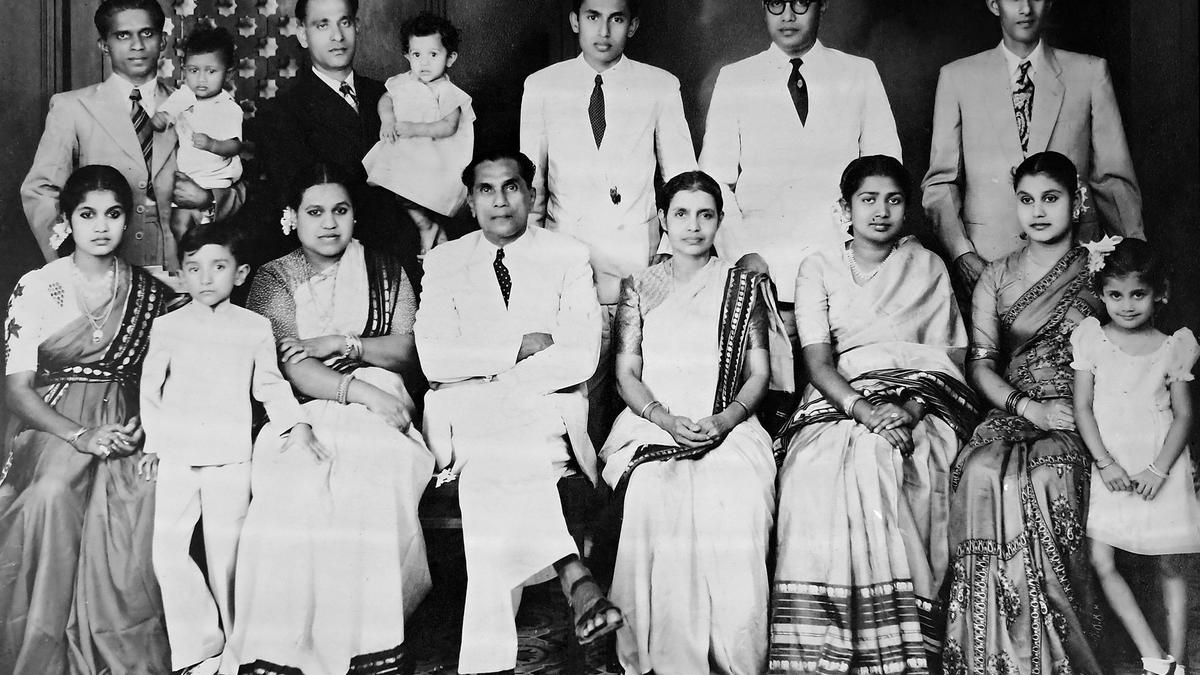
Few in Kerala recognises J. C. Daniel by his full name: Joseph Chellaiah Daniel. To most, he is simply J.C. Daniel, revered as the father of Malayalam cinema. The 2013 film Celluloid rekindled public memory of his life and struggles, with the evocative song, “Kaatre Kattre”, rendered by Vaikom Vijayalakshmi, lingering in the minds of the audience. Yet, across the border in Tamil Nadu, it remains little known that this pioneering figure of Malayalam cinema was, in fact, a Tamil who spent his final years at Agastheeswaram, a small town near Kanniyakumari. “Contrary to popular perception — and to his portrayal in Celluloid as a man neglected by his children and reduced to poverty — J.C. Daniel lived an honourable and dignified life in Puthu Veedu, his family home at Agastheeswaram,” says Janet Chandrika, his granddaughter and retired college professor. She recalls seeing him seated in a reclining chair.
Born into a well-to-do family of medical professionals, Daniel was the son of Gnanabaranam Joseph Daniel, a doctor trained in Calcutta and England, who served as Chief Medical Officer in Travancore. The family home, built by his father, resembled a miniature palace, and the family came to be known locally as the ‘Puthu Veedu Doctor Family’. Daniel was also an accomplished martial artist, and it was this passion that inspired him to make a film on the art form. From a young age, he trained in silambam and other martial arts, and his years in Thiruvananthapuram deepened his engagement with kalari traditions. He even authored a book titled Indian Art of Fencing and Sword Play. As Kumar Solomon notes in his biography J.C. Daniel-Vaazhvin Nizhal, Daniel eventually realised that a compelling narrative was essential for the success of the film and changed the storyline.