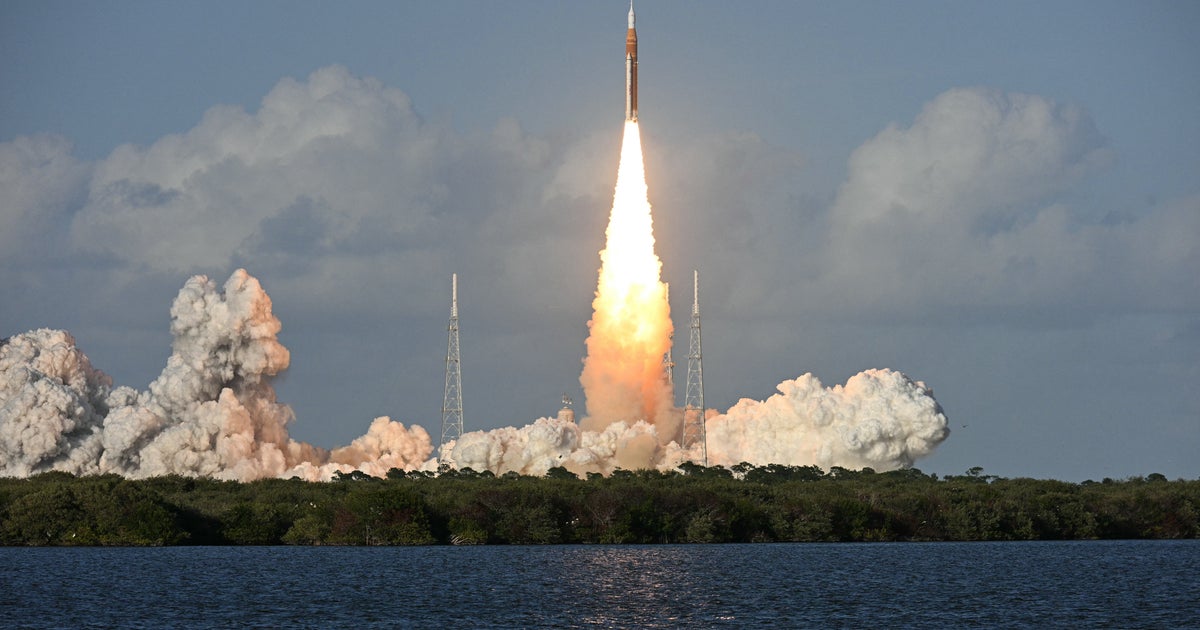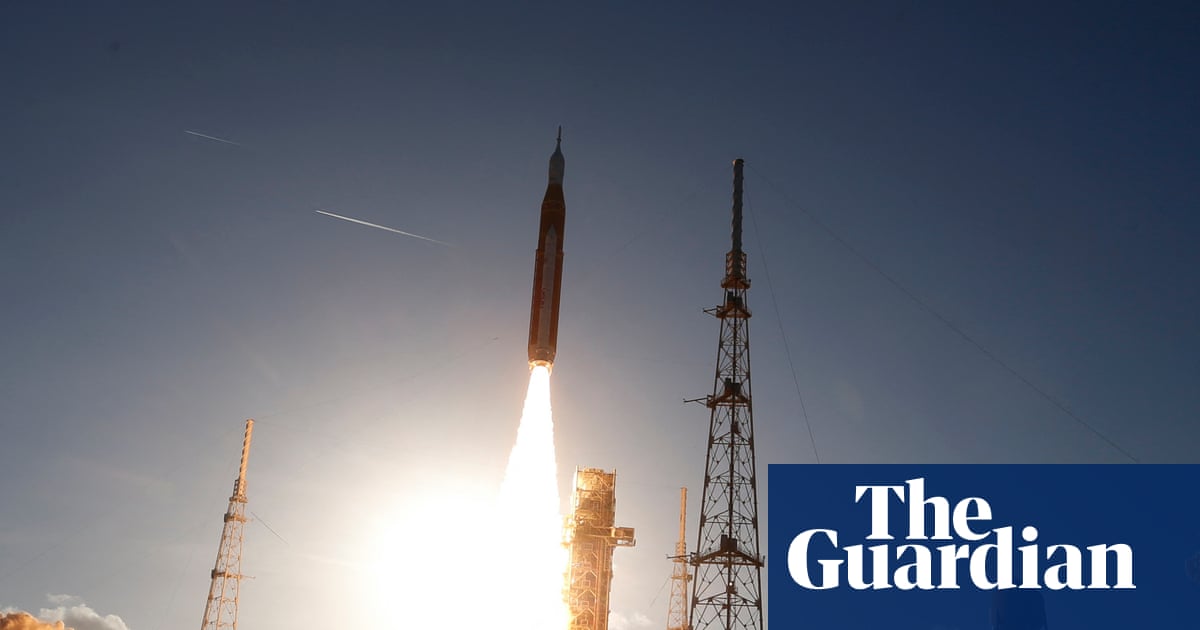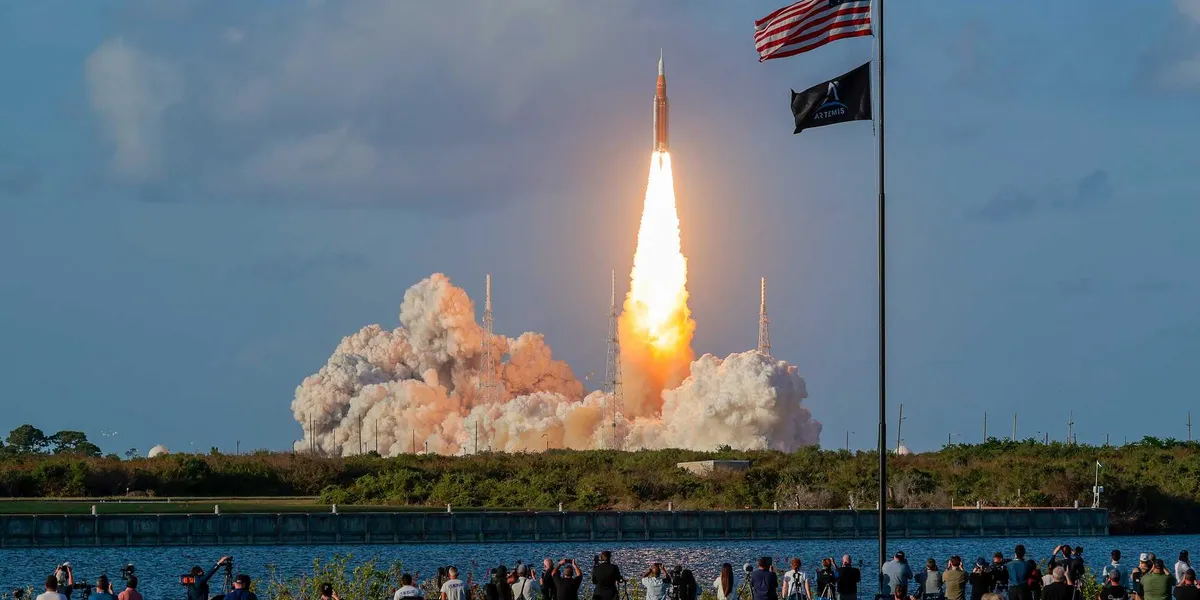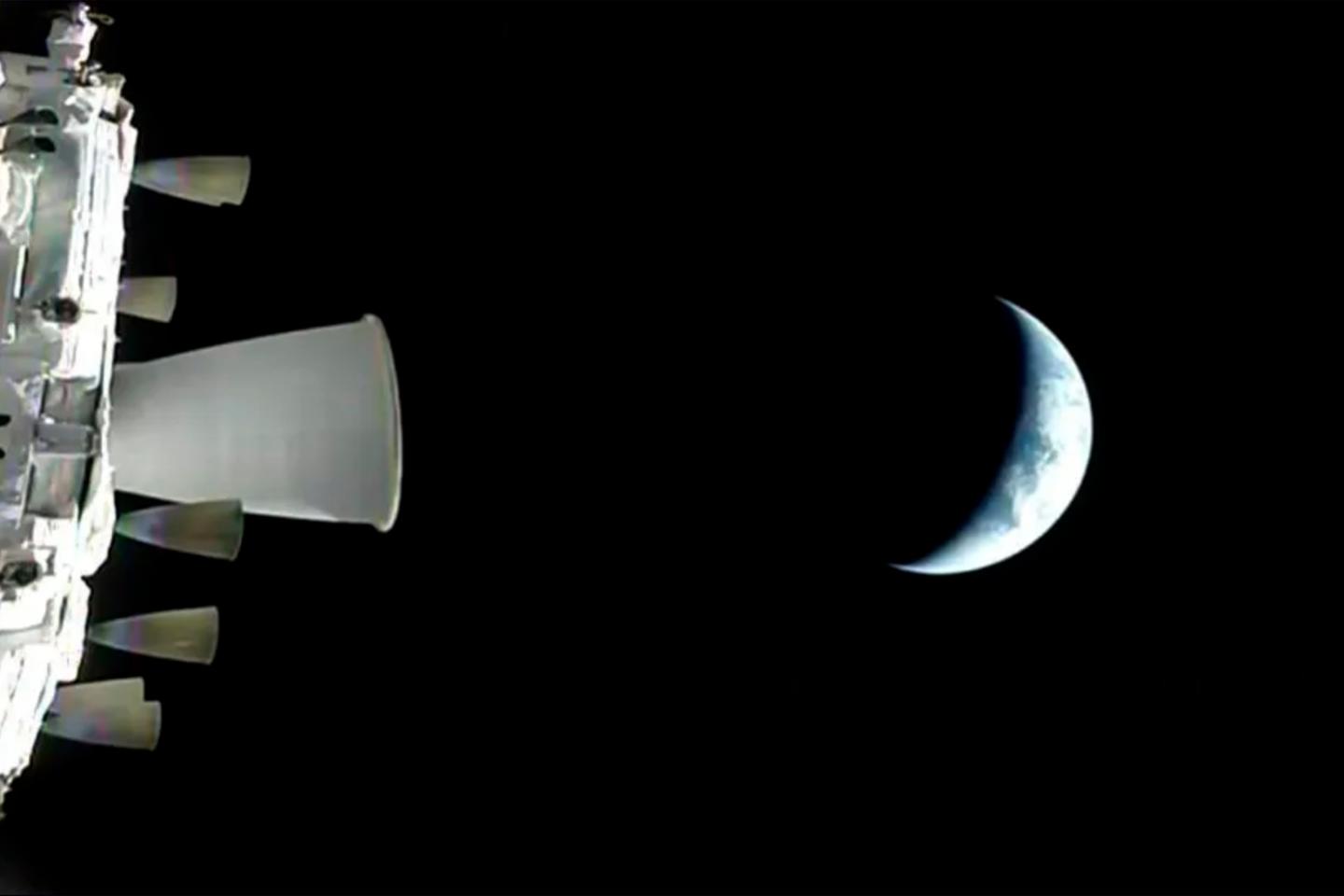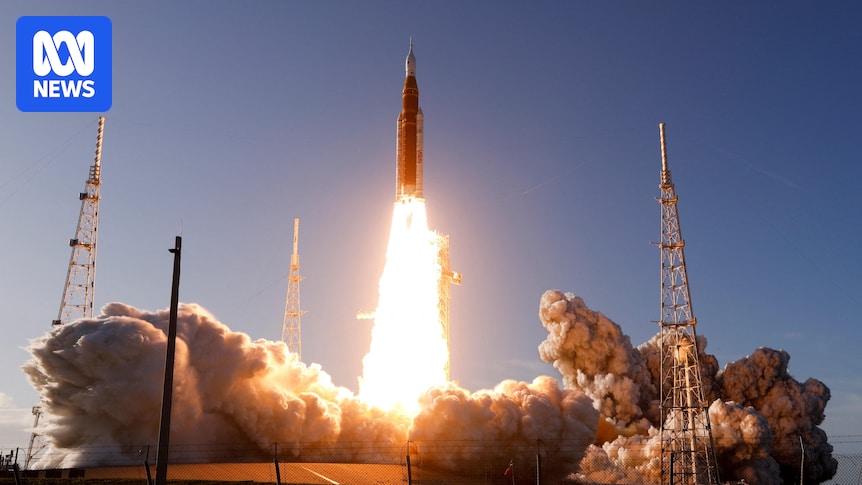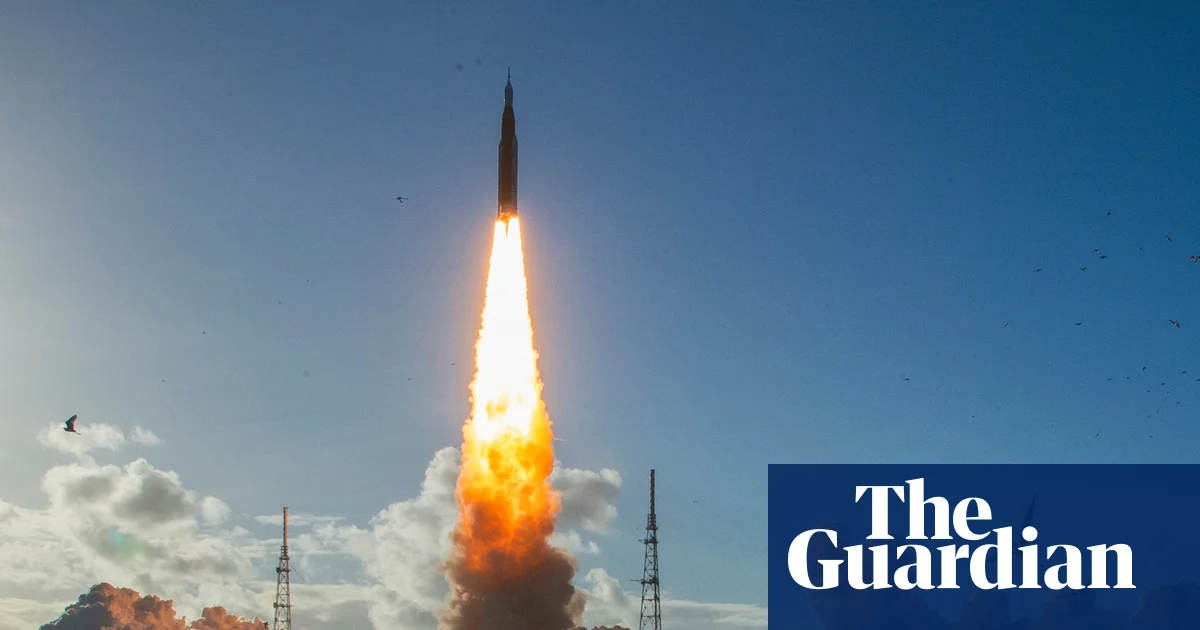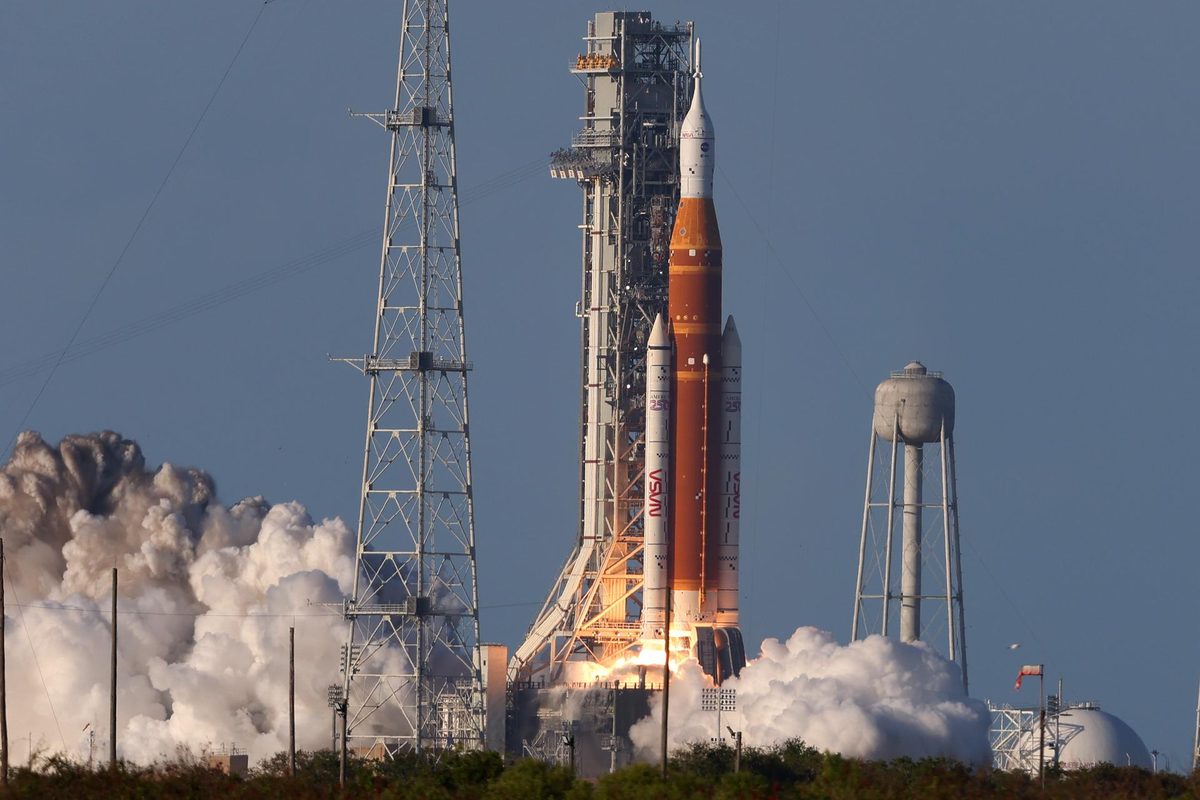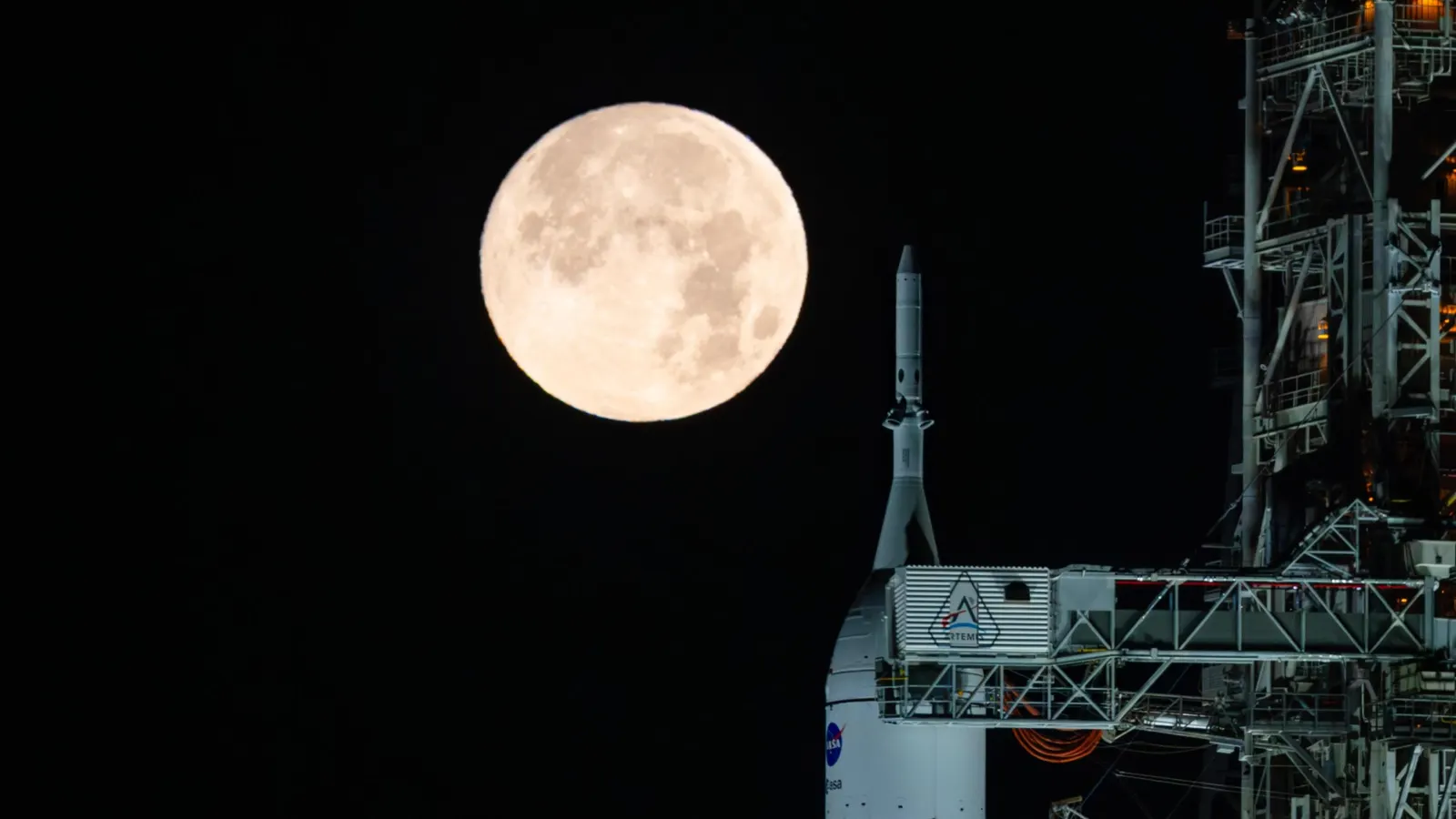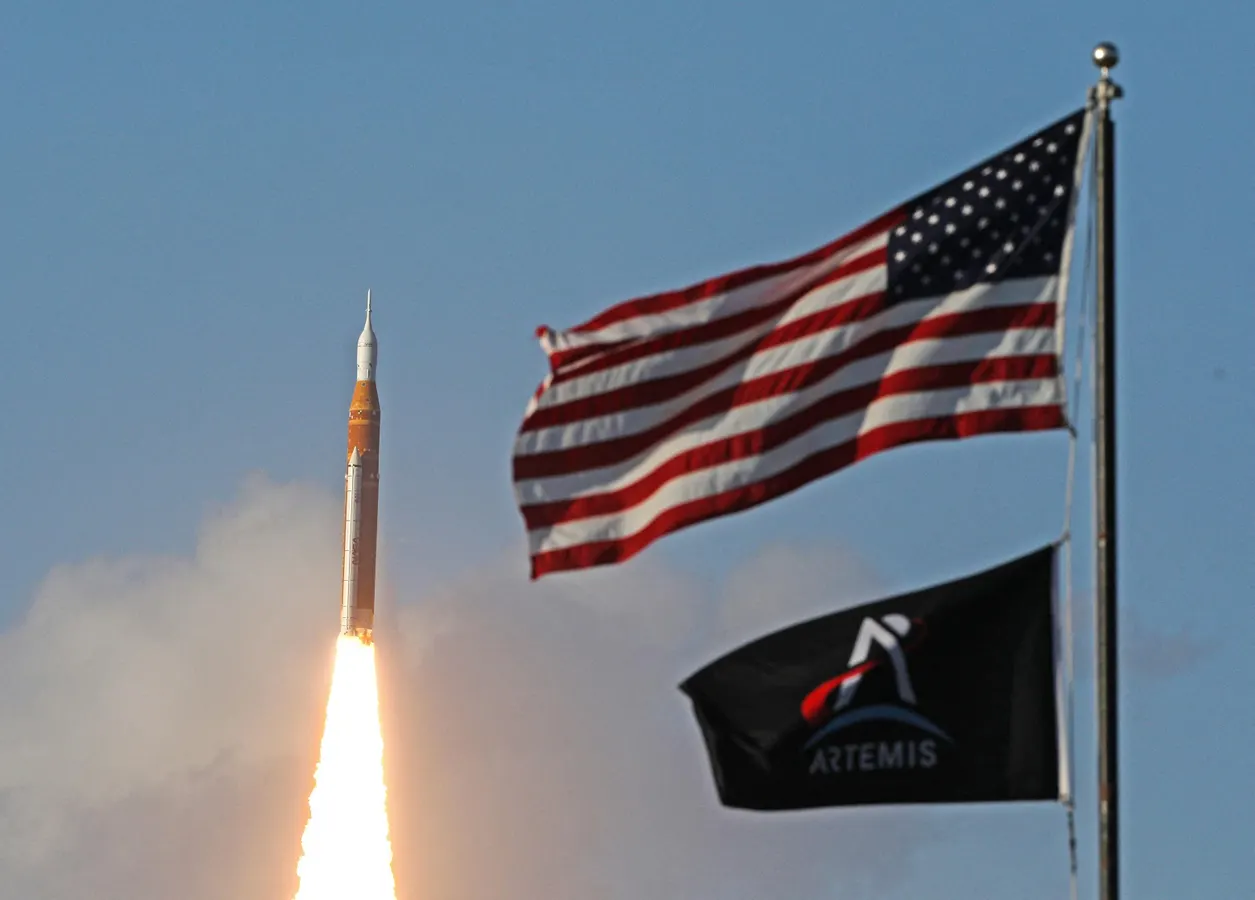
ToplineMore than 50 years after the final Apollo mission, NASA today launched Artemis II, the first crewed mission to travel around the moon, as the full pink moon rose. Lifting off from Kennedy Space Center at 6:35 p.m. EDT on Wednesday, April 1, atop NASA’s Space Launch System rocket, four astronauts in the “Integrity” spacecraft began a 10-day deep-space journey that marks the opening salvo in NASA’s plan to return humans to the lunar surface in 2028. The Artemis II crewed lunar mission launches at Kennedy Space Center in Cape Canaveral, Florida, on April 1, 2026. Four astronauts blasted off aboard a massive NASA rocket April 1 on a long-anticipated journey around the Moon, the first crewed lunar flyby in more than 50 years. With an intense roar that reverberated far beyond the launchpad, the enormous orange-and-white rocket carried three Americans and one Canadian away from Florida's Kennedy Space Center at approximately 6:35 pm local time, according to an AFP journalist onsite. "We're going to the Moon!" yelled a spectator. (Photo by Gregg Newton / AFP via Getty Images)AFP via Getty ImagesKey FactsArtemis II is a 10-day crewed flight around the moon, the first time astronauts have traveled beyond low-Earth orbit since the final Apollo mission, Apollo 17, in 1972.Four astronauts — NASA commander Reid Wiseman, pilot Victor Glover and mission specialist Christina Koch, along with the Canadian Space Agency’s Jeremy Hansen — will travel to the moon and beyond, returning to Earth to splashdown in the Pacific Ocean, just off the coast of San Diego. Koch will become the first woman to leave Earth’s orbit and visit the moon. The mission followed delays into April 2026 due to repairs on the rocket’s interim cryogenic propulsion stage. NASA’s following mission, Artemis III, scheduled for 2027, will test lunar landers and next-generation spacesuits in low-Earth orbit. It was originally scheduled to land astronauts on the moon. The first crewed lunar landing of the Artemis era is now targeted for 2028 during the Artemis IV mission, when two NASA astronauts will land at the moon’s south polar region.What Artemis Ii Will DoArtemis II is designed to test life support systems in NASA’s Orion capsule and the European Space Agency’s European Service Module (ESM) attached to it. After launch, the spacecraft will orbit Earth twice before executing a translunar injection burn, sending the crew on a sweeping arc around the moon and about 4,600 nautical miles (7,400 kilometers) beyond its far side — the farthest any humans have ever been from Earth — before returning home to splashdown off San Diego. While on their trip the astronauts will see the far side of the moon, witness a total solar eclipse and may also get a view of comet C/2026 A1 (MAPS). Infographic showing a schematic outline of the NASA's Artemis II mission voyage to take a crew of four in the Orion spacecraft around the Moon and back to Earth with the launch planned for early 2026 (Graphic by Jonathan WALTER and Paz PIZARRO / AFP via Getty Images)AFP via Getty ImagesWhat’s Next For NasaData gathered during the flight will be used by NASA engineers to inform Artemis III in 2027, which will focus on rendezvous and docking tests with commercial lunar landers from SpaceX and/or Blue Origin, as well as validation of life-support, propulsion and spacesuit systems in preparation for a landing attempt. That mission will set up Artemis IV’s historic 2028 landing attempt — almost 60 years after Apollo. Further ReadingForbesComplete Guide To NASA’s Epic Artemis II Mission — Launching This WeekBy Jamie CarterForbesMeet The First Female Astronaut To Go On A Moon MissionBy Jamie CarterForbesNASA Artemis 2 Moon Mission Delayed To April After Rocket IssueBy Jamie CarterForbesYour Ultimate Guide To Stargazing And Astronomy In 2026By Jamie Carter
NASA’s Artemis 2 Launches: 4 Astronauts Begin Moon Mission
NASA’s Artemis II has launched astronauts around the moon for the first time since 1972 — the first step toward a planned lunar landing in 2028.
627 words~3 min read