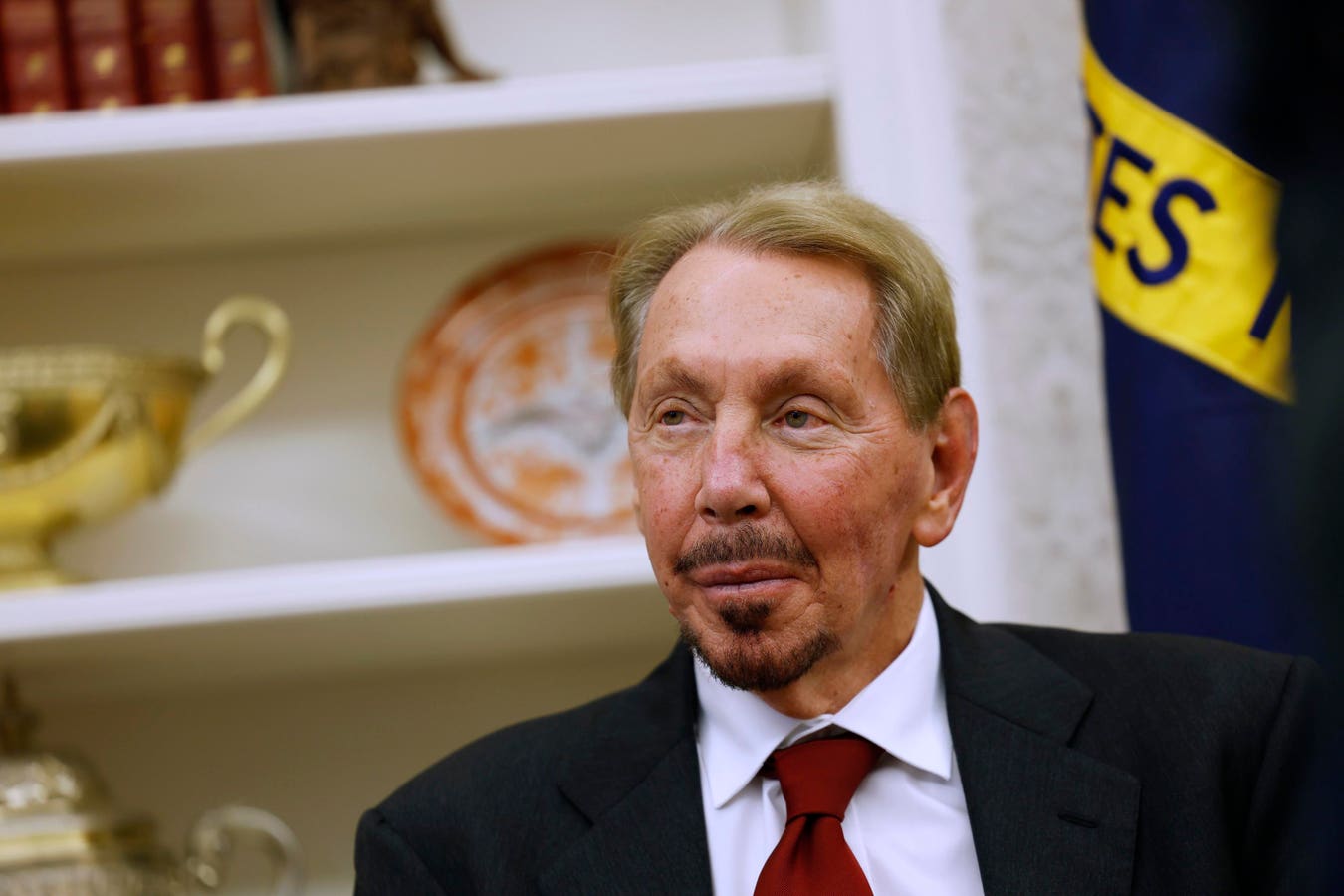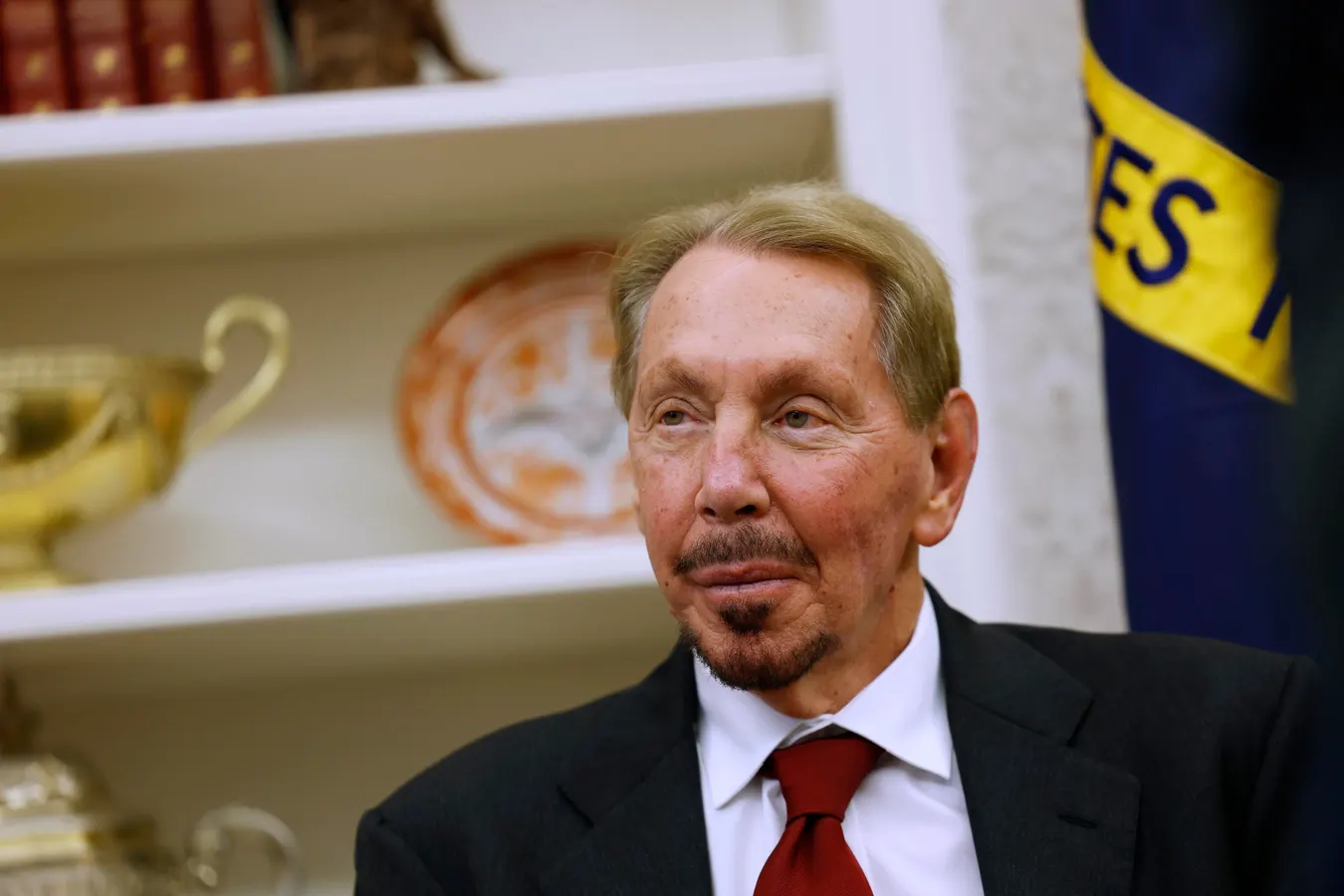
WASHINGTON, DC - FEBRUARY 03: Oracle co-founder, CTO and Executive Chairman Larry Ellison listens as U.S. President Donald Trump speaks to reporters in the Oval Office of the White House on February 03, 2025 in Washington, DC. After signing a series of executive orders and proclamations, Trump spoke to reporters about a range of topics including recent negotiations with Mexico on tarriffs. (Photo by Anna Moneymaker/Getty Images)Getty ImagesOracle stock has taken a brutal plunge — losing 57% of its value since hitting a 52-week high of $345.72 last September.On March 31, bad news spread to Oracle employees when the company announced plans to slash up to 30,000 jobs — nearly 19% of its global workforce.Why is Oracle creating misery for so many workers? The company is investing billions of dollars in AI computing centers and needs cash to pay for them. Cutting these jobs should free up as much as $10 billion in incremental free cash flow.Cost cutting will not enable the company to beat growth expectations, and it looks to me that Oracle stock will likely fall further.This raises three questions.Why Has Oracle Stock Fallen So Far?The stock has crated because investor sentiment has changed. While last fall traders feared missing out on the revenue growth potential of AI data centers, they have since refocused on their fear of Oracle’s shrinking profit margins and its sudden, severe cash crunch.MORE FOR YOUOracle’s cloud infrastructure unit is nowhere near as profitable as rivals’. For example, whereas competitors like Amazon Web Services enjoy gross margins in the 30% to 35% range and Microsoft Azure’s gross margins are higher than 40%, Oracle’s cloud infrastructure unit is operating at a 14% gross margin due to price cuts to win new contracts, as I previously noted.Along with the shrinking profit margins, Oracle is boosting significantly its capital expenditures — aiming to spend $50 billion in 2026 on graphics processing units and other data center assets, according to CNBC.What’s Really Driving Oracle’s 30,000 Job Cuts?Oracle’s decision to cut 30,000 employees is due to a shortage of cash spurred by the declining margins and rising capital expenditures. The move is driven by “a cash crunch from massive spending on data centers, which Wall Street expects will keep Oracle’s cash flow negative for years, forcing the company to seek alternative ways to preserve liquidity,” Bloomberg reported.Oracle’s predicament was made worse by a drop in equity and debt market demand for the company’s securities. After raising $50 billion in debt and equity in early 2026, Oracle has found banks are no longer willing to finance AI data center buildouts — effectively doubling the company’s borrowing costs, according to Monday Momentum.Oracle management appears locked into the idea that taking on more financial risk is critical to diversifying away from its core software business into AI cloud services. To be fair, Oracle has a massive backlog — which soared 359% to “$455 billion following an agreement with OpenAI worth over $300 billion,” per CNBC — and needs the cloud services capacity to fulfill those contractual commitments.While the job cuts are anticipated to save $10 billion, it remains to be seen whether Oracle will be able to earn anywhere near the profits seen by AWS and Azure.Is Oracle Stock A Bargain Now?In my view the bear case is compelling — hence the shares could fall more. How so? As lenders become more nervous, the risk of problems in building out infrastructure looms large. Delays in getting AI data centers online could add to crushing interest payments.Moreover, the cost of breaking leases for office space in Austin, Texas and Redwood City, California — where many of those 30,000 laid-off employees work — will be a drag on Oracle’s balance sheet.Finally, Oracle’s low AI data center margins are not likely to increase unless the company can compete on quality rather than price. With its financial condition coming into question, Oracle’s lower prices may not be enough to sway customers to switch to Oracle from AWS and Azure.To be fair, it is possible the stock has declined to reflect all these risks. However, with OpenAI cutting costs in anticipation of an initial public offering, it does not inspire confidence to know that $300 billion of Oracle’s backlog is from a company forecasting $14 billion in 2026 losses, per Yahoo Finance, that is slashing its costs by shuttering its AI video generation tool Sora.
Oracle’s $10 Billion Bet On AI Sends Shares Down 57% And 30,000 Workers Out The Door
Oracle’s stock sinks 57% as the company cuts 30,000 jobs to fund a $10 billion AI push, raising concerns about cash flow, margins and future growth.
728 words~3 min read