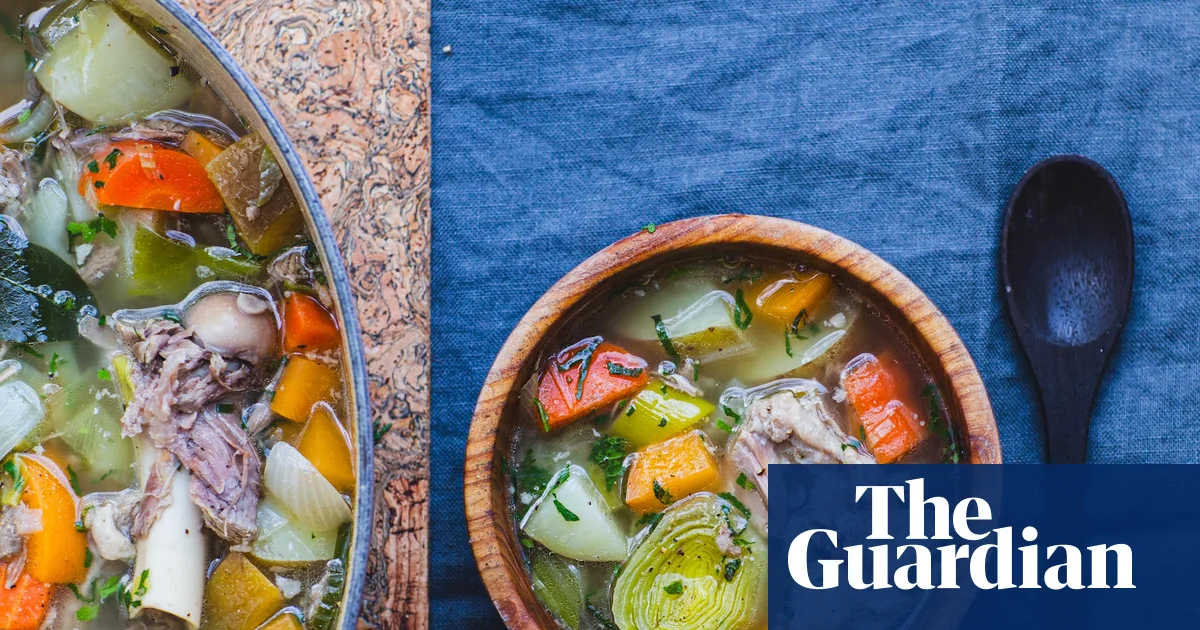
Cawl is Wales’ gift to the world of thrifty, slow-cooked broths and, like all great peasant dishes, it’s seasonal, versatile and immensely practical. A few years ago, Food & Drink Wales invited me to create two food sustainability toolkits, one for hospitality and one for the public, with both celebrating Welsh produce and recipes. This led me to explore Wales’ national dishes and discover cawl (or lobscows, the northern Welsh name for the dish) properly for the first time. Inspired by Welsh culinary legends Dudley Newbery and Tomos Parry’s recipes, it’s the perfect way to turn lamb leftovers, or even just a bone, into a hearty meal.Welsh cawl with leftover lambThe magic of cawl lies in its sheer simplicity. Lamb bones, a little meat, a leek, an onion and a few root vegetables combine to create a seriously thrifty yet hearty stew. If you’re planning ahead, you could make it with lamb neck chops or, if you’re planning a lamb roast, it’s worth buying a bigger joint knowing you’ll save the bone(s) and any meat still clinging to them for this dish. Even the bone alone will give you extraordinary flavour, while any remaining meat is a wonderful bonus.Like all stews, cawl tastes even better the next day, when the flavours have had time to marry. So, if you’re making a roast, after the meal, get that bone straight into a pot to start the cooking process, ready to finish as and when you need it. Use any fat or drippings from your lamb roast, too, because they’ll add heaps of flavour.Serves 61 large lamb bone, raw from the butcher or from cooked roast lamb, including any meat, gravy, scrapings or fat, or 500g lamb neck sliced on the bone1 large onion, peeled and roughly chopped
How to turn a leftover roast lamb bone into Wales’ national dish – recipe | Waste not
This hearty, slow-cooked soup is a celebration of all things Welsh, and its versatility makes it a year-round favourite
503 words~2 min read