https://arab.news/mhjyy
Throughout history, those who wage war have sought a decisive weapon, one that would grant them an unassailable advantage, deter their enemies or deliver victory on the battlefield, ideally quickly and at low cost. In modern times, warfare and the ways in which strategic objectives are pursued have been repeatedly reshaped by the introduction of gunpowder, artillery, machine guns and, later, warplanes, missiles, nuclear weapons and now digitization and artificial intelligence.
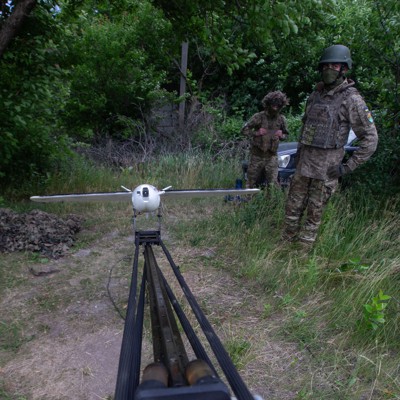
In recent years, unmanned aerial vehicles, more commonly known as drones, have come to the fore, marking the latest phase in the evolution of military technology. Their extensive use is evident in Ukraine and, more recently, in the war involving Iran. These systems are transforming warfare not only technically but also psychologically, as unmanned flying machines are increasingly used to kill, destroy and instill fear in civilian populations.
Drones possess several distinctive characteristics that set them apart from earlier military technologies. They offer low-cost yet highly effective real-time surveillance and, more frighteningly, precise strike capabilities. Some argue that their combination of affordability and efficiency has “democratized” firepower — albeit with the troubling consequence of prolonging conflicts while inflicting widespread suffering. Their proliferation is also increasingly likely to spread to other areas of conflict.