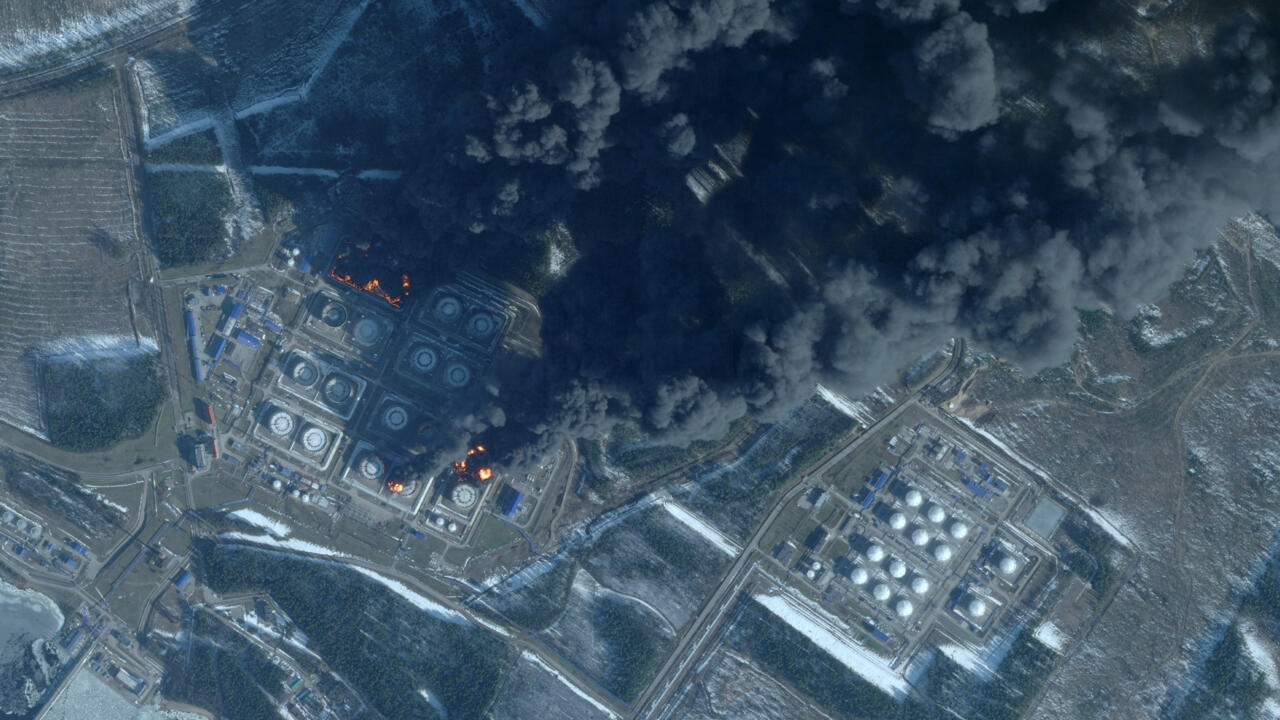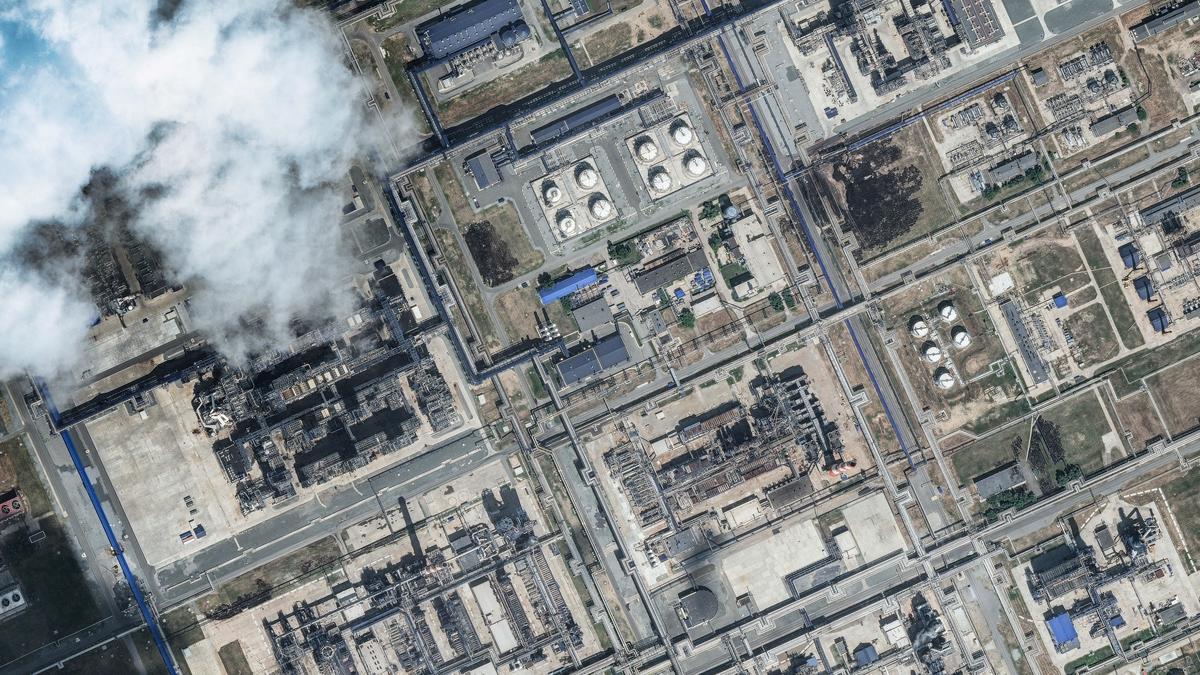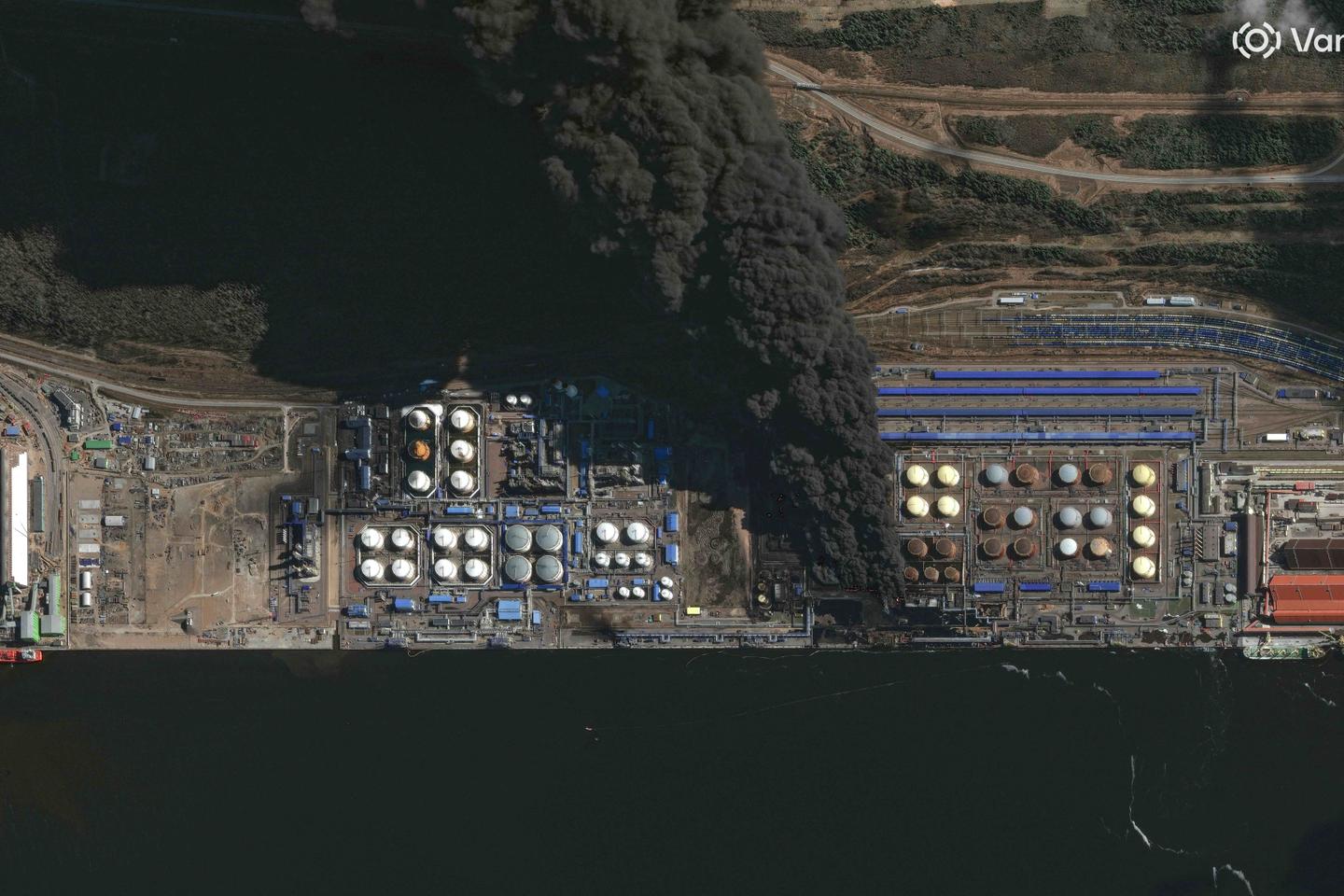
Satellite image of the Russian port of Ust-Luga, Russia, on the Baltic Sea, after a Ukrainian attack, March 27, 2026. VANTOR VIA REUTERS
In recent days, Ukrainian media in Kyiv have been using irony to refer to "cotton flowers," meaning "explosions" at the "strategic targets" of Ukrainian drone strikes: Russian oil ports. For the third time in less than a week, on Sunday, March 29, they targeted Ust-Luga, the largest export complex on the Baltic Sea. Aleksandr Drozdenko, governor of the region surrounding Saint Petersburg, acknowledged that the large-scale attack caused a fire at this crucial facility for transporting crude oil and petroleum products. He did not provide further details.
Ukraine's security agency, the SBU, claimed to have caused "significant damage" at Ust-Luga. Operated by Transneft, Russia's oil pipeline monopoly, the site exports about 700,000 barrels per day and, in 2025, reportedly shipped nearly 33 million metric tons of petroleum products. Due to a lack of information, it is difficult to assess the extent of the damage after three successive attacks on Ust-Luga, on March 25, 27 and 29. Each time, major fires broke out at the port, which also exports coal, iron ore, fertilizers and chemicals. Other targets of Ukraine's long-range drones included the port of Primorsk, also on the Baltic, and Novorossiysk, on the Black Sea.