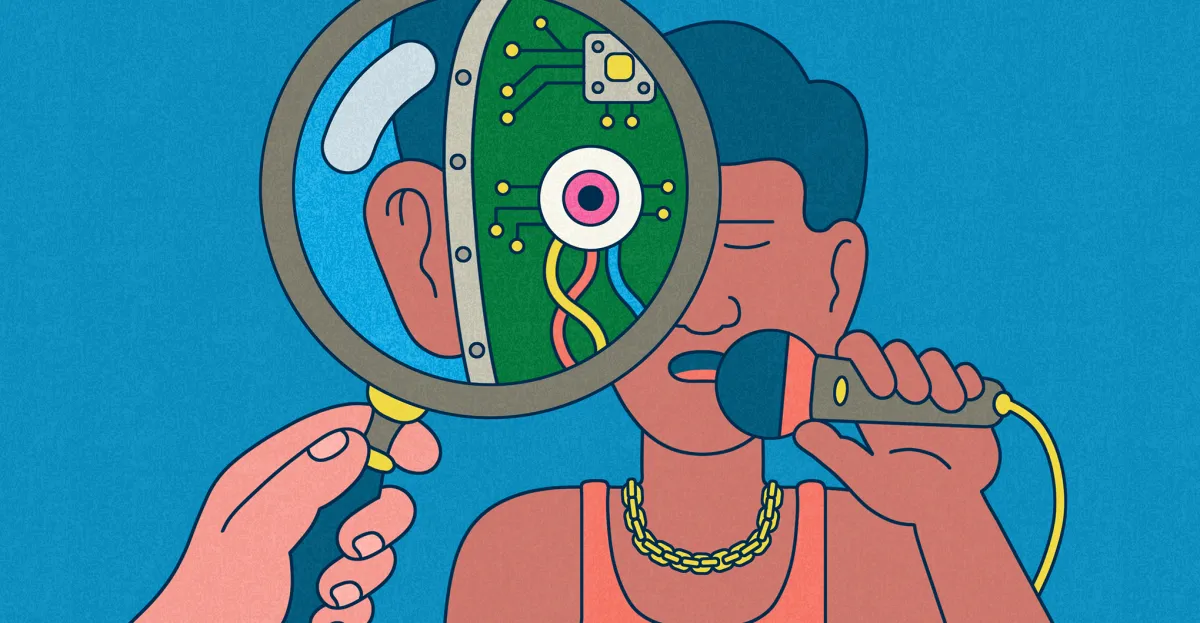
Who has heard of Scarlyy2 and their hit "Banc de touche"? Or the tearful country ballad "Mercy on My Grave" by Aventhis? These tracks have two things in common: They were generated entirely by artificial intelligence (AI), and they managed to "break through" on streaming platforms without most listeners suspecting they were not the work of real artists. Both of these examples, among many others, have garnered several million streams.
Music created by AI with tools like Suno or Udio is no longer content to simply carve out a growing space on streaming platforms. It aims to be listened to, to blend in with the landscape, and even to sneak onto the charts without the listener's knowledge.
Until recently, AI-generated tracks were still easy to identify: poor audio quality, very short length and a distinctly similar feel. But over the past two years, programs like Suno, which allow users to create a song from start to finish in seconds based on a simple prompt, have made remarkable strides in credibility.
Do platforms identify AI-generated content?
Even for the platforms themselves, identifying AI-generated tracks is a real challenge. The main difficulty for listeners is that streaming giants are under no obligation to label these artificial tracks. Spotify, the world's leading music streaming platform, downplays the issue, viewing AI as just another creative tool. "The use of AI in itself is not a problem," Romain Takeo Bouyer, head of content analysis at Spotify, told Le Monde. "What we penalize are abuses like identity theft, unauthorized cloning and fraud."