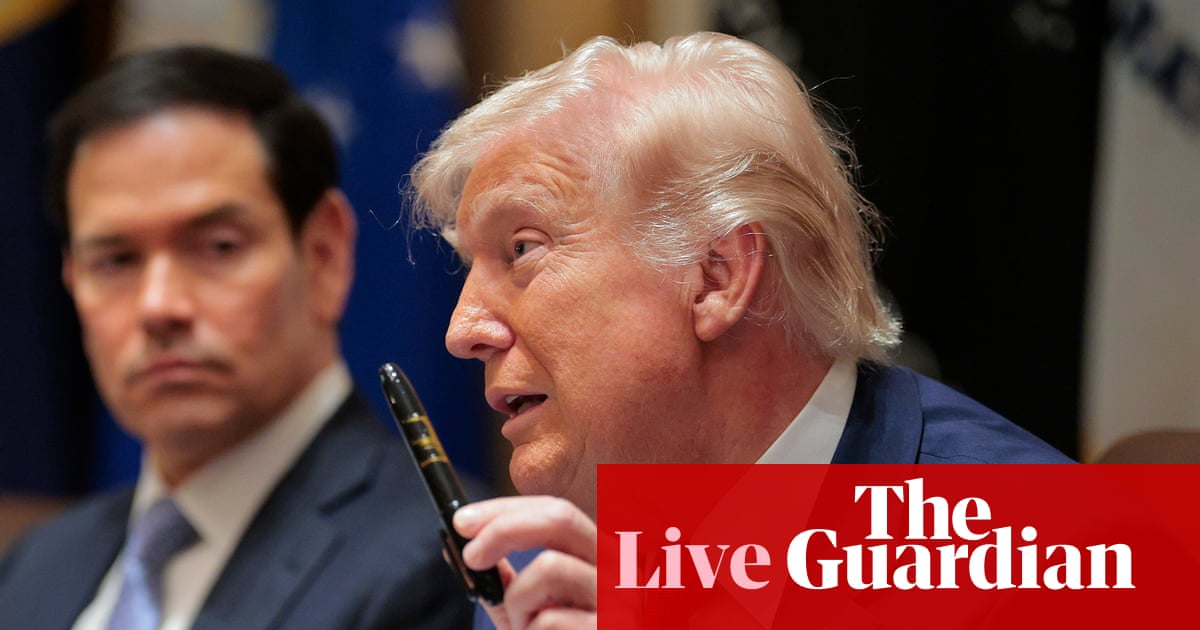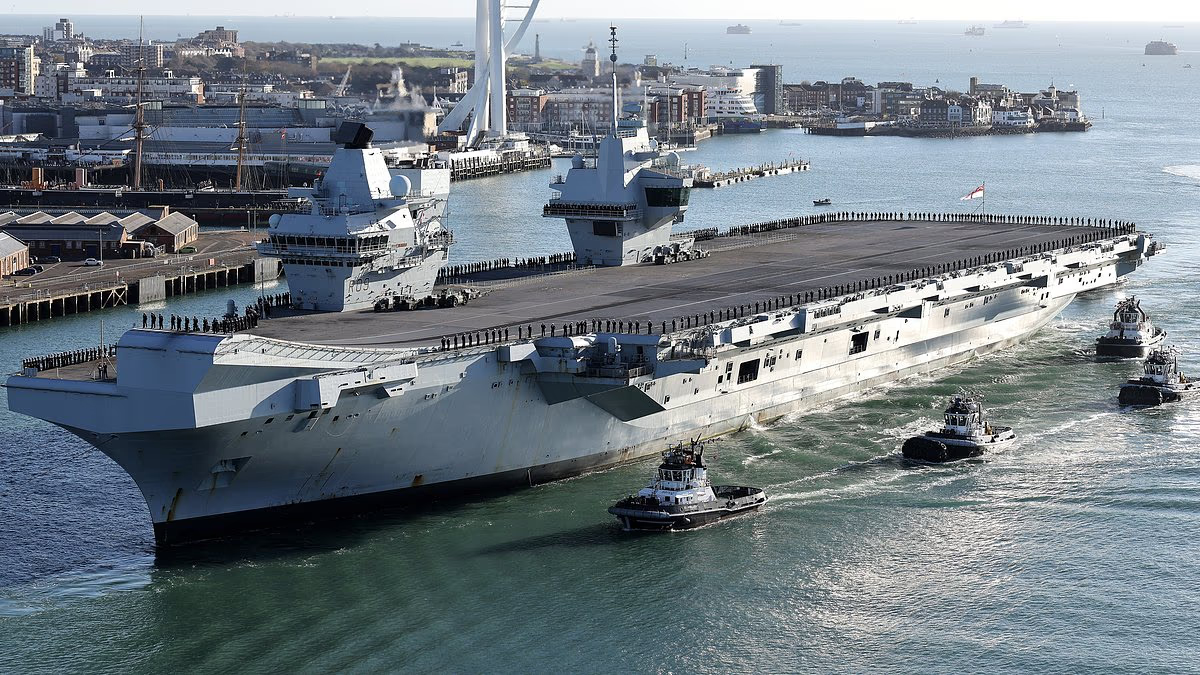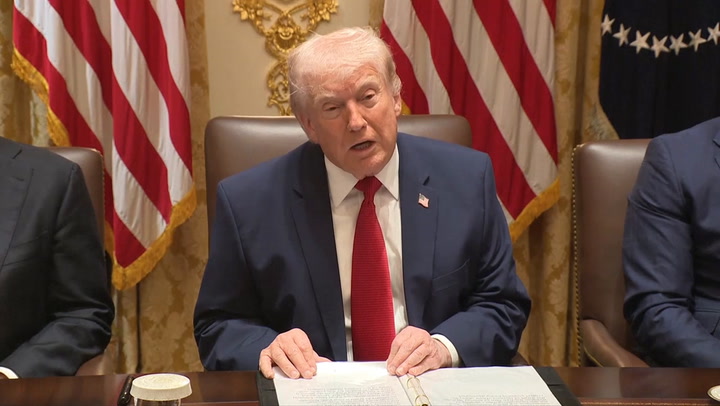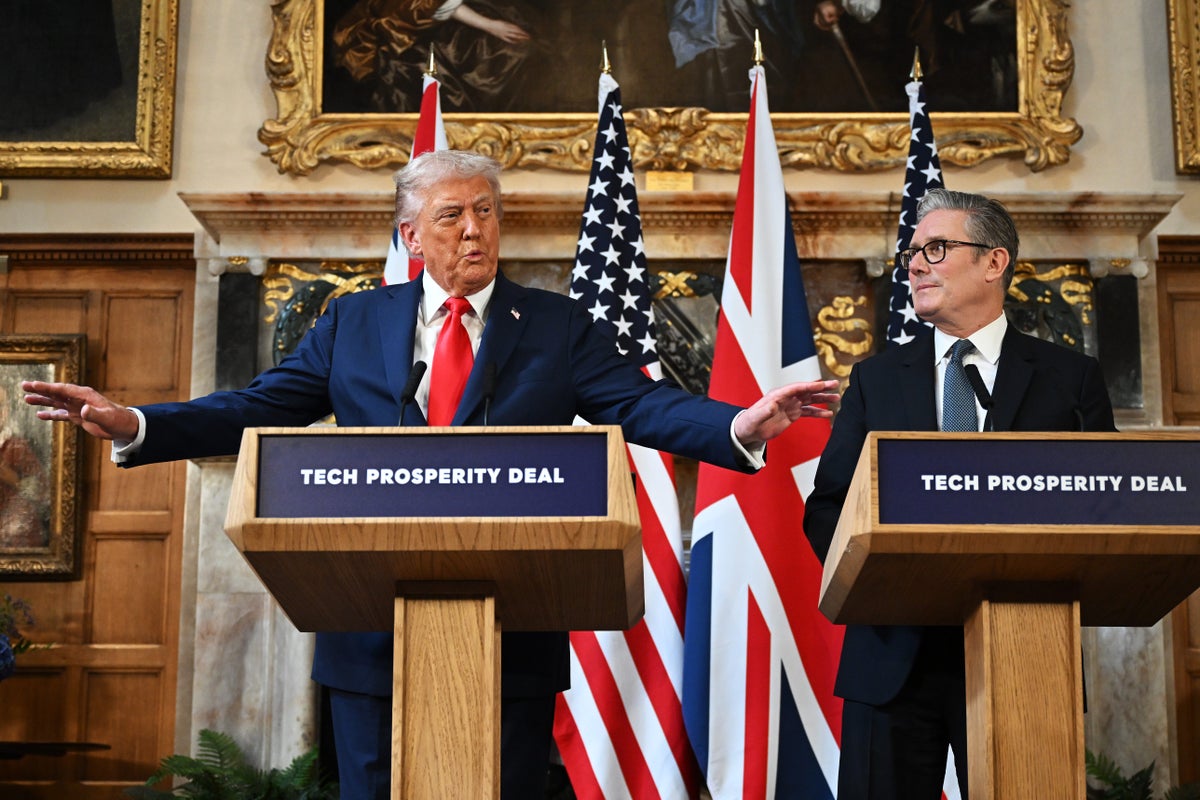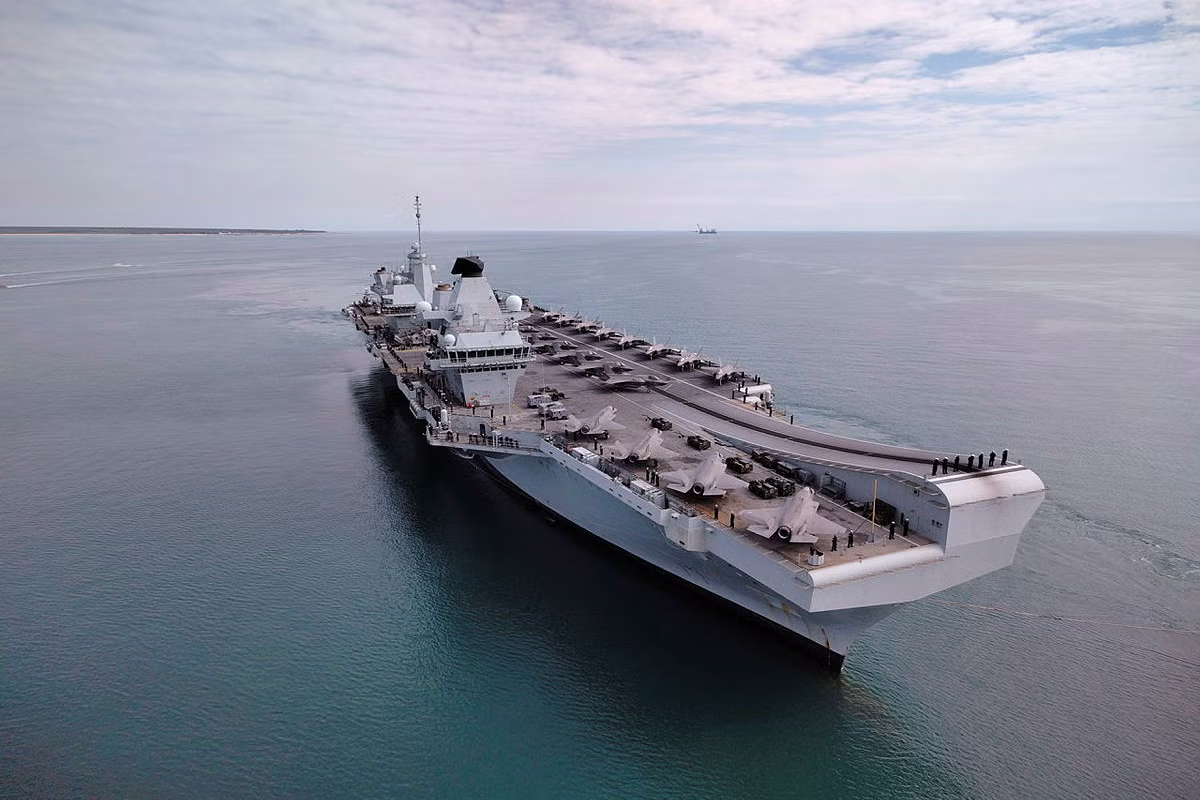
My father, a Fleet Air Arm pilot in the Second World War, was fond of telling me of the time a passing American warship sent a Morse code message by flashlight to a Royal Navy convoy in the North Atlantic. “Greetings from the biggest navy in the world,” crowed the American captain as he sailed by.The phlegmatic captain of the British flagship promptly ordered his signallers to send a message back: “Greetings from the best navy in the world.”There has always been a knockabout relationship, but ultimately respectful, between the US Navy and the Royal Navy, but last week, President Trump took the gloves off good and proper. However, his dismissal of the Royal Navy’s aircraft carriers HMS Queen Elizabeth and HMS Prince of Wales as mere “toys” compared to US carriers was, even by his standards, a classic foot-in-the-mouth moment. He missed an important point. In fact, he missed several points: technical, strategic, tactical and, not least, diplomatic.I have spent four years of my life on HMS Queen Elizabeth, the fleet’s flagship, and have followed her progress from the laying down of her first steel in Govan shipyard in 2009, through to her construction, to her first sea trials in 2017, her aviation trials in 2018 and her first operational deployment to the South China Sea in 2021.Embedding with the construction workers and marine architects during construction, and then with various of her ship’s companies, I have made 12 full-length films about the QE for the BBC and written a best-selling book called How to Build an Aircraft Carrier. So I know a bit about these “toys”, what they are capable of and, above all, the sailors and aviators who make them work.The first thing to clarify is that US carriers and UK carriers are designed for different sorts of warfare, but are expected to work together as allies on the high seas. In military speak, this is labelled “interoperability” — a clumsy word, for sure, but one pregnant with meaning and relevance in an increasingly dangerous world.The Queen Elizabeth, commissioned in 2017, is a much more modern ship than all 10 of the US Nimitz-class carriers, which are now considered a legacy design. As the backbone of the US Navy, they remain highly capable, active warships, but the class was designed in the 1950s and 1960s. Having said that, the US Navy's newest carrier, the USS Gerald R. Ford, is very much a ship of our times, but even then, comparison is misleading.Certainly, the new US carrier is bigger and more powerful than the Elizabeth-class carriers, but its purpose and function are very different. HMS Queen Elizabeth is a highly sophisticated, 21st-century carrier designed for efficient, precision fifth-generation stealth operations using the F-35B stealth fighter. The nuclear-powered Ford class, meanwhile, is designed for maximum power projection and sustainability.When it comes to design and automation, the QEC carriers were designed with a focus on high levels of automation, requiring a crew of only 700–1,600 (including aircrew), compared to the 2,600+ required for the USS Ford (and the 5,000 to 6,000 for Nimitz carriers). The QEC relies on a highly efficient integrated electric propulsion system, which is cheaper to run than nuclear power. And when it comes to versatility and cost, they are considered both nimble and cost-effective, with a notional three QEC carriers potentially deployable for the cost of one Ford-class.Sea hear: Filmmaker Chris Terrill aboard HMS Elizabeth (Royal Navy)Whatever the comparison in any sort of Trump playground bragging contest, these phenomenal warships are theoretically on the same side. Despite what the US president says, I know that the US Navy and the US Marine Corps (USMC) have a great deal of respect for the Elizabeth-class carriers and what they would bring to the battle space.All our warships have their own strategic roles to play. Increasingly, in the face of Russian aggression, this is in the North Atlantic and the Arctic High North, where we need to defend and, vitally, secure our nuclear deterrent. Britain’s overworked fleet now has to meet multiple operational commitments simultaneously, but its main mission has to be to protect British security and keep our shipping lanes open for trade and supply.Despite Trump’s claim, there was never a promise to send one of our carriers to the Middle East, let alone two. One of them is always in readiness or maintenance, so not able to deploy immediately. The operational carrier, currently the Prince of Wales, is readying for a deployment to the High North.Nobody is pretending the Royal Navy is not stretched, and it desperately needs more investment to ensure that it can fulfil increasing demands – all the more reason not to take part in a war that is not of the UK’s making. The crucial “all for one and one for all” Article 5 of the Nato alliance is a defensive pact triggered by an attack on a member state – it is not a call to arms for a war of choice by any member state. It is certainly not deployment for a war declared unilaterally (with Israel) without any reference to Nato allies.Mr Trump can’t have it both ways.Royal Navy warship HMS Dragon recently arrived in the eastern Mediterranean to begin operational integration into Cyprus’s defences (UK MOD/Crown copyright)What the increasingly confused president doesn’t seem to have calculated for are the threats from sea mines, drones and asymmetric naval warfare in the Hormuz Strait. He does not need carriers for that; he needs specialised ships such as mine countermeasure drone vessels rather than large surface combatants. These have been offered by the UK government.Taken together, all these factors complicate the simplistic narrative that Britain’s navy is undersized or ineffective. The real issue isn’t the size of ships, but how they’re designed, deployed and integrated into a modern alliance. Bigger isn’t always better at sea.Most importantly, a warship’s effectiveness is not all about its hardware anyway. It is about the people behind the hardware. The men and women who call any warship their home, and British sailors are widely regarded as the best trained in the world.Jerry Kyd, the first captain of HMS Queen Elizabeth, knew that from long experience, and I was there when he addressed his first ship’s company prior to sea trials.“Let me be clear,” he said. “The world is a frisky place right now and likely to get friskier. All sorts of dangers lurking and security risks everywhere. HMS Queen Elizabeth, as big and as sophisticated as she might be, is really just a huge metal box, full of pipes, wires, gadgetry and computer terminals. She’s missing one vital ingredient…“Without the flesh, blood, muscle and hearts of you, my sailors, the ship is just a robot. It’s only as good as those who breathe life into it. You, not the ship, are my most important resource…”Bigger, not better: US Navy warships in port in San Diego, California (Getty)Soon after the sea trials, a four-star American admiral came on board to have a look round the new British carrier. After his tour, he came to the wardroom for a chat with Jerry Kyd and some of his senior officers.“So, how are you finding the new ship?”“OK – thanks. Got a few things to sort out,” replied Kyd with typical British understatement. The fact was that, at the time, the government, financially stretched as ever, was considering selling one of the two carriers or putting it into mothballs.“Hell!” said the American admiral with thigh-slapping relish. “If you don’t want it – I’ll buy it!”Chris Terrill’s series ‘Britain’s Biggest Warship’, ‘Britain’s Biggest Warship Goes to Sea’ and ‘The Warship: Tour of Duty’ are currently showing on BBC2 and BBC iPlayer. His book ‘How to Build an Aircraft Carrier’ is published by Penguin
Trump called Britain’s aircraft carriers ‘toys’. He couldn’t be more wrong
When the US president mocked HMS Queen Elizabeth and HMS Prince of Wales, he missed the point entirely. Having spent years embedded on Britain’s flagship, in this personal account, Chris Terrill explains why the Royal Navy’s carriers are built for modern warfare, and why bigger isn’t always better at sea
1,291 words~6 min read