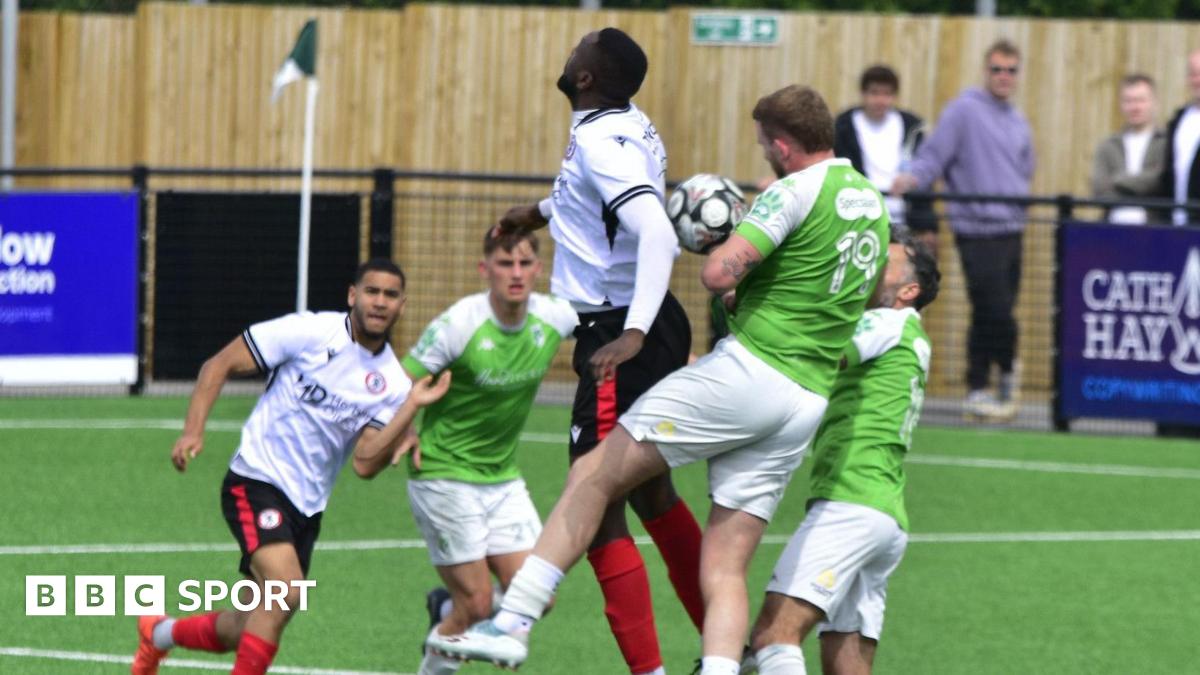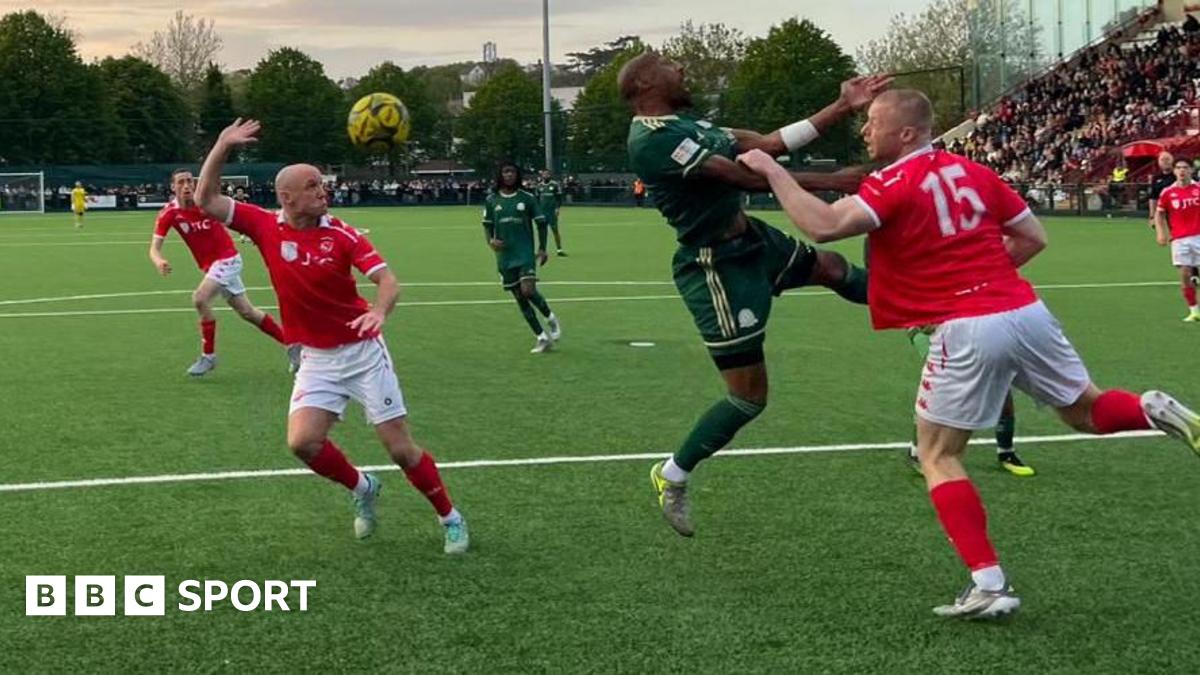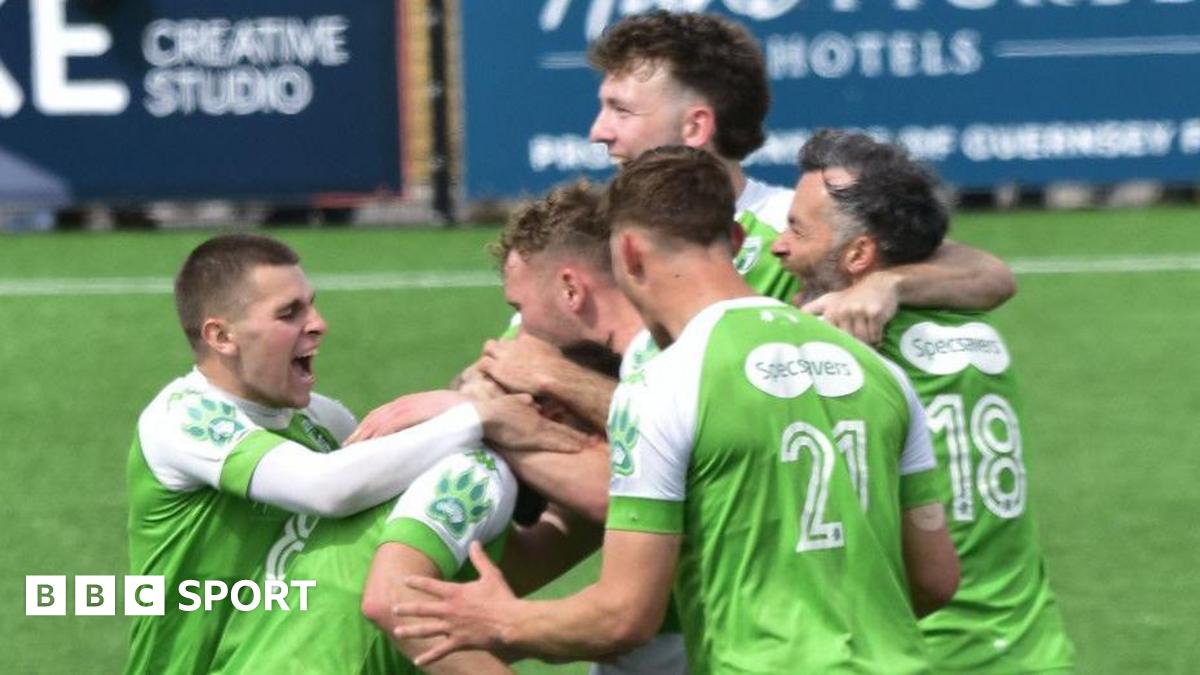
With their non-league sides effectively serving as national teams for the crown dependencies they have dreams of climbing higher in the football pyramid
C
lad top-to-toe in Jersey Bulls paraphernalia, Andy Lane takes a brief step away from drum-banging duties on the Springfield Stadium touchline and rolls up a sleeve to reveal the tattooed badge of a football team in only their seventh year of competition. The bull rearing up Lane’s right forearm matches that on his wife Jojo’s left calf, encapsulating the impact the club has made on the local community. “It’s about pride,” Lane says.
Bulls’ latest visitors are Hassocks, a club hailing from a village just north of Brighton. Like every other team in the eighth-tier Isthmian League South East Division, this away day was the first they sought out when the fixture list was unveiled last summer, and more than 50 supporters have flown over for the occasion. “It’s a great novelty fixture,” says the Hassocks chair, Patrick Harding.
The lower down the football pyramid you go, the more regionalised leagues tend to become. In a volunteer-led landscape, where players are either partly remunerated or entirely unpaid, it is impractical to expect teams to regularly traverse the country, which is what makes the football clubs of Jersey, Guernsey and Isle of Man so unusual. Despite the inconvenience of up to 200 miles and vast bodies of water separating them from opponents, all three clubs compete in English non-league football; pseudo-national teams effectively representing their crown dependencies against part-timers on a weekly basis, before retiring to the clubhouse for pie and chips.