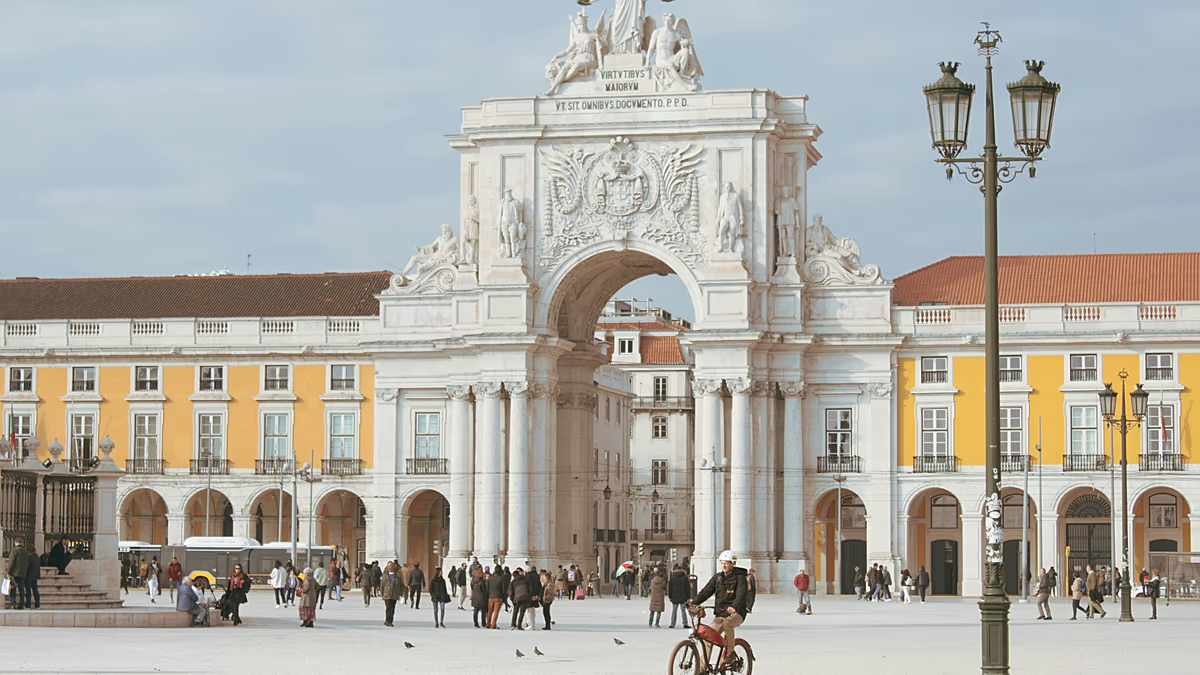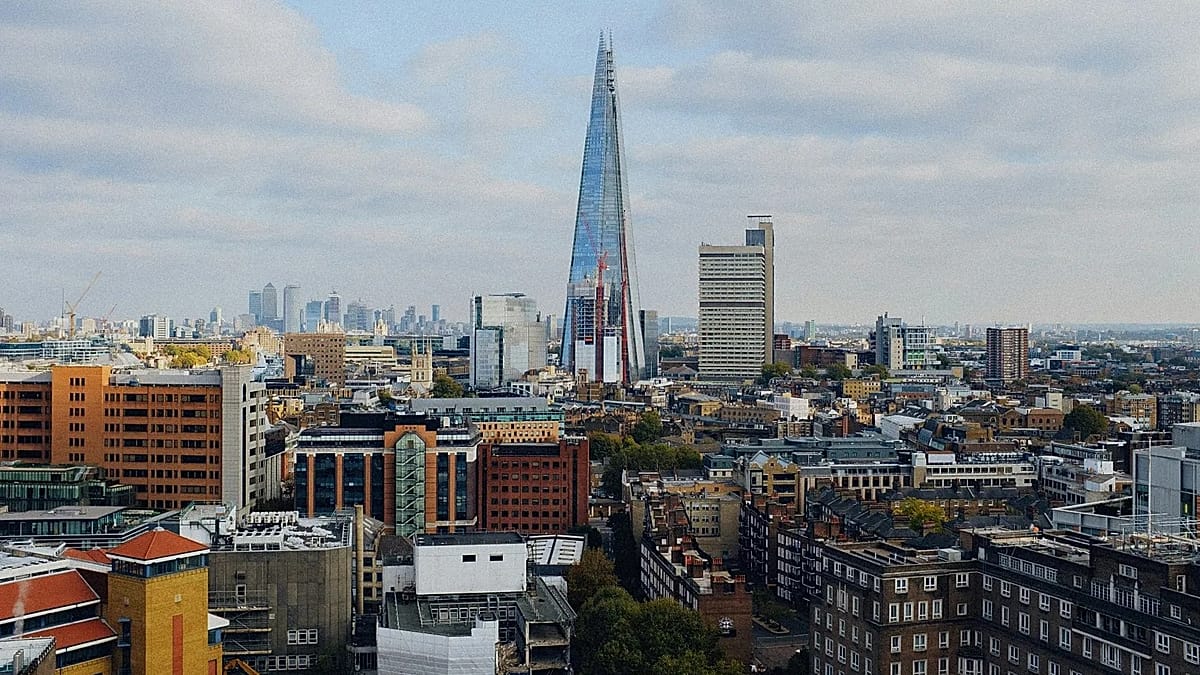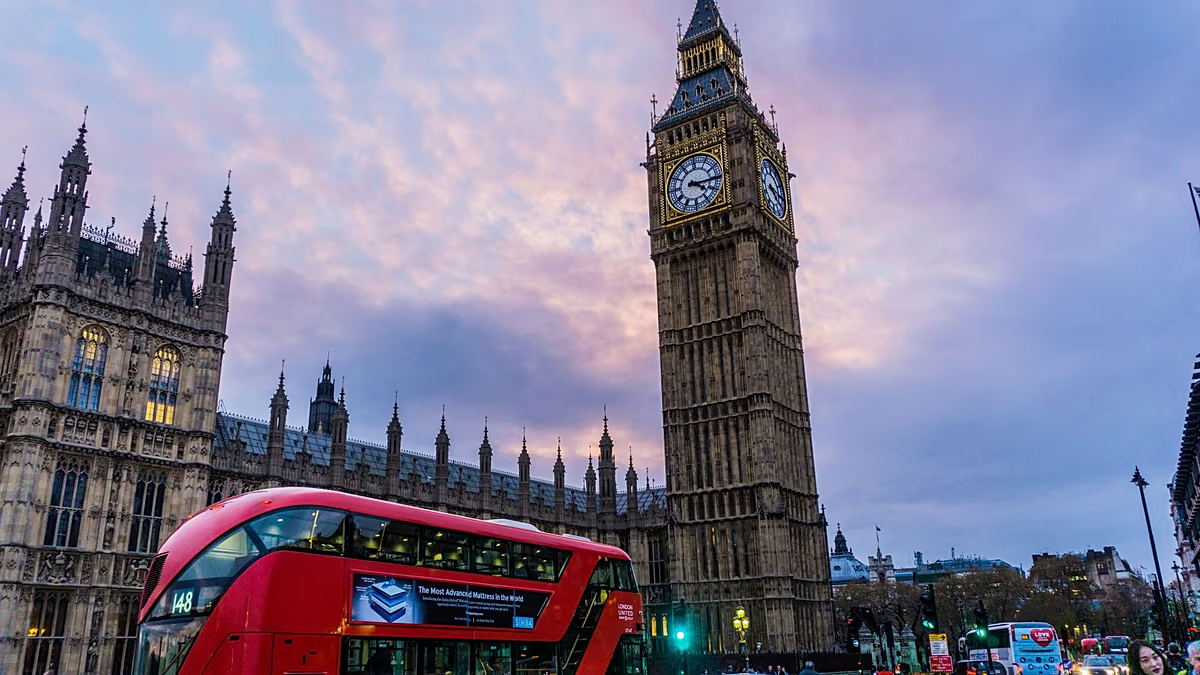
London came top in a new ranking of the best European cities to live in.gettyIf you’re dreaming of European skies, but are looking for desirable cities in which to live, a recent piece of research by Resonance, a real estate and tourism consultancy, may be able to help. It ranks European cities, specifically metropolitan areas with populations of more than 500,000 (according to Eurostat and the Organisation for Economic Co-operation and Development). It measures 47 metrics across 33 subcategories—all categories are weighted equally and aggregated into Livability, Lovability, and Prosperity indices, which it perceives as indicators of a thriving city that is attractive to residents and businesses alike. Then, with Ipsos, it collects perception data reflecting residents' opinions and preferences across European countries. London, Paris and Berlin Make The Top Three Best European CitiesThe top three cities are London—because of its “relentless innovation” —Paris, because of how the idea of developing the 15-minute city has translated into improved quality of life for residents, and the Grand Paris Express, which is reshaping access and mobility. Finally, Berlin, because of its transformation of Tegel Airport into Berlin TXL, one of the world’s largest timber-construction neighborhoods and for its climate-positivism.Two of these top three cities, London and Paris, recently featured on CNTraveler’s list of the most beautiful cities in Europe. London in particular came first in three of the 34 subcategories (the most of any city), and topped the overall Prosperity and Lovability indexes, and second for Livability. Heathrow Airport has attracted a record number of visitors to take advantage of a weaker pound, with Americans in particular accounting for 25% of all prime real estate purchases in 2024, according to Beauchamp Estates, the largest demographic of overseas buyers. Paris has completely changed in the past few years. “The city-wide 30 kph speed limit, once controversial, now feels inevitable. Parisians now navigate more than 1,000 kilometres of bike lanes as of late 2025, with cycling rates nearly doubling in the past two years.” An additional 100 hectares of pedestrianization have been implemented since 2020, with the same amount planned for delivery before 2030. And bike maintenance hubs will soon be delivered in all of Paris’ arrondissements (districts). New Metro (subway) stations bring Paris’ Orly airport closer to the city center than ever before. Paris ranks #2 in the overall Prosperity Index. With the city’s techno culture now UNESCO‑recognised, Berlin is surging back to pre-pandemic levels of tourism—in 2024, the city recorded over 30.6 million hotel overnight stays for the first time since the pandemic, with these 12.7 million guests generating billions in visitor spending. Its museums and cultural spaces are thriving, too, such as the Kulturforum, the museum of the 20th century and the High Swing, Europe’s highest swing at 120 metres on the roof of the Park Inn at Alexanderplatz. Business is booming, with unicorns and startups, and the Estrel, Europe’s largest hotel, congress, and entertainment complex, and its accompanying skyscraper, Berlin’s first, will open at the end of 2026.Rome, Barcelona and Madrid took the next three spots, with the first two also appearing on CNTraveler’s most beautiful cities in Europe. Amsterdam, Vienna, Prague, and Stockholm round out the top ten of the Best Cities in Europe, all of which also appear on the most beautiful list. Incidentally, many of these top-tier European capitals provide a perfect gateway to CNTraveler’s The Best Places to Go in Europe in 2026, places that are making cultural waves—these are “regions, cities, and neighborhoods that are deserving of your time and attention this year.” Many are just a short train ride from several highlights on the list, such as Frankfurt, the World Design Capital in 2026, and only three hours by train from Berlin. Or the Alpine town of Saint-Gervais-les-Bains in France, offering a new take on sustainable train travel with energy-efficient trains to discover the Mont Blanc foothills, direct from the town’s train station to the ski lifts. Or just two and a half hours by train from Madrid is the high-speed link to Seville, with luxury hotel openings and disruptive food entrepreneurs leading the way at Casa Orzáez, Sr. Cangrejo, Leartá, and Barra Baj.These cities have been travel hotspots for centuries, but as the data shows, they’re still evolving into greener, more liveable urban spaces that can still attract the crowds and, more importantly, have never been so relevant.The annual ranking still excludes Russian cities because of the military offensive in Ukraine. MORE FROM FORBESForbesThe Best Places For Expats, According To 3 New StudiesBy Alex LedsomForbesTravel The World’s Longest Managed Coastal Path In The U.K.By Alex LedsomForbesAir Travel Disruption And Skyrocketing Prices—Should Travelers Book Now?By Alex Ledsom
The Best European Cities To Call Home, Per 2026 Consultancy Research
If you're thinking of a move to Europe, new research identifies the reasons why many much-loved destinations are still able to draw in new residents.
773 words~4 min read