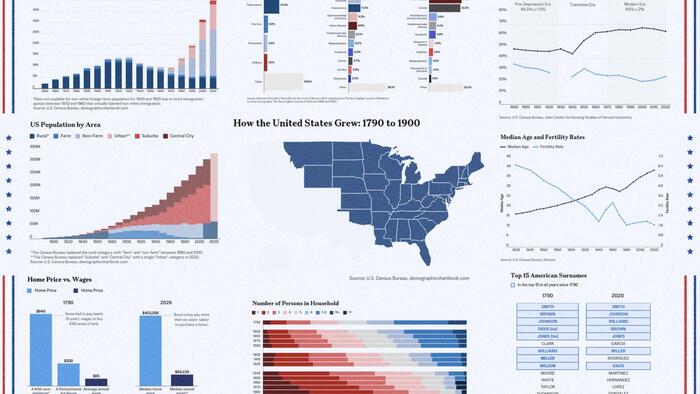
As the nation approaches its 250th anniversary, its population is larger and significantly older, more racially and ethnically diverse and likelier to be foreign-born than it was at the time of the nation's bicentennial, according to a report compiled by the Pew Research Center.
The U.S. population has grown to 340 million over the past 50 years, an increase of more than 120 million people, the center said. Much of that growth, it said, has been driven by immigrants, longer life spans, and an increase in Asian and Hispanic Americans.
As the 1970s got underway, the Baby Boom generation was still between 6 and 24 years old, noted Ken Johnson, a professor of sociology at the University of New Hampshire not connected to the report.
“It was the first generation where many women went to college,” Johnson said. “Older generations were relatively small, having been born during the war and Great Depression. And immigration was picking up, but it had been modest for decades before.”
The Baby Boom generation was the first to have many women with higher education, Johnson said. The resulting opportunities led many women to marry later and have fewer children, patterns that would endure in later generations.