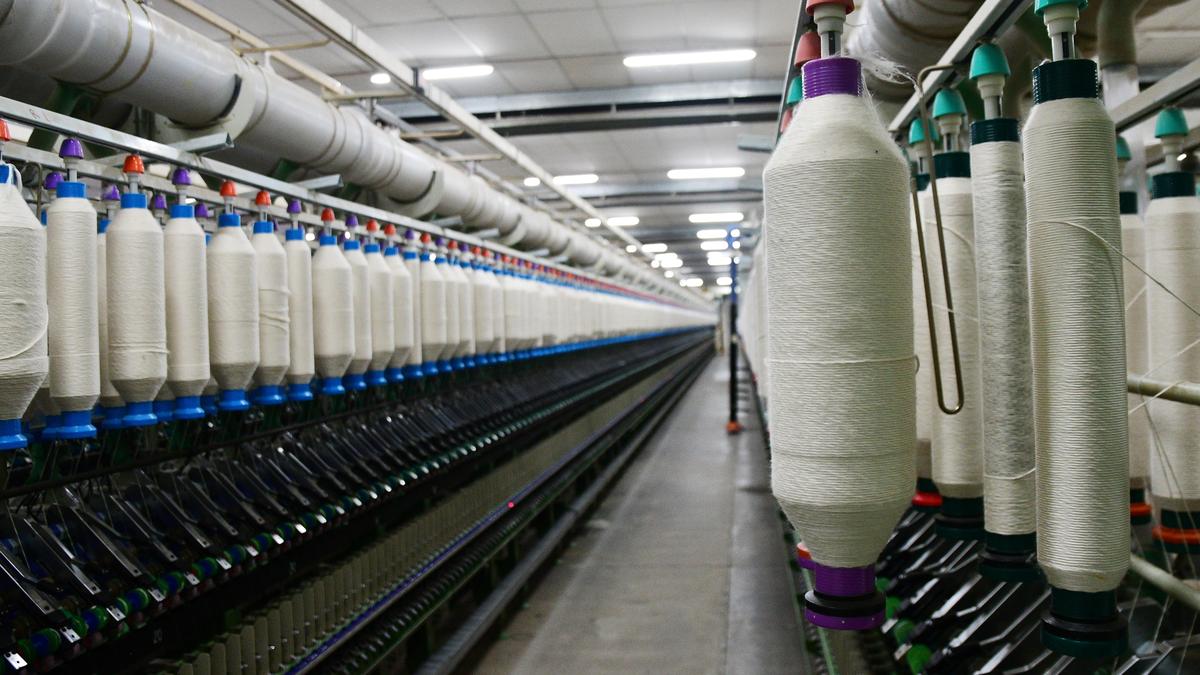
The conflict in West Asia has hit hard the textile units in Karur.
The U.S. remains one of the largest markets for Indian textiles. Home textile exports originate from the Karur cluster, which has earned a reputation for quality and reliability over decades of trade relationships, and constitute a significant share of the country’s exports. The annual manufacturing value of Karur cluster is pegged at ₹9,000 crore. Of this, exports constitute ₹6,000 crore, predominantly to the U.S. and European Union. The cluster employs about 2 lakh people in production of home textiles such as bed linen, table covers, kitchen cloths, mats, and sofa covers.
Since the beginning of West Asia crisis about three weeks ago, the exporters are facing problems in moving containers because of disruption in global goods movement and the impact is being felt in the Karur textile industry. Similarly, the industry, which is heavily dependent on petroleum-based raw material, is facing serious challenges due to shortages and sharp price increase in key inputs. The cost of polyester yarn, synthetic fibers, dyes, and various chemicals have risen steeply while their availability has become increasingly unpredictable, making it difficult to plan production.