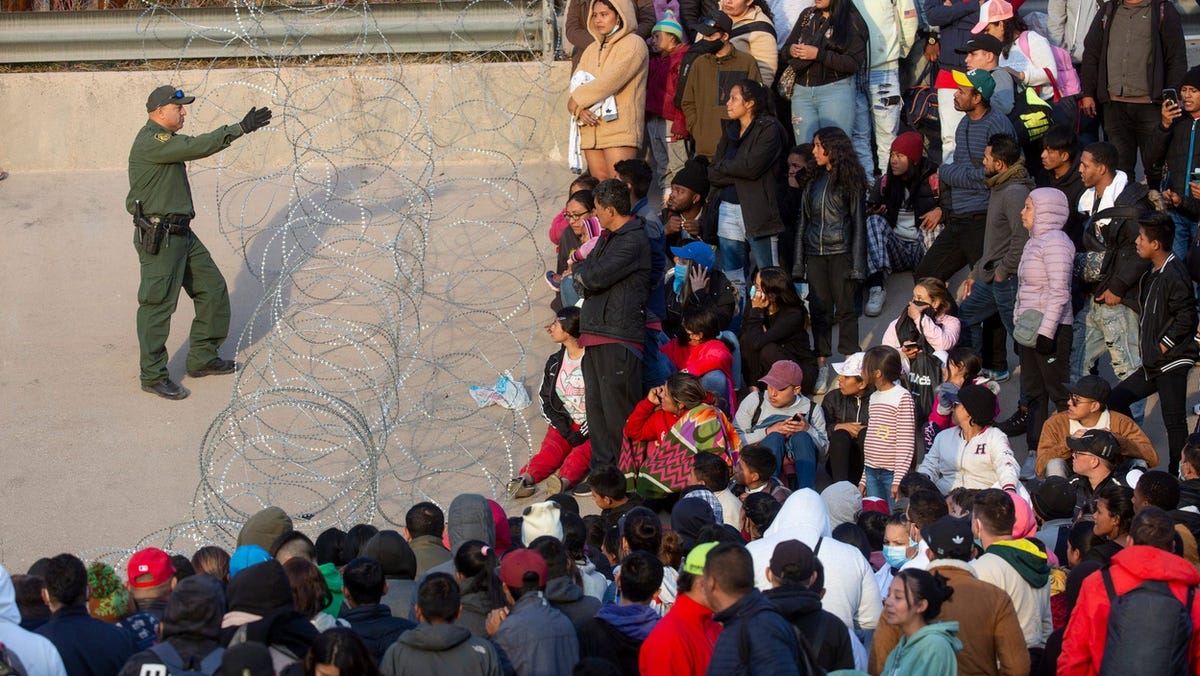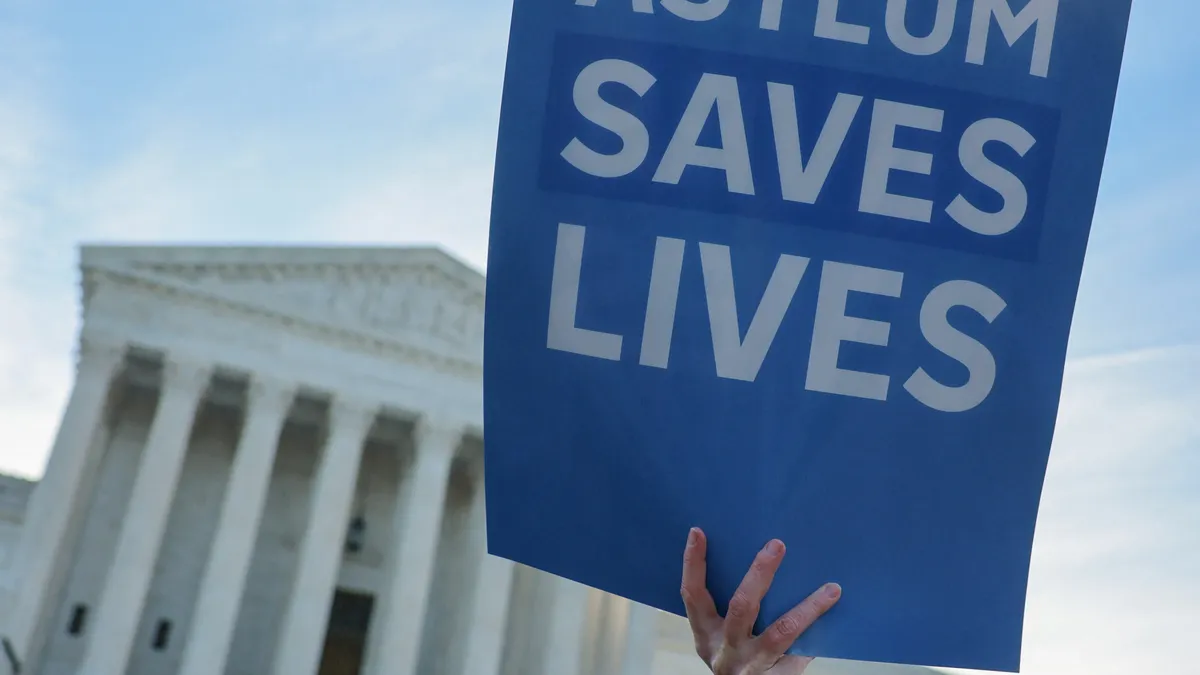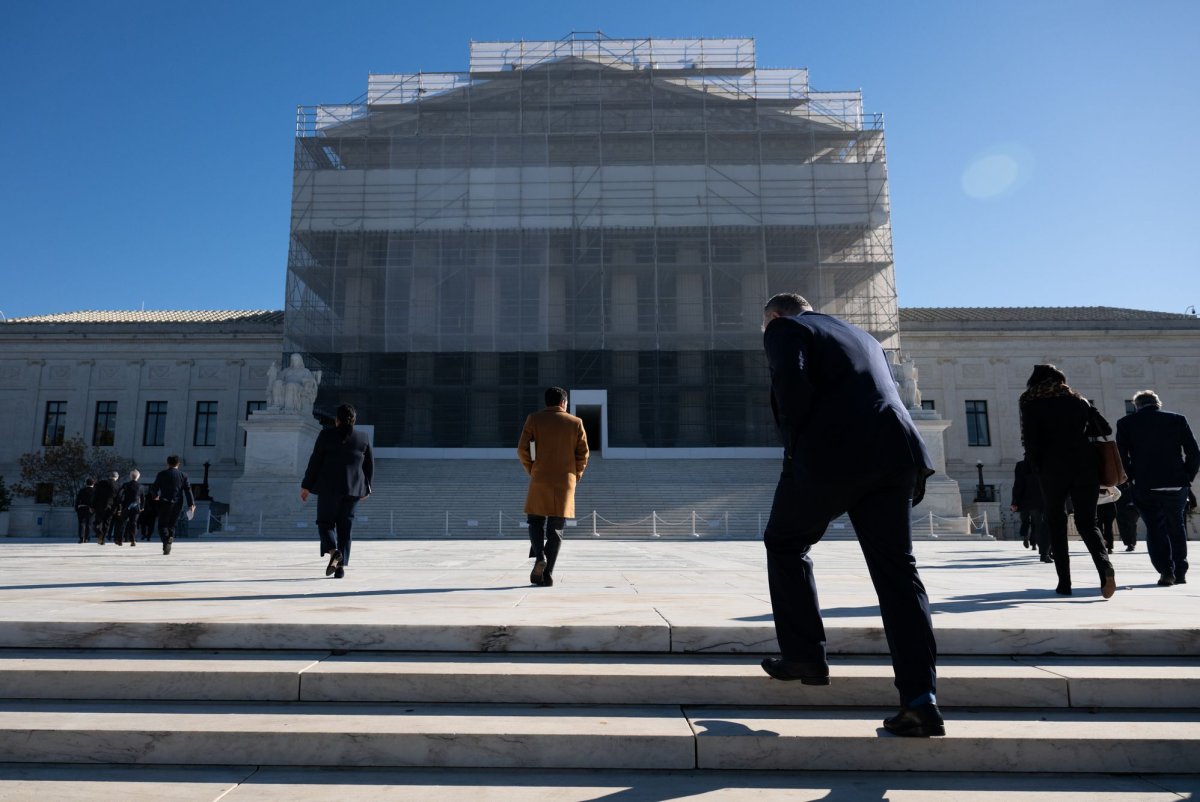
The Supreme Court on Tuesday seemed open to arguments from the Trump administration that it has a right to turn asylum seekers away at border ports of entry, even if they have potentially valid claims and follow the legal process for pursuing them.
Central to the case, Noem v. Al Otro Lado, is the question of whether someone who arrives at a port of entry along the southern U.S. border has the right to claim asylum, even if officials physically block them from actually entering the country. Much of the morning’s arguments hinged on the interpretation of the phrase “arrives in” — as in, whether someone who had arrived at an official port of entry, but not been allowed to cross onto U.S. territory, could be said to qualify under the wording of immigration law.
“Does a person ‘arrive in’ the house when the person is not in the house, and is knocking at the door, asking to be admitted to the house?” asked Justice Samuel Alito, part of the court’s conservative majority.
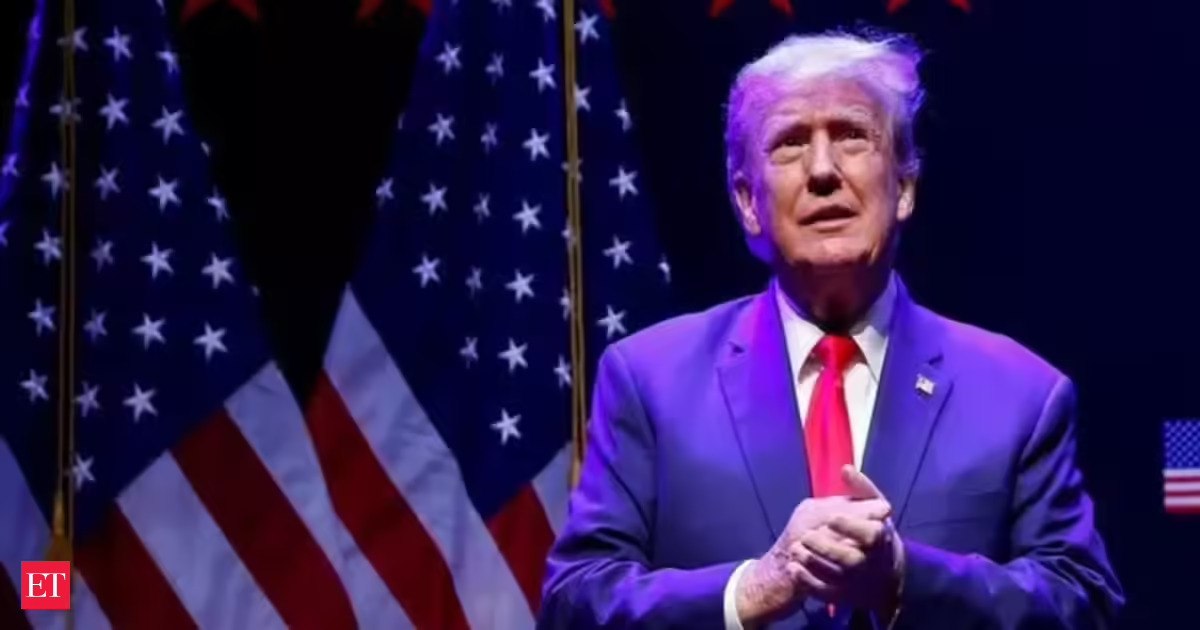
Current immigration law states that someone “who arrives in the United States” must be allowed to make an asylum claim, giving them the opportunity to at least make an initial case that they face danger if turned away. Starting in 2016, however, U.S. border guards began a policy of “metering,” turning back people who had come to present a claim before they could do so. Lower courts rejected the policy, but amid the immigration crackdown of Trump’s second term, the administration has sought the authority to reinstate it.