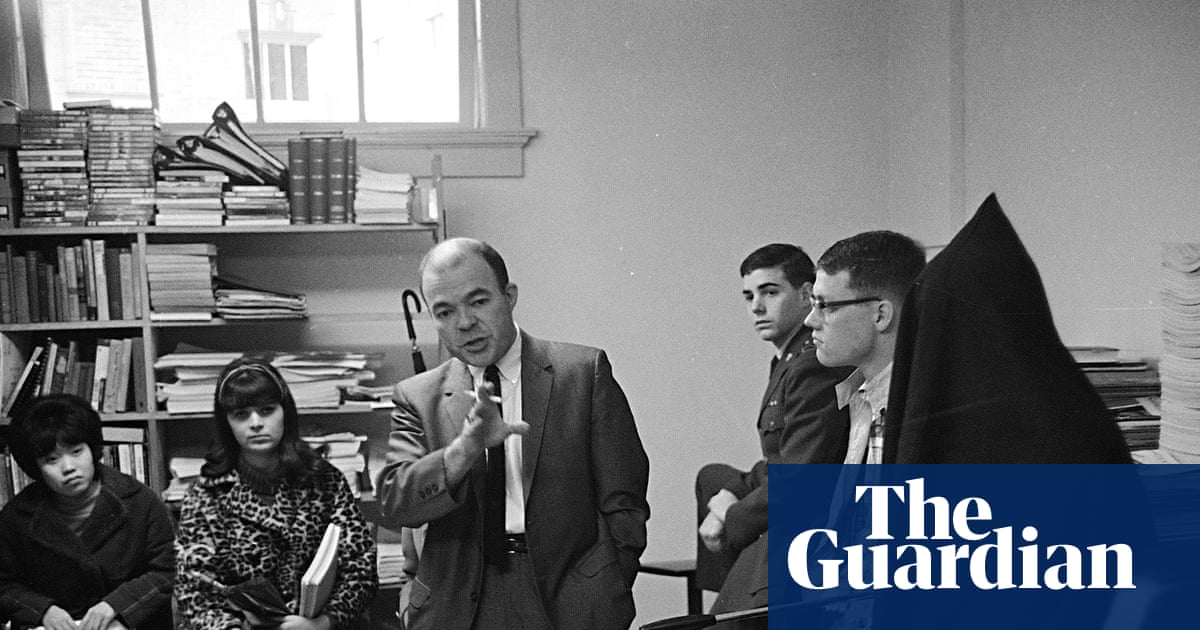
Drawing on a real-life 1960s experiment, this story of an out-of-work actor paid to cover himself in a black leather bag fizzes with wit and invention
T
he unnamed narrator of Black Bag, an out-of-work actor living in London, has finally landed himself a role, and it’s a doozy. Advertised on the “admirably candid” website strange-acting-jobs.org, the role demands that he sit silent and unmoving at the back of a university lecture theatre for one whole term, dressed in nothing but a black leather bag. He will be paid in cash. He cannot believe his luck. “This is my big chance to do absolutely nothing, as thoroughly as possible.”
Black Bag is the hilarious new novel from Luke Kennard, a poet whose second collection made him the youngest ever nominee for the Forward prize in 2007, and whose debut novel was the similarly surreal and equally enjoyable The Transition. Both works operate as Black Mirror-style satires of late-capitalist, technocratic societies, where discontented thirtysomethings find themselves embroiled in bizarre social experiments.
The experiment here is based on a real-life one conducted by Charles Goetzinger in 1967 at Oregon State University. Goetzinger had one of his students attend classes for a semester dressed in a big black bag with only their feet showing, finding that over time the other students’ attitudes changed from hostility to acceptance to, eventually, friendship. Given enough exposure, it seems, we can come to accept anything.