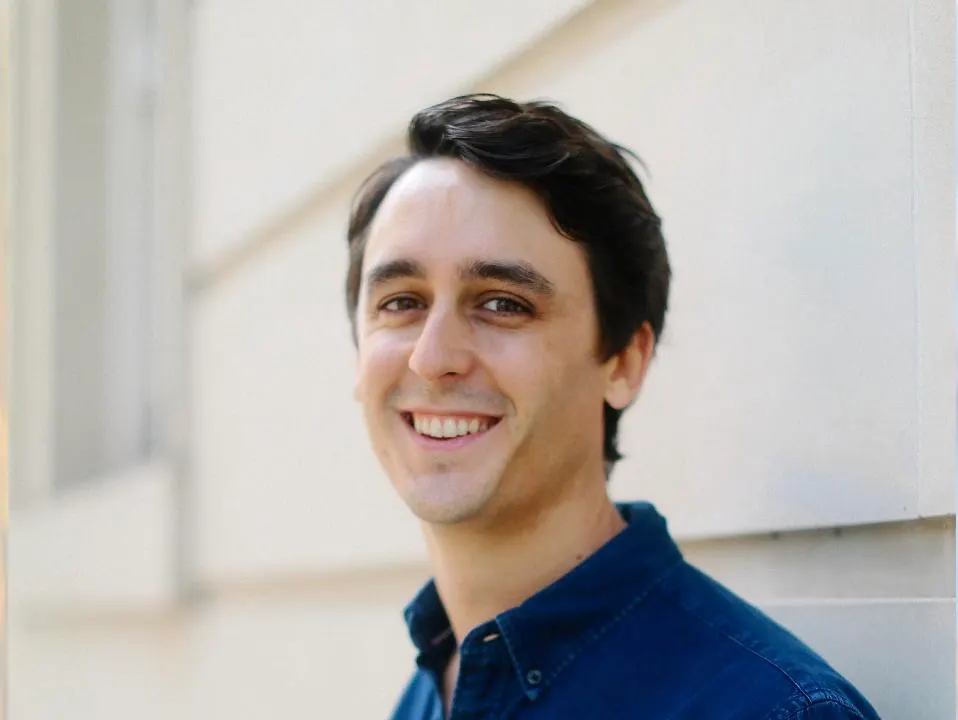
Nathan Benaich, founder and general partner of Air Steet CapitalNathan Benaich Solo venture capitalist Nathan Benaich placed his bets on AI long before ChatGPT took it mainstream. Back in 2013, early applications of the technology were limited to algorithmic financial trading, improving search algorithms and nascent self-driving vehicles. After stints at funds like British early stage firm Playfair VC, he founded Air Street Capital in 2019 to back AI-first startups in categories like drug discovery and cybersecurity. But he struggled to raise $27 million for the first fund that year. “At the time it was really, really hard to find anybody who wanted to invest in AI,” Benaich tells Forbes. Times have changed. The London-based investor announced Monday that Air Street has raised a roughly $230 million fund, about double the size of the $121 million Fund 2 he raised in 2022 and nine times as big as his first. The raise also makes Air Street Capital the largest solo VC fund in Europe. “In a market where all the big venture firms are gobbling up 99% of all capital that's available and sucking out all the air … it's possible to really stick out because I think at the end of the day, it's the founders’ choice on what venture firm they work with,” Benaich says. He’s got an excellent track record, having backed a series of AI heavy hitters including ElevenLabs ($11 billion valuation), Crusoe ($10 billion), Synthesia ($4 billion) and Black Forest Labs ($3.25 billion). Benaich says finding the right talent and startups to back is a “long term game.” While some startups have grown quickly, others like Synthesia and self-driving car startup Wayve were “seven to 10-year overnight successes.” “These things were really different back then and nobody believed,” he says. Benaich says that while traditional VC firms are pouring billions into neolabs — research-focused startups that prioritize long term breakthroughs over immediate product revenue — there’s a ton of value to be found in companies building out the infrastructure to power AI, and the applications that utilize it. Now let’s get into the headlines. BIG PLAYS OpenAI is scrapping its once-popular video app Sora as it looks to streamline its focus on business and coding applications, the Wall Street Journal reported. “We’re saying goodbye to the Sora app,” the company posted on X. Disney is exiting a deal it signed with the AI giant last year where it invested $1 billion and agreed to license some of its iconic characters for use in the app, according to Hollywood Reporter. Forbes reported in November that OpenAI was spending $15 million per day on Sora videos. Elsewhere, Nvidia CEO Jensen Huang said on the Lex Fridman podcast that he believes we have achieved artificial general intelligence (AGI), a vague term that describes AI that rivals or trumps human smarts. But there’s a caveat. Huang defined AGI very narrowly as an AI system that can create a web application or software that goes viral and makes a lot of money. That doesn’t mean it necessarily creates a sustainable business. People using OpenClaw to automate parts of their lives, like applying for jobs, are an indication that AI is already tackling high stakes tasks, he said. What AGI is and when we’ll reach it is up for debate. In January, OpenAI CEO Sam Altman told Forbes that AGI will need a series of “medium-sized breakthroughs” rather than a big step change. Microsoft CEO Satya Nadella holds a different view entirely: “I don’t think we are anywhere close to [AGI].” TALENT WARS It’s acquihire season (again). Meta has recruited the cofounders and licensed the tech of Dreamer, an AI startup that launched just a month ago that lets people build custom agents for tasks like managing calendars and tracking spending. The move comes after the social media giant hired the creators of Moltbook, the viral social media network for agents, to join Meta’s Superintelligence Labs. Humans aren’t enough. CEO Mark Zuckerberg is also building an AI agent to help him do his job, the Wall Street Journal reported. AI DEAL OF THE WEEKSan Francisco-based clinical AI startup Latent Health has raised $80 million in funding from Spark Capital and Transformation Capital to automate and speed up paperwork helping patients get approval for drugs, Forbes reported. The startup is now valued at $600 million, according to a person familiar with the deal. DEEP DIVEShortly after Anthropic released its AI model Opus 4.5, CEO Guillermo Rauch held an all-hands meeting in January at his company’s headquarters in San Francisco. He started with a set of slides outlining key moments in the (brief) history of AI coding. It kicked off with Github Copilot in 2021 (“it could barely complete code”), then to ChatGPT a year later (coding ended up being “a killer use case”), on to Anthropic’s Sonnet 3.5 in 2024 (which “could clearly be trusted” with smaller bits of code).Opus 4.5 felt like another one of those milestones. “This is going to be a big moment for the world,” he recalls telling his staff. It’s certainly made an impression: Claude Code, long a front runner in the AI coding wars, has begun to break away further. By 4.6’s released in February, it triggered the so-called “SaaSpocalypse,” wiping away billions of dollars in value from global software-as-a-service stocks as investors worried those firms could be automated away.It was a jump scare for the market, but may be a harbinger of good news for Vercel, which helps developers to build, deploy and host web apps, and now, AI agents. It’s a classic picks and shovels story — selling supplies to the miners feverishly exploiting the gold rush: With the glut of new code generated thanks to AI, someone’s got to host it. “We've seen a tremendous acceleration on deployments,” Rauch says. “Fundamentally, we want to become the infrastructure layer of this new generation of software.”Vercel isn’t a household name like OpenAI or Google, but it’s a crucial vendor for some of the world’s biggest brands, including Under Armour, Stripe and Sonos, who use Vercel to host their digital infrastructures. (One of the most popular ways to view the Epstein Files, an interface called Jmail that mimics a Gmail inbox, is hosted on Vercel.) In September, the company raised $300 million, co-led by blueblood venture firm Accel and GIC, one of Singapore’s sovereign wealth funds. The fundraising round lifted the startup’s valuation to $9.3 billion, up from $3.25 billion the year before. The influx of cash also makes Rauch, an Argentine immigrant, a billionaire, worth at least $2.1 billion, according to Forbes estimates.Read the full story on ForbesMODEL BEHAVIORAfter Cursor launched its new coding model, an anonymous X user noted that the model appeared to be a version of Kimi 2.5, an open source model released by Chinese company Moonshot AI. A number of Moonshot employees confirmed that Cursor indeed used its models, with one alleging in a now deleted post that “Cursor did not respect our license nor did they pay us any fees.” Lee Robinson, Cursor’s vice president of developer education, admitted that the startup had used the Chinese open source model as the base but acquired a licensed version of it through inference platform Fireworks AI.
This VC Invested In AI Pre-ChatGPT. Now He’s Raised $230 Million To Double Down
Solo venture capitalist Nathan Benaich once struggled to raise $27 million to back AI startups. His new fund is nine times as big as his first.
1,204 words~5 min read