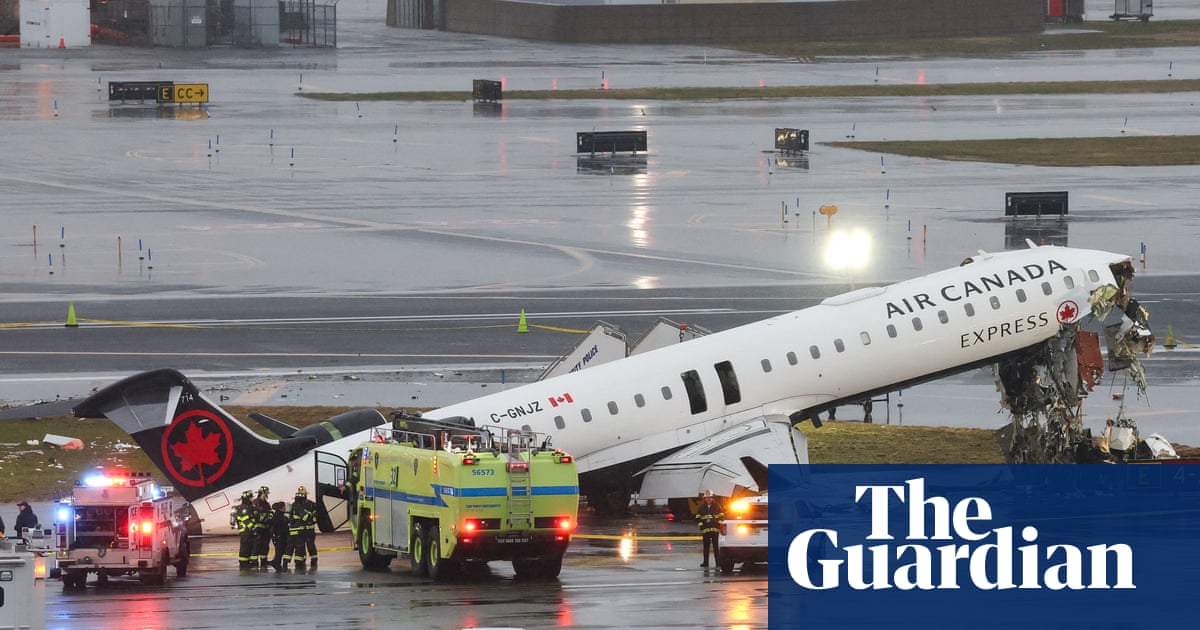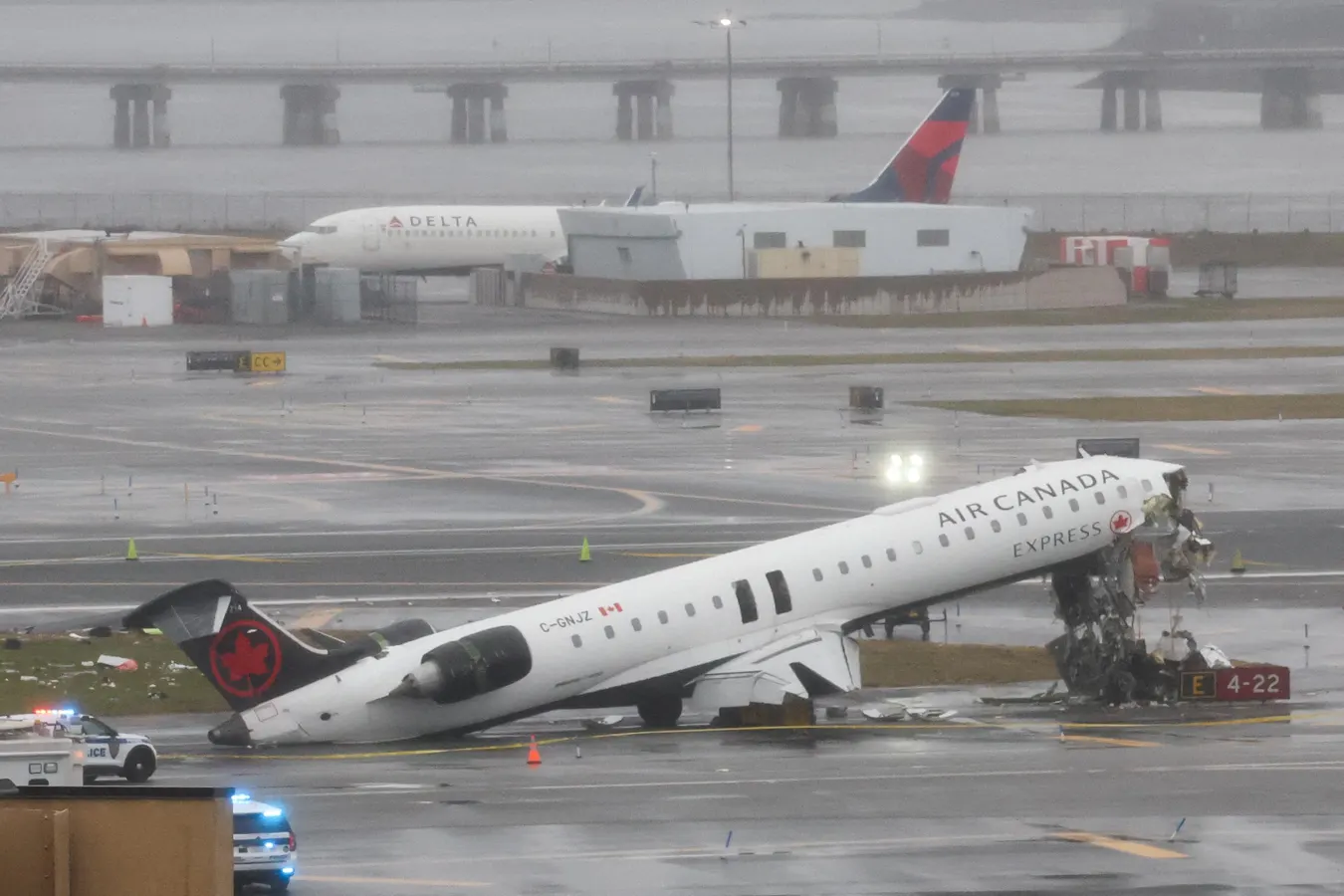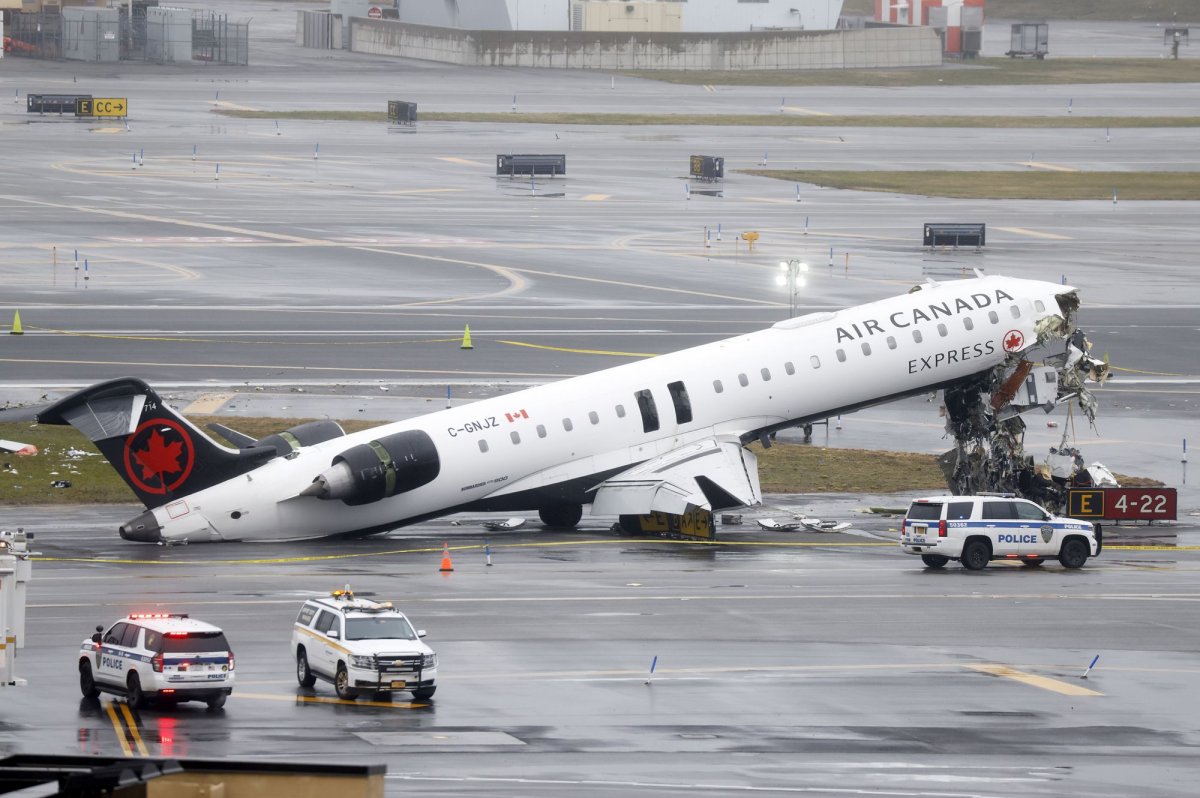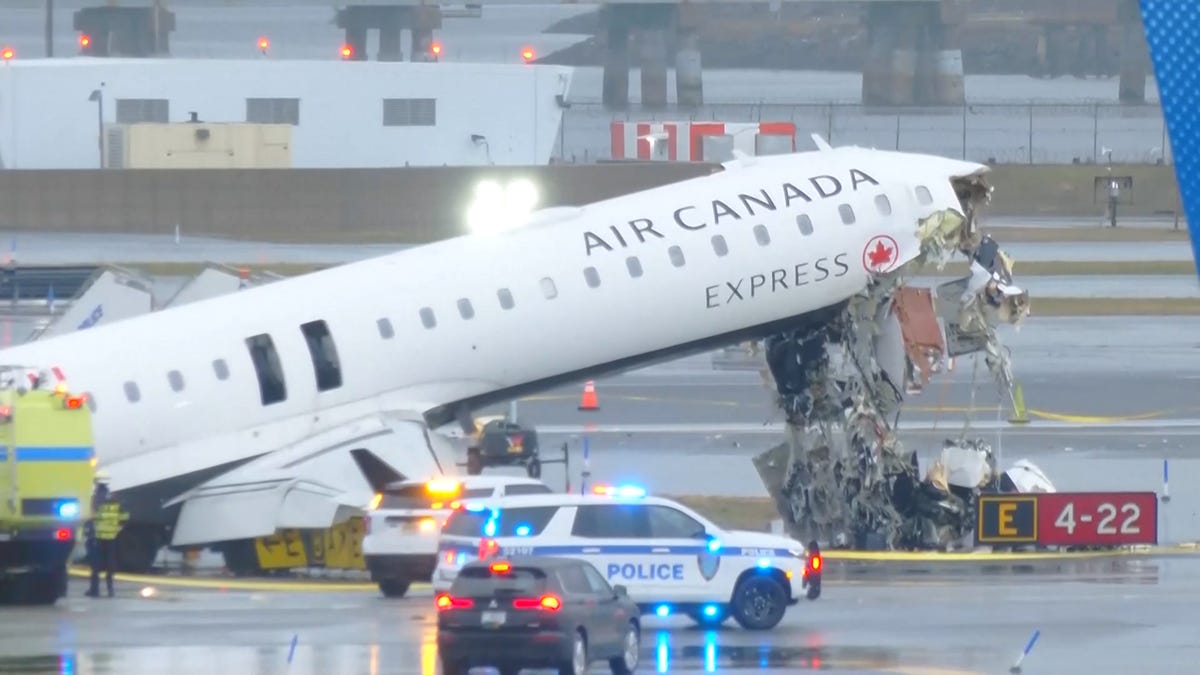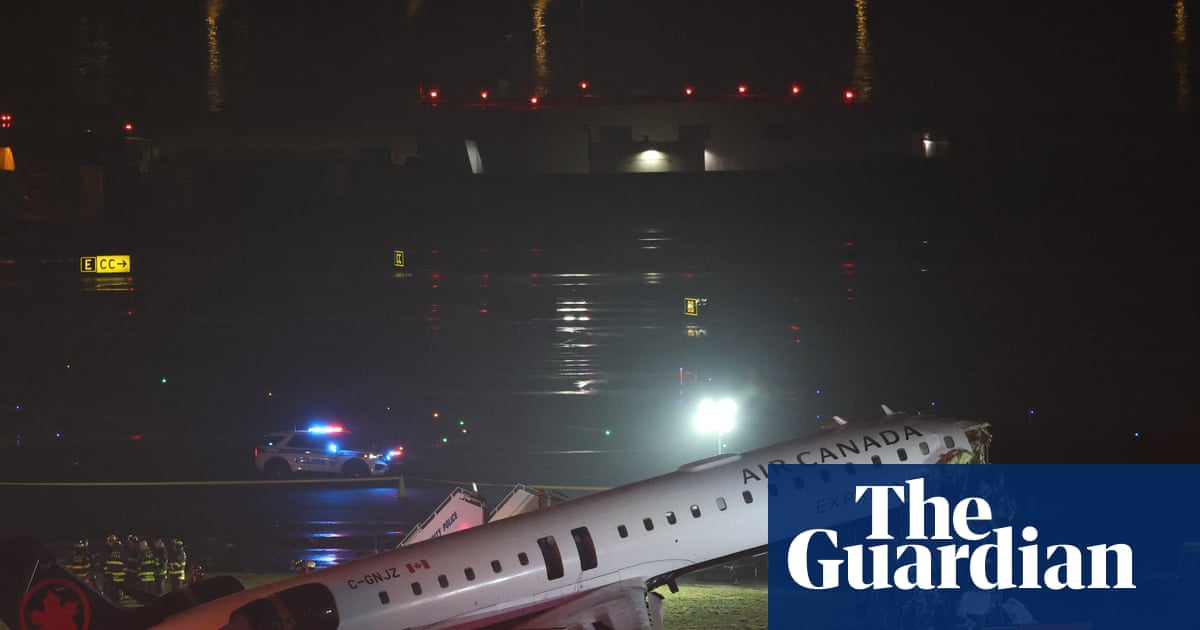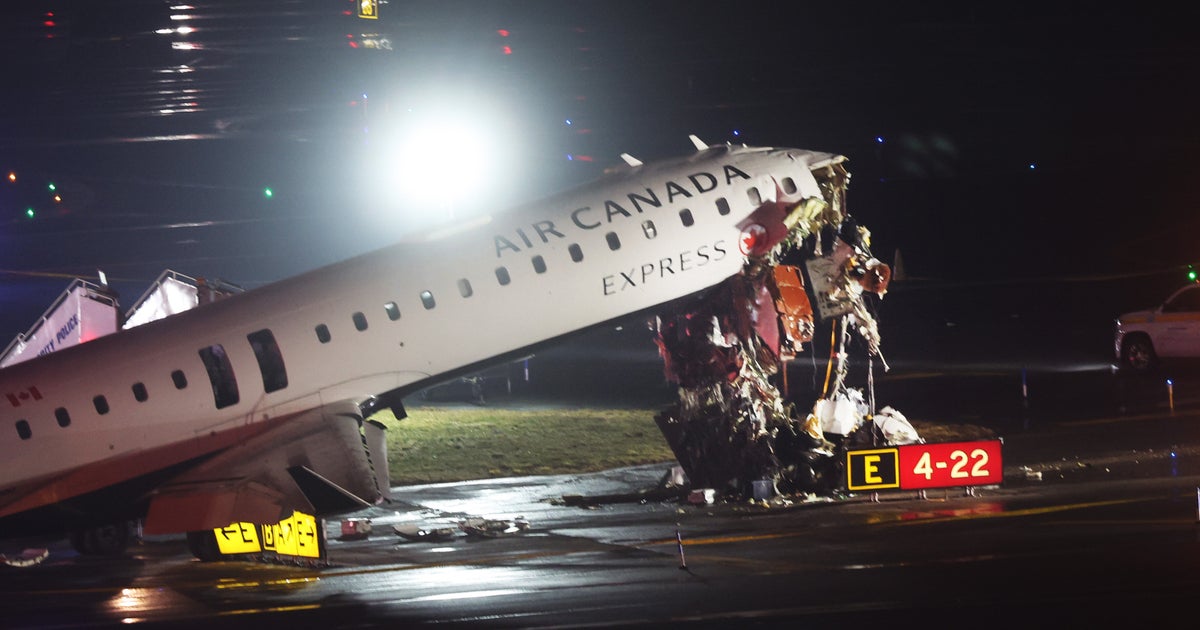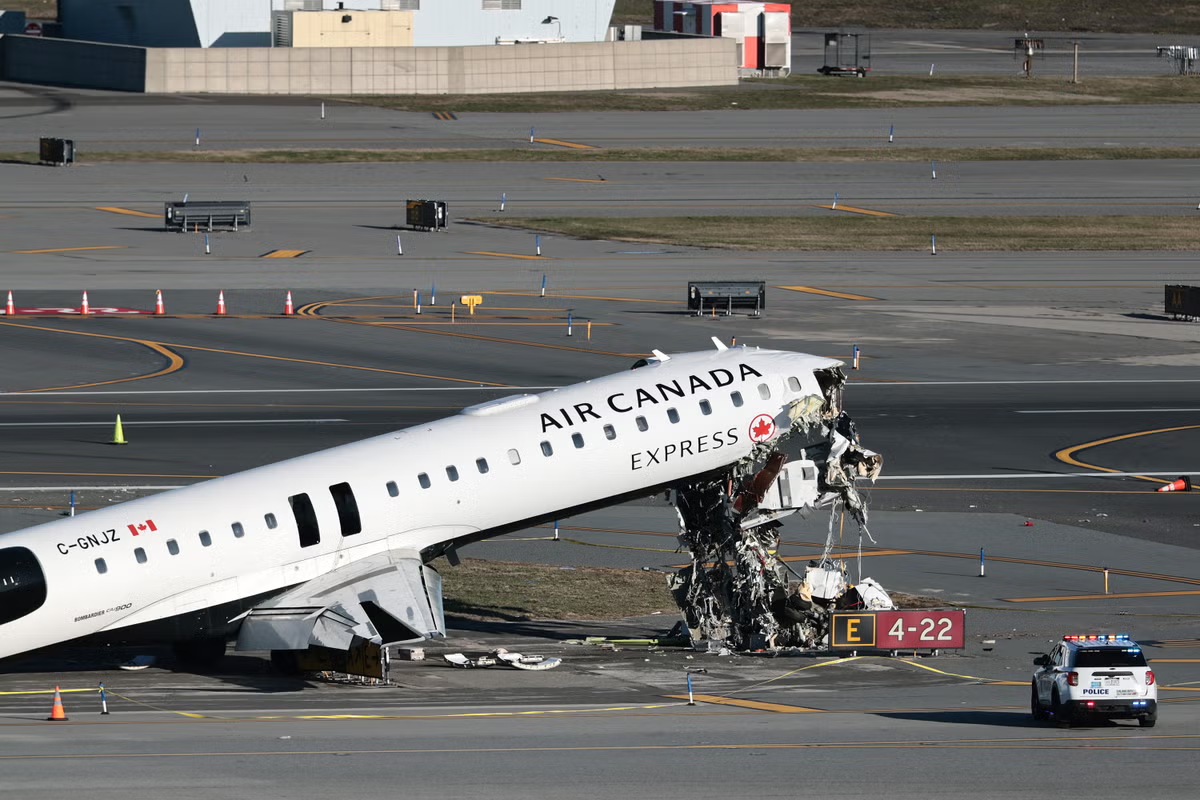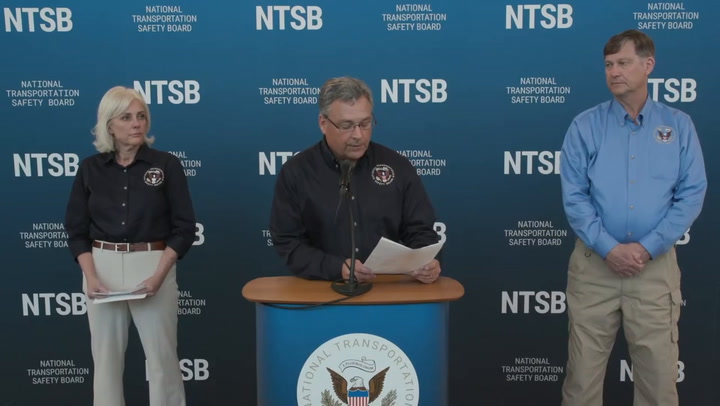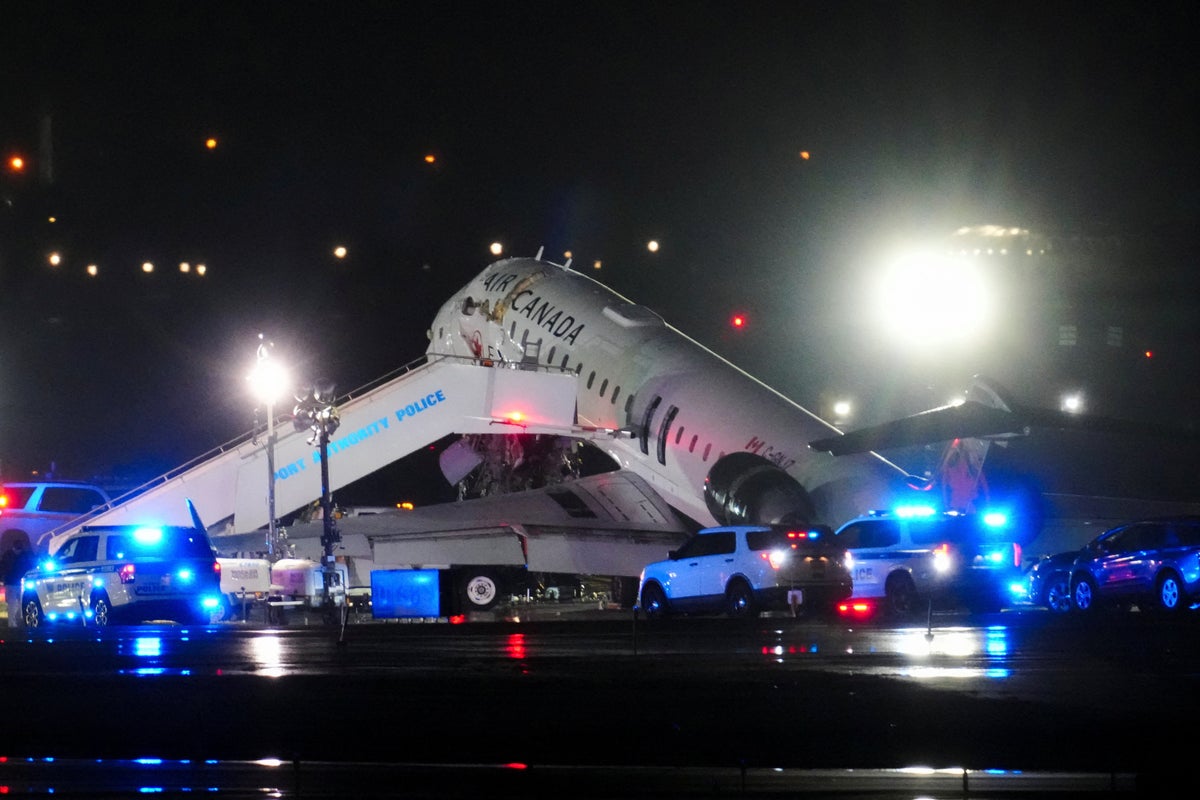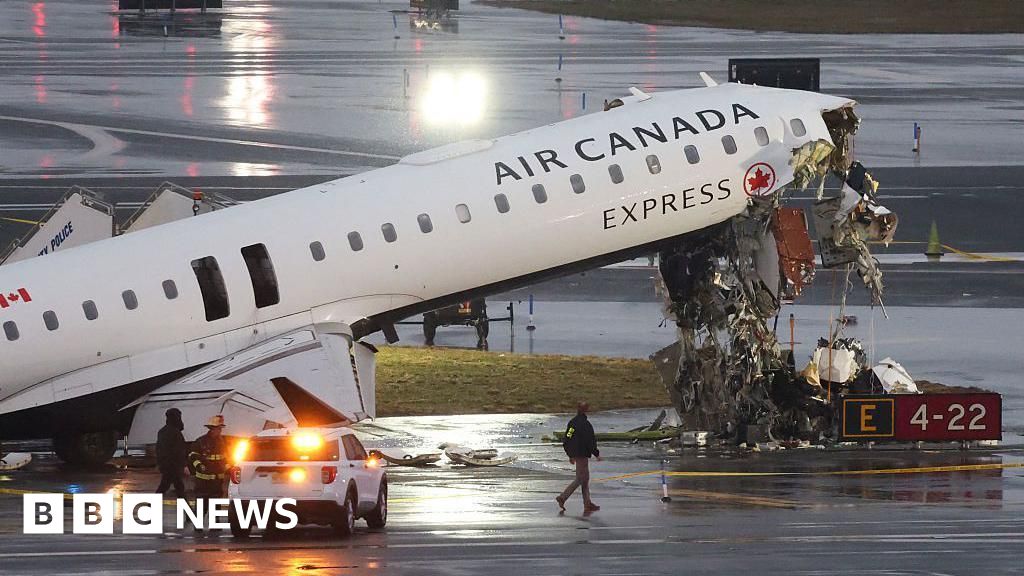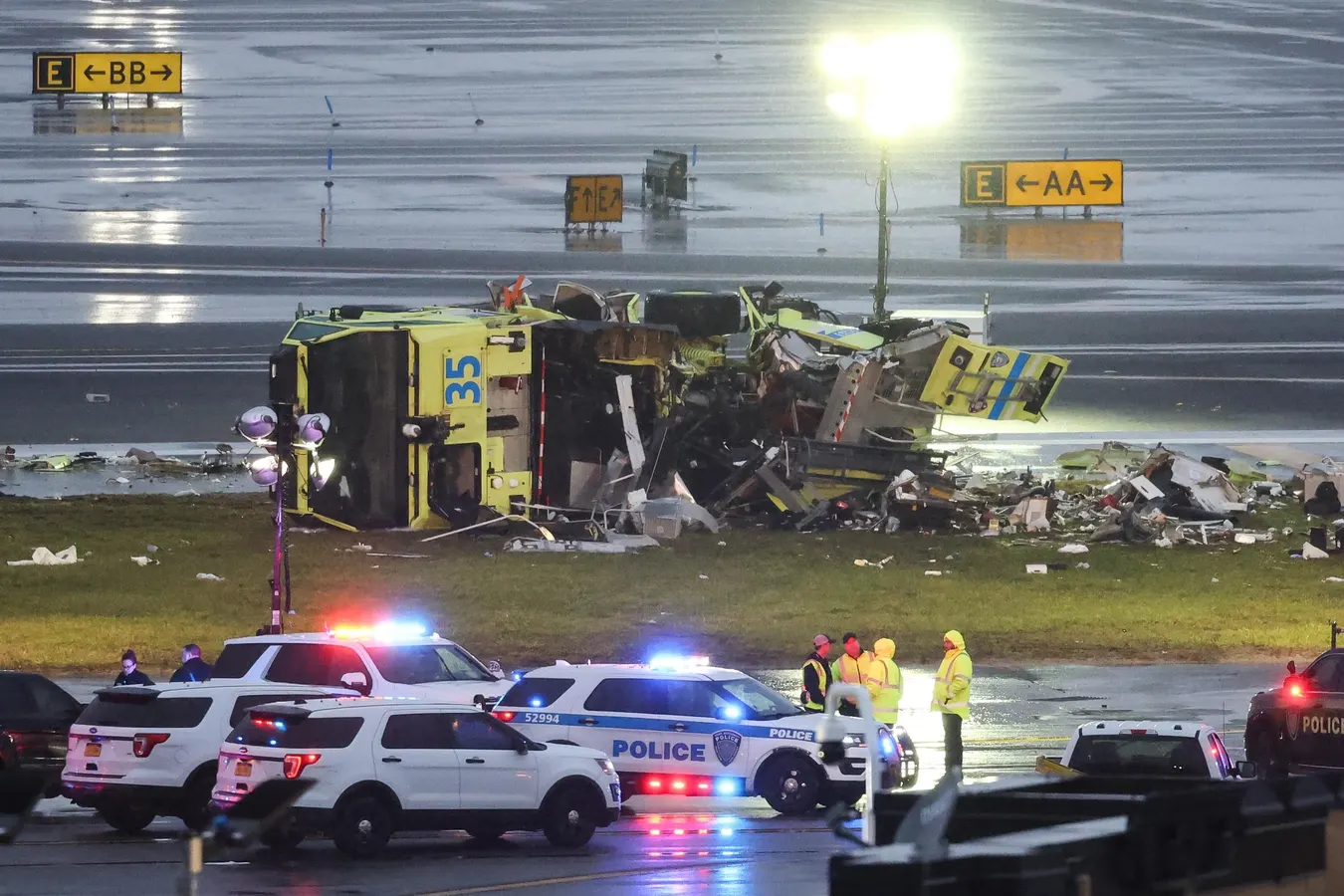
ToplineThe fire truck that was struck by a jet at LaGuardia Airport on Sunday did not have a transponder that would have triggered an alarm before the crash, the National Transportation Safety Board said Tuesday, revealing more details about the lethal incident as officials investigate possible causes.A damaged Port Authority fire truck sits near the runway after colliding with an Air Canada Express CRJ-900 at LaGuardia Airport in New York, on March 23, 2026.Photo by TIMOTHY A. CLARY / AFP via Getty ImagesKey FactsA runway warning system known as ASDE-X did not work because of the absent transponder, NTSB Chair Jennifer Homendy told reporters, saying “many many things went wrong” Sunday night.The alert system failed “due to the close proximity of vehicles merging and unmerging near the runway,” Homendy added. The fire truck was responding to an incident concerning a separate aircraft when the jet struck it, killing two pilots and injuring about 40 people.Transponders for runway trucks work by broadcasting the vehicle’s position and speed to the air traffic control tower, which means the air traffic controllers on duty during the crash only had radar systems to rely on, according to Homendy.Homendy noted the NTSB had “no indication” the other trucks behind the fire truck that was hit had their own transponders.Crucial Quote“I have seen a number of reports from the press about distraction—whether there was distraction among controllers,” Homendy said. “I would caution pointing fingers at controllers and saying distraction was involved,” citing heavy workloads for the air traffic controllers Sunday night.Key BackgroundEmergency vehicles at LaGuardia were responding to an emergency on a United Airlines flight that reported a strong odor in the cabin after it aborted a takeoff. The fire truck involved in the crash was permitted to cross the runway cleared for Air Canada Express Flight 8646. “Once an aircraft is cleared to land—and this one was—it owns the runway,” Mary Schiavo, former U.S. Department of Transportation inspector general, told Forbes, adding there will be “serious questions about what the FAA was doing, who was in the tower, whether they were overworked, and whether staffing was sufficient to coordinate these functions.” Investigators still need to analyze cockpit and flight data and conduct interviews with survivors. One of the surviving firefighters was released from the hospital Monday night while the other remains hospitalized.Further ReadingLaGuardia Crash: More Than 170 Flights Canceled Tuesday—Delays Could Last Days (Forbes)
NTSB: Runway Warning System At LaGuardia Didn’t Go Off Before Crash
A jet crashed into the fire truck at LaGuardia Airport on Sunday, killing two and injuring dozens.
398 words~2 min read