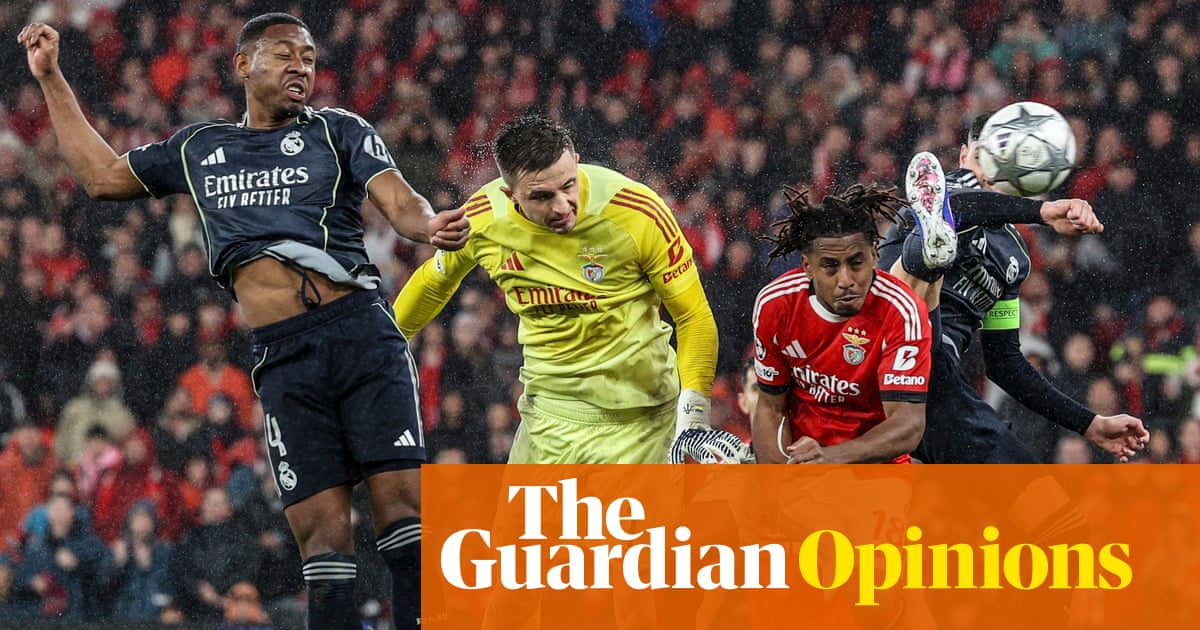
Theories range from obvious mismatches to Premier League clubs not being able to defend from open play
There were 68 goals in the last 16 of the Champions League, which is not only a lot but goes against the trend of the previous four seasons. What’s going on? Has football suddenly become more attacking again? This surely can’t all be down to Premier League sides struggling to defend against teams who don’t just rely on corners but actually attack from open play, can it?
An average of 4.25 goals a game is highly unusual, particularly given the recent context. Before 2008-09 there was only one season when the knockout phase of the Champions League yielded more than three goals a game; between 2008-09 and 2019-20 there was only one season when goals per game dipped below three. There then followed four campaigns in which the average did not climb above 2.72 (and in 2022-23, it was as low as 2.34), before bouncing back to 3.29 last season (including the playoff round). The playoff round this season produced 3.94 goals per game – and there were no Premier League teams involved; this is not purely an English issue.
The sample size is limited, but 32 games yielding an average of more than four goals a game is a marked uptick. There had been a theory that the abolition of the away goals rule in 2021 lay behind the drop in the number of goals – although that didn’t explain why the decline began the previous season – but if that did have an impact, it seems to have been temporary.