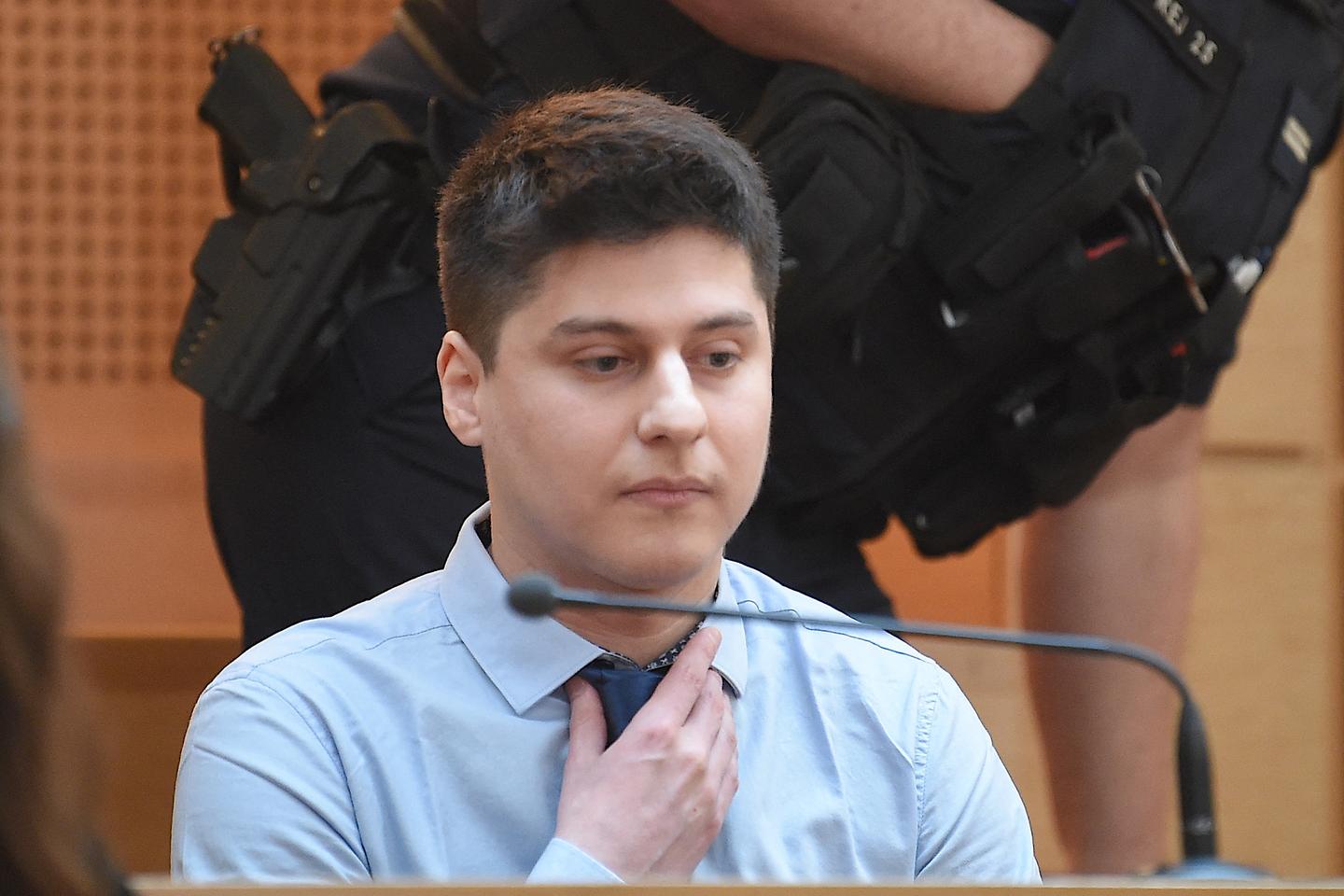
For someone who followed Nicolas Zepeda's first two trials in the spring of 2022 and then in December 2023, attending the third is an unusual experience. Everything is familiar. The defendant has neither gained nor lost weight, although his face has perhaps lost a bit of its roundness. His thick hair remains just as dark, and his voice has the same tone.
His deferential attitude toward the court is unchanged as is the detached ease, now expressed in entirely fluent French, with which he recounts his "happy childhood in a loving family," his education "at a Montessori school," his university studies where, he says, he was a bright and curious student, his "very useful" stay in the United States and then at a Japanese university, "with a government scholarship." Then comes, just as smoothly, the story of his meeting with Narumi Kurosaki. And, of course, word-for-word, we hear the same repeated statements. "I am innocent, I did not kill Narumi," he said once again on Tuesday morning, March 17, at the opening of the hearing before the criminal court in Lyon.
Also familiar, in the front row, is the face of Kurosaki's mother, doubly hidden behind a mask and a curtain of black hair, clutching an embroidered envelope to her chest, known to contain a portrait of her daughter who disappeared forever in the eastern town of Besançon on the night of December 4, 2016. The Japanese student, forever frozen at age 21, has two younger sisters, Kurumi and Honami, who share the same serious expression and restraint.