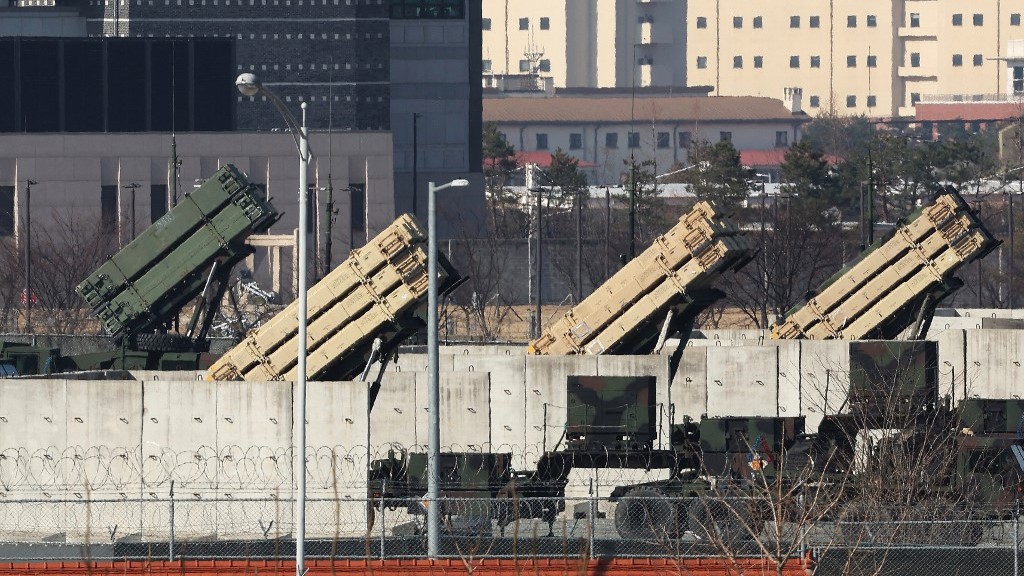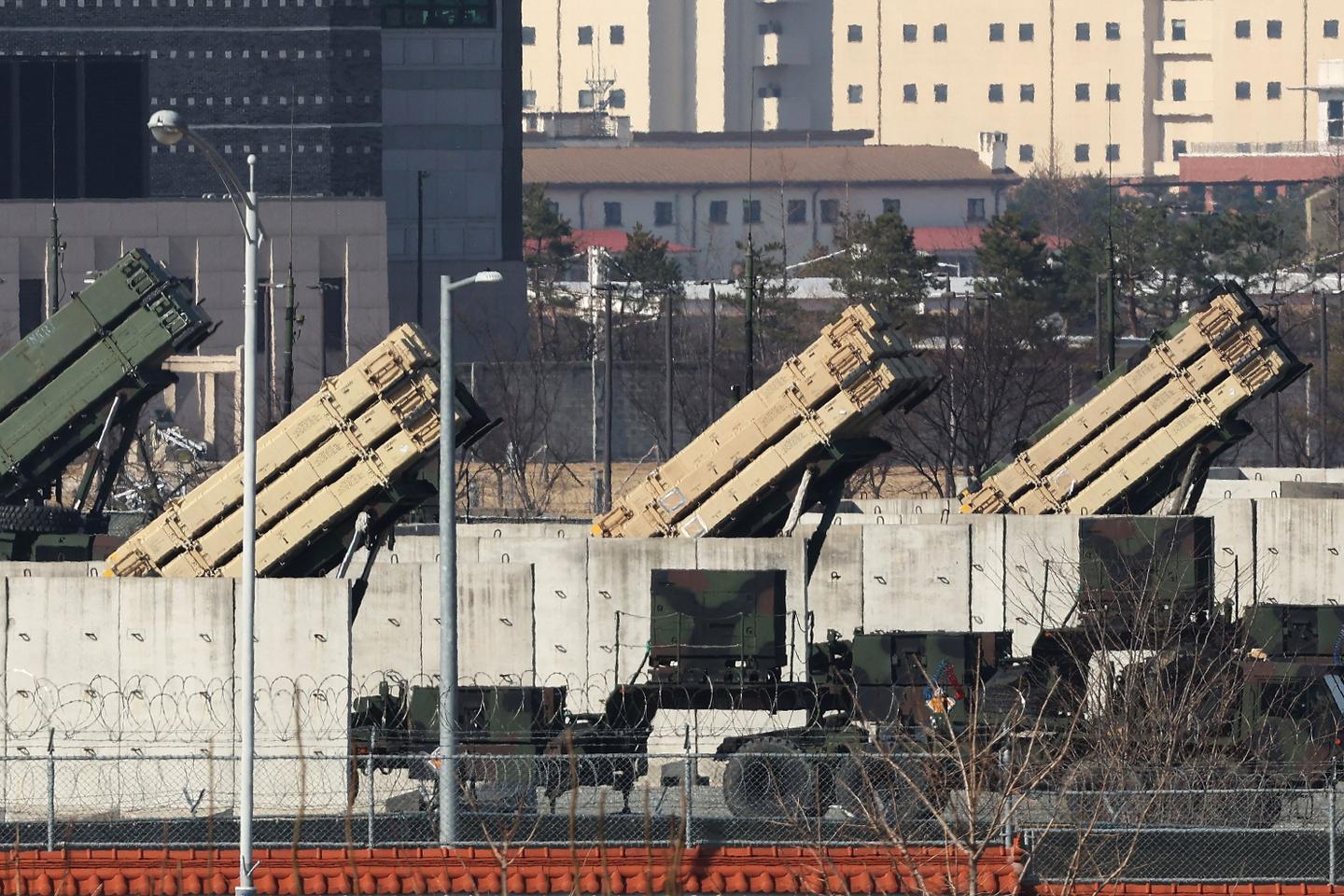
Patriot missile launchers at a US military base in Pyeongtaek, South Korea, March 8, 2026. YONHAP VIA AFP
In the war waged by the US and Israel against Iran, ammunition reserves on both sides remain perhaps the most closely guarded secret. This highly sensitive information is at the heart of military strategy, as each of their goals are partly shaped by these figures. After two weeks of strikes, how many missiles and drones does Tehran still have to target its adversaries and their allies? And for how much longer can Gulf countries and Israel defend themselves?
Even before the offensive began, military officials had begun taking stock, worried that a drawn-out conflict would deplete interceptor reserves already significantly reduced by previous Iranian offensives. After the "12-day war" in June 2025, Israel's supply of Arrow missiles, which enable interception of ballistic missiles at high altitudes, was considerably diminished, according to several military sources. No new operations could have been launched before the arrival of US reinforcements, including additional defense systems and munitions, to protect both Israel and Gulf countries.
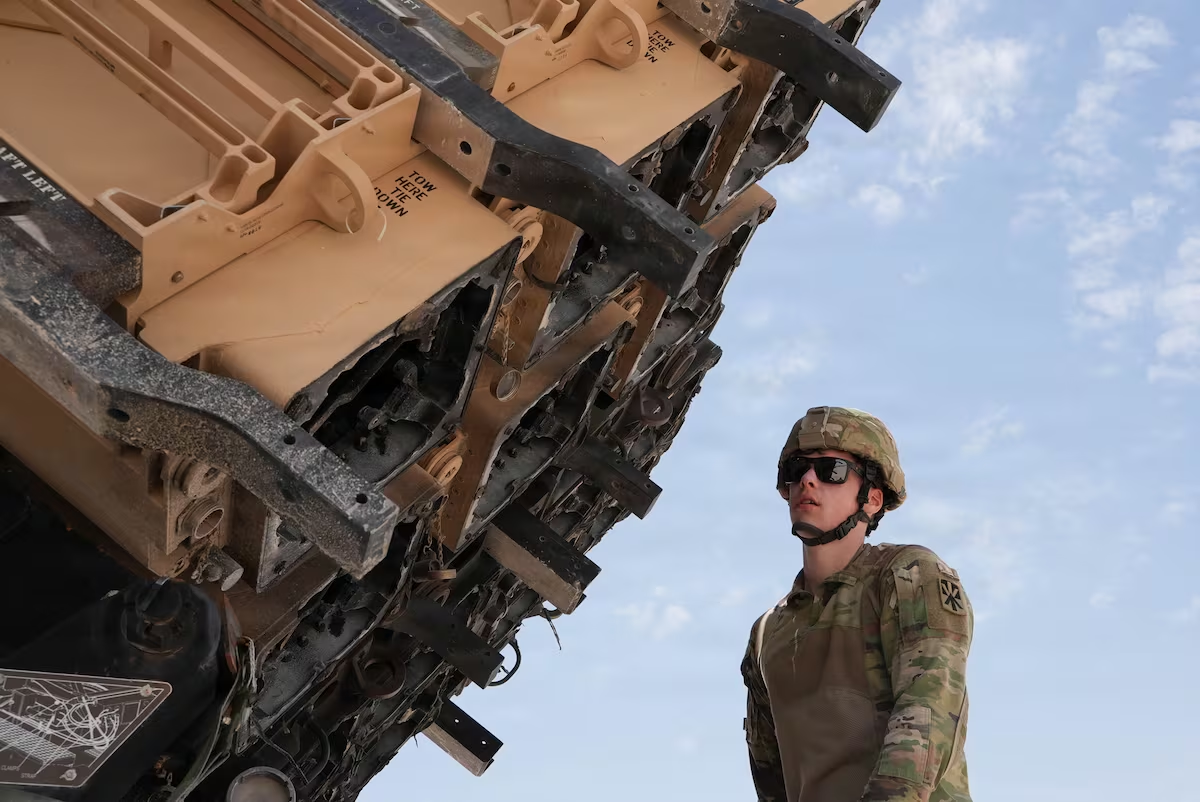
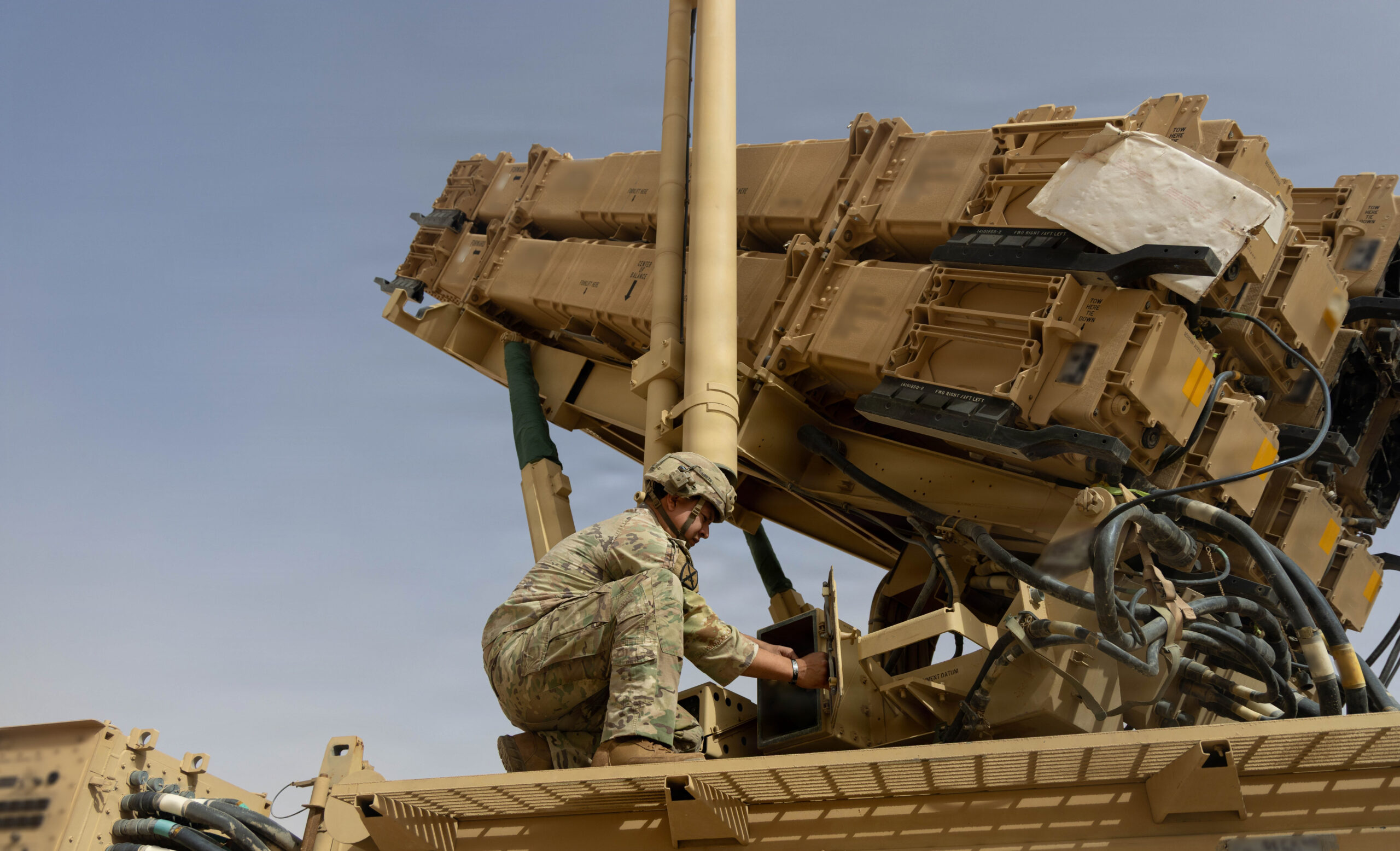
The best-known system is the Patriot, with a range of 15 to 25 kilometers, designed to shield strategic infrastructure or cities from aerial and ballistic threats. Beyond that, air defense relies on other systems such as Terminal High Altitude Area Defense (THAAD) and Aegis (whose SM-3 missiles are launched from the sea). With respective ranges of up to 150 and 500 kilometers, these systems allow for earlier interception. All are extremely costly – running into several million dollars, or even tens of millions for the most advanced models – so militaries maintain only limited stocks.