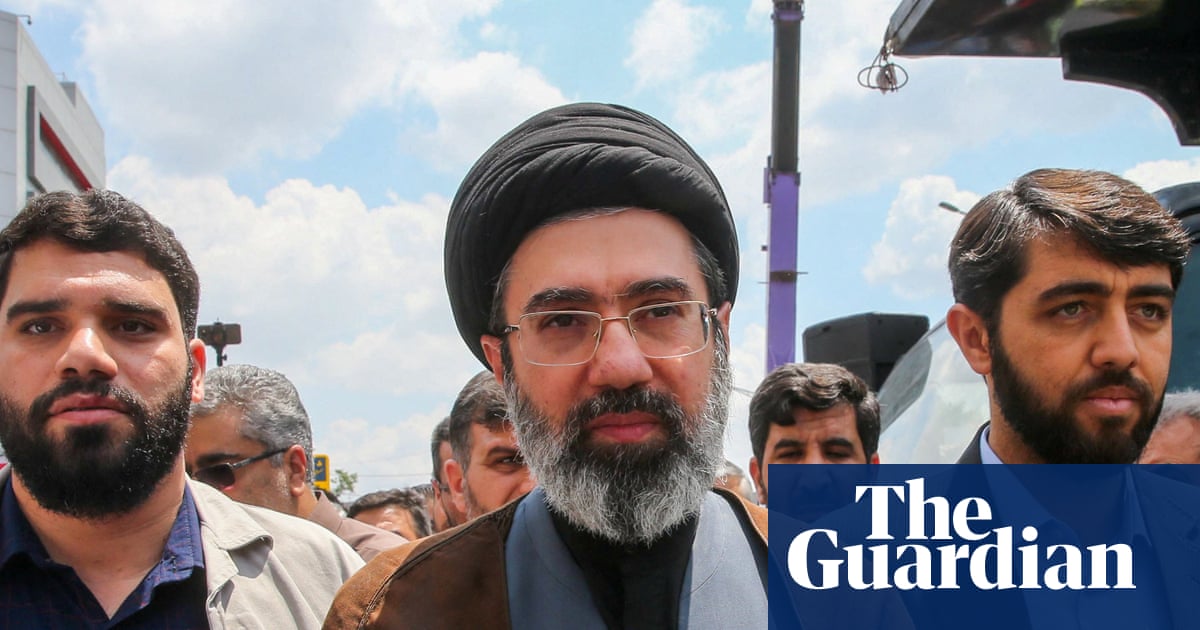
Lack of public appearances prompted speculation about new leader’s mortality after multiple family members perished
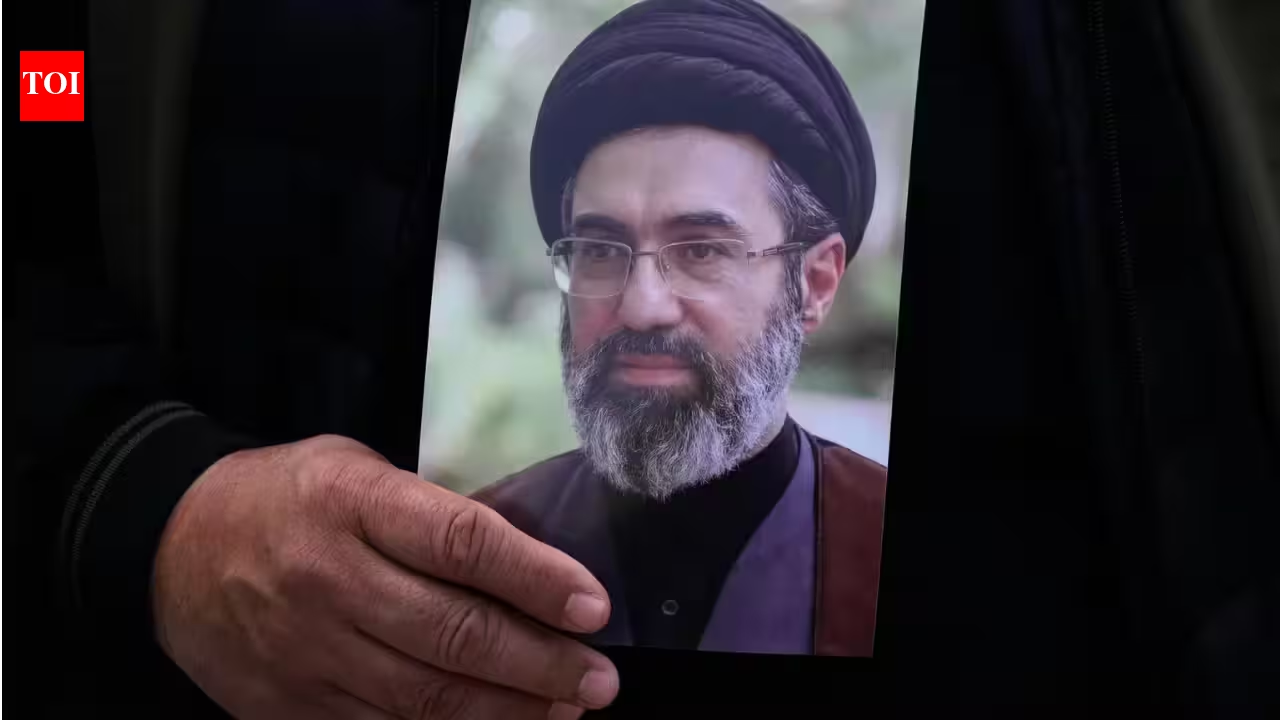
The confirmation that Iran’s new supreme leader, Mojtaba Khamenei, was injured in the first wave of Israeli attacks underlines how desperate the Islamic Revolutionary Guards Corps (ICRG) was to ensure their wounded choice was elevated to high office, and how confident it is that the wartime machinery can operate almost on automatic pilot without him.
The full scale of Khamenei’s injuries and speed of his recovery remain unclear, but a broken leg and facial injuries are the minimum. It is not a medical bulletin on which the authorities are seeking to dwell, although Ali Larijani, the secretary of the supreme national security council, chose his words carefully in saying “his condition has not been reported as critical”, a phrasing that suggests he has not personally seen him.
In a bid to show the government was functioning in line with its constitution, he added: “Despite this incident, he continues to provide full authoritative guidance and oversight of the operations, and all actions and attacks are carried out with his direct permission and orders.”
But it now looks as if some of the delay around his election was not just a technical issue of assembling in wartime the assembly of experts, the 88 strong body of clerics that elect the Supreme leader, but also over doubts about Khamenei’s capacity and willingness to take on the job.