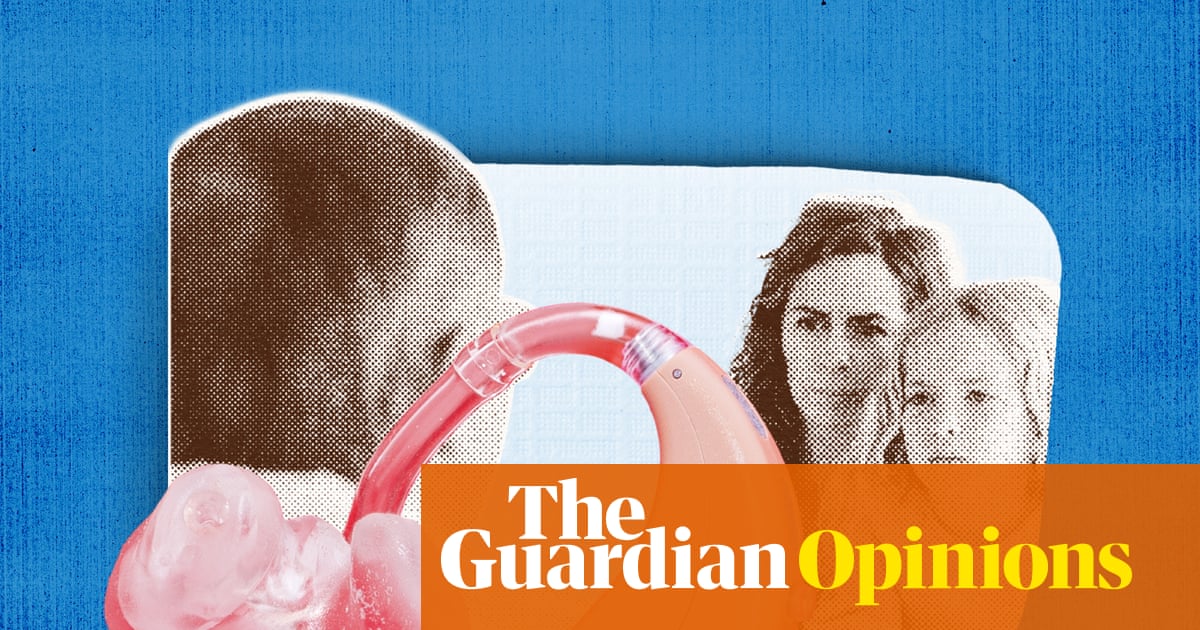
Since the US has no federal mandate for hearing aid coverage, I found myself in a quandary – I couldn’t communicate with the hearing or the deaf
At the end of my second American Sign Language (ASL) class, during which I had fingerspelled my name Deborah as “F-E-B-O-R-A-H”, I thought it prudent to type a question into my Notes app rather than trying to fingerspell it. “How do I sign, ‘I’m hearing impaired?’” I wrote, showing the typed sentence to my teacher, Courtney Rodriguez. Then I pointed to one of my hearing aids.
Sixty percent of ASL, Courtney had just taught us, consists of non-manual markers, meaning most of the communication in ASL comes from facial expressions. Puffed cheeks, for example, indicates something big. Pursed lips means small. From the puffed cheeks and pained look on my deaf teacher’s face, I could sense I had hit a big nerve.
Courtney wrote the phrase “hearing impaired” on a whiteboard then crossed it out. “No,” she signed. Then she replaced my self-descriptor with the correct ASL term, “hard of hearing”, and signed it by tapping two fingerspelled “H”’s in front of her, as if hitting two adjacent bongos: “H … H. Hard of hearing.”
“Ahh”, I said out loud, “hard of hearing. Got it.”