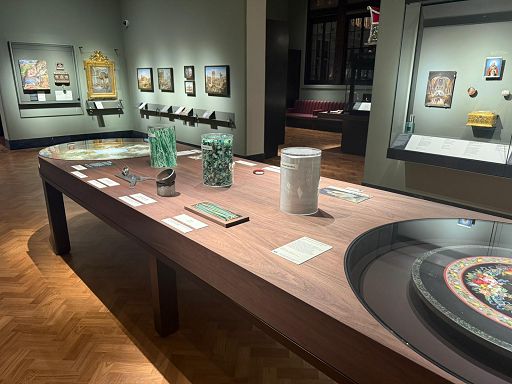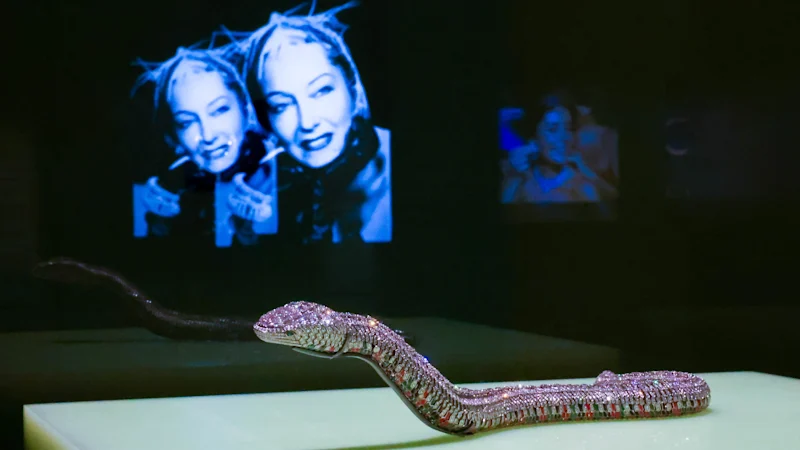
Displayed in a redesigned space, Rosalinde and Arthur Gilbert’s expansive collection of decorative items is not only gorgeous, at last it boldly tackles the question of where these valuables came from
W
e periodically hear when a masterpiece is “saved for the nation”, usually when a museum is obliged to raise eye-watering sums to prevent the export or sale of an artwork deemed of national significance. Museums also occasionally purchase at auction for the same purpose. They are, however, swimming in a pool among the superwealthy, with many news-making record sales subsequently disappearing into someone’s private yacht or bathroom.
It is this marketplace that makes it a momentous occasion when an entire private collection is bequeathed to the nation, usually upon the benefactors’ death. From the Wallace Collection in the 19th century to the 2025 acquisition of the Schroder treasure by the Holburne museum in Bath, museums are willing custodians of collections of such quality as can only be acquired through capital vastly exceeding their own. How they choose to present that gift is a curatorial issue in itself.
The Gilbert collection was bequeathed by the late Sir Arthur Gilbert after his first wife Rosalinde’s death in 1995. It was held by Somerset House in 2000 and then moved to the V&A in 2008. The couple began as fashion entrepreneurs in wartime London before locating to Los Angeles in 1949 where Arthur made success as a property developer. The now 1,000-plus collection began in the 1960s driven by a love for what Rosalinde called “beautiful things”, a rather superficial description for their collecting criteria of superlative craftsmanship of small-scale. These included European decorative works in gold and silver, Italian mosaics and enamelled portrait miniatures, and were linked to historical figures including Tsarina Catherine II of Russia or Napoleon. Frederick the Great’s 1765 mother-of-pearl snuffbox encrusted with gold, rubies and hardstones? Check. Enamel miniature portrait of Queen Charlotte of Mecklenburg-Strelitz, 1781? Check.