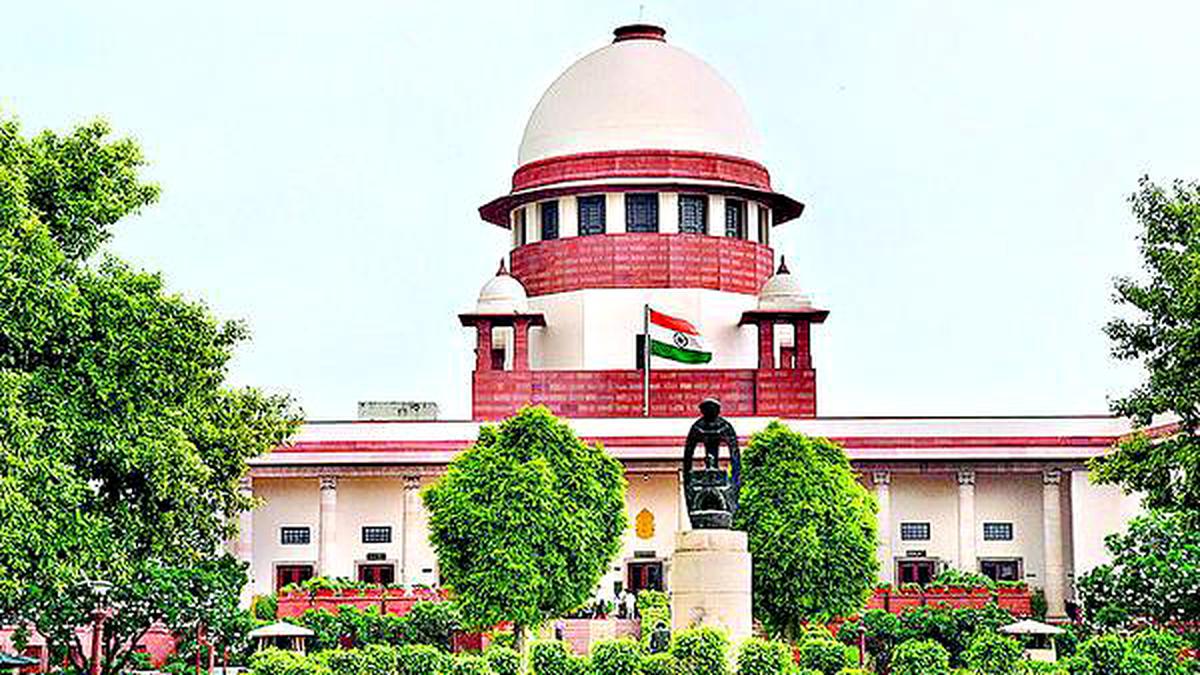
The Supreme Court of India on Monday (March 9, 2026) gave a petitioner liberty to approach the competent authority in the Union government with a representation questioning the new Income Tax law, which permits authorities not only to disclose reasons for initiating search and seizure operations but also extends the definition of undisclosed assets to the virtual digital space.
A Bench headed by Chief Justice of India Surya Kant dismissed as withdrawn a petition filed by Vishwaprasad Alva challenging the legality of provisions, especially Section 132 of the Section 132 of the Income Tax Act of 1961 and its corresponding provision of Section 247 along with Section 249 (non-disclosure of reasons for initiating search and seizure) in the new Income Tax Act of 2025. The new law is scheduled to take effect from April 1, 2026.
The CJI indicated that tax laws need teeth as they dealt mostly with tax evaders, bigwigs. “It is not easy,” Chief Justice Kant said orally.
“But the law strikes both the big and the small together. You make laws for Dawood Ibrahim and it hits a poor man elsewhere,” senior advocate Sanjay Hegde responded.
The petitioner, also represented by advocate Pranjal Kishore, opposed the absolute non-disclosure of reasons, and noted that seizure of personal digital devices cannot infringe the right to informational privacy as an intrinsic part of dignity as upheld by a nine-judge Bench of the Supreme Court in the Puttaswamy case.