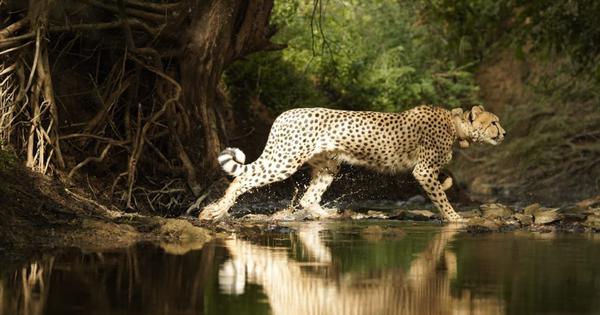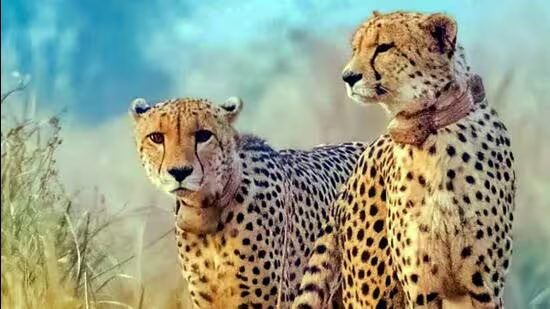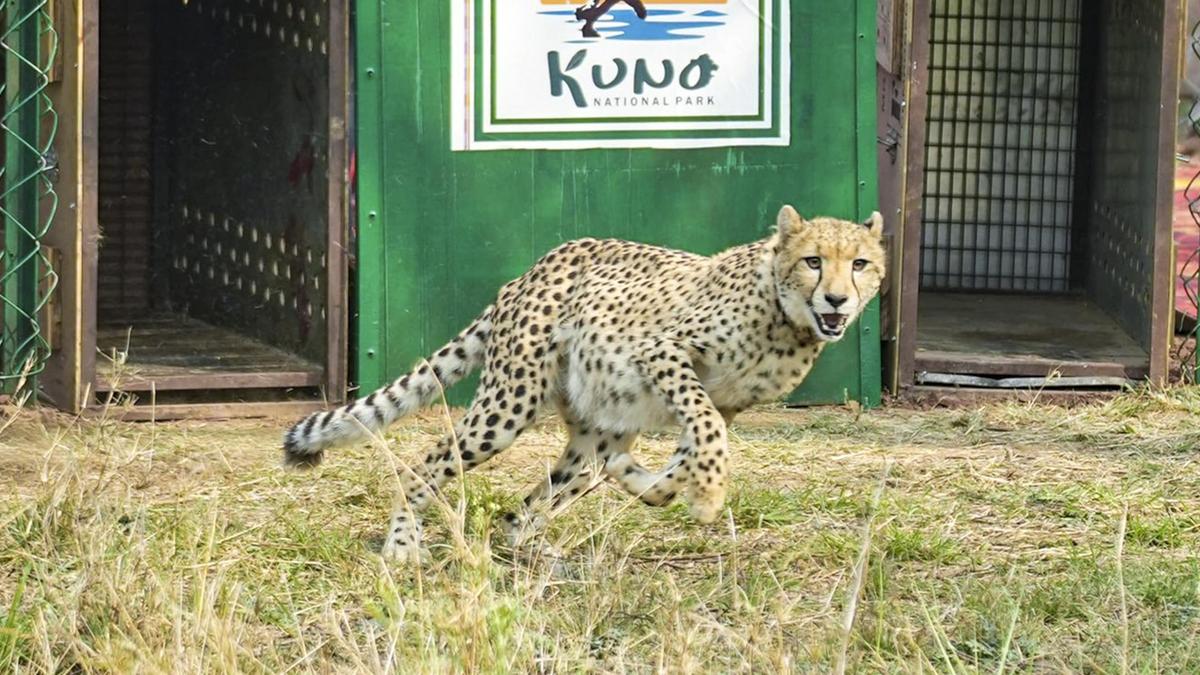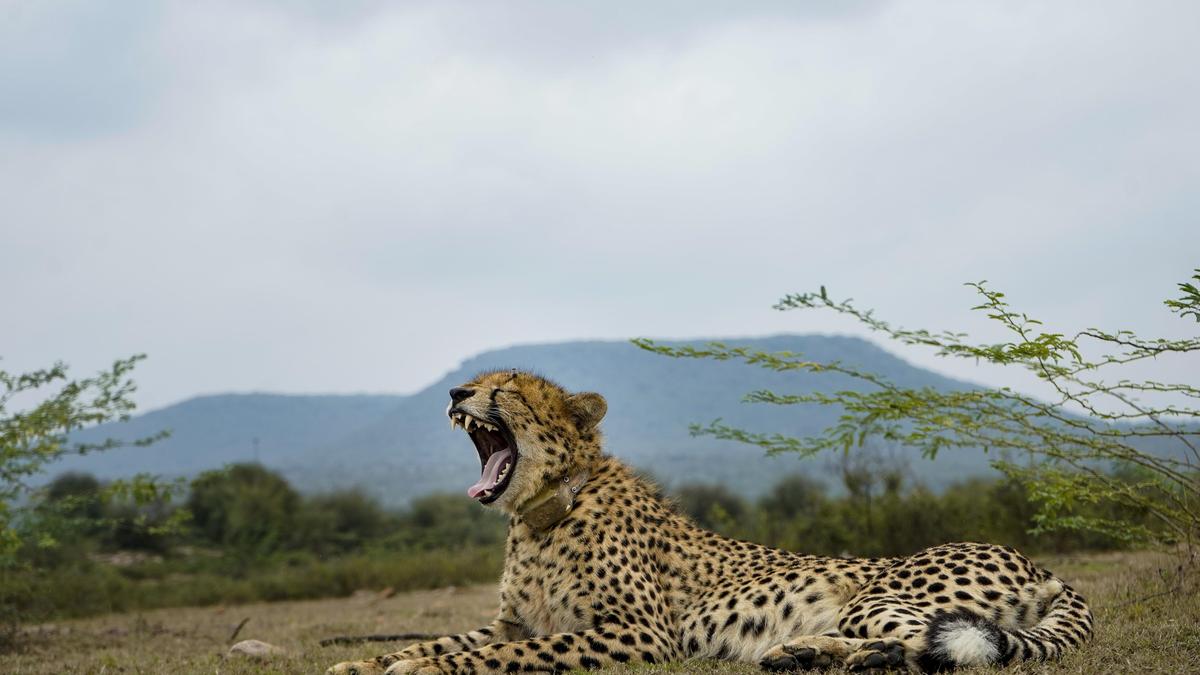
The National Tiger Conservation Authority (NTCA), a body under the Union Environment Ministry, said on Sunday that cheetahs travelling from Kuno National Park in Madhya Pradesh to Baran in Rajasthan was “natural territorial behaviour”.
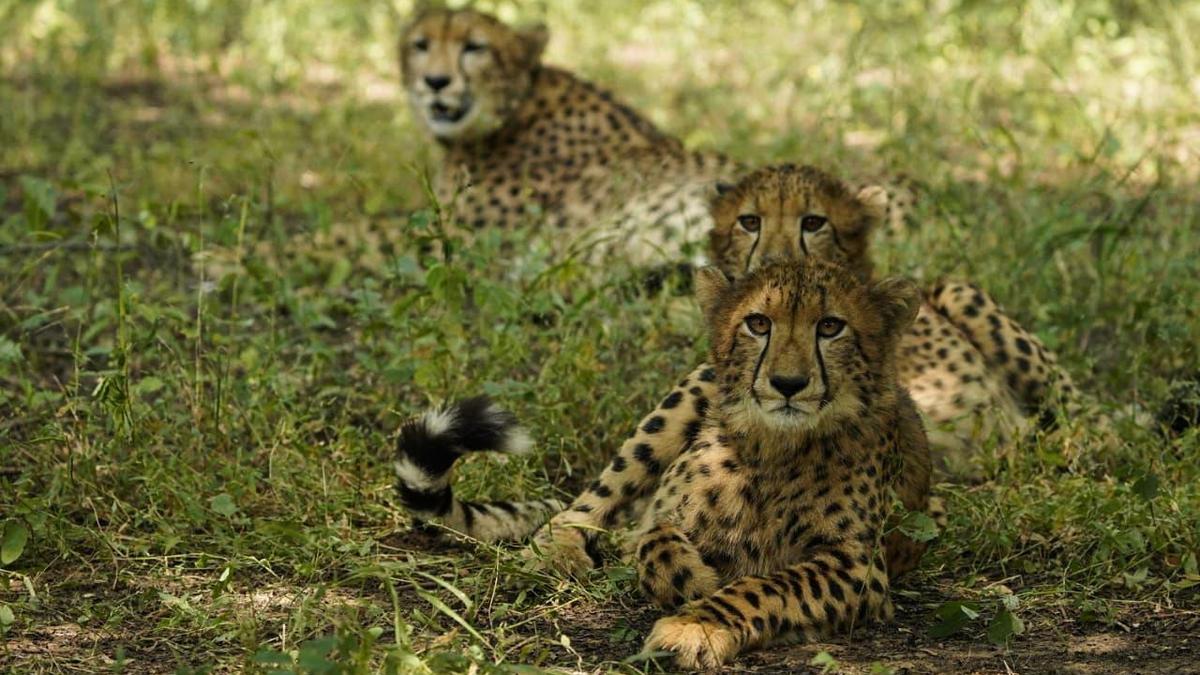
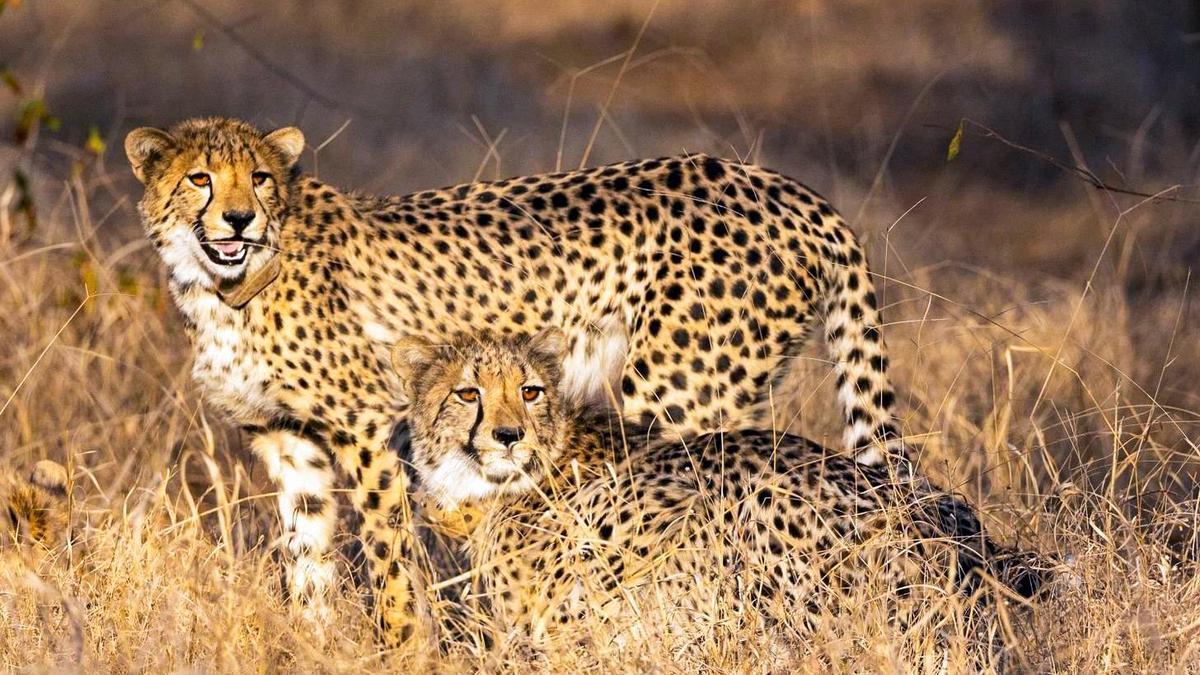
This follows media reports since late February that two cheetahs from Kuno had been tracked in the Mangrol range of Baran and the Banjh Amli Conservation Reserve after travelling about 60 to 70 km from Kuno National Park. Both animals are positioned about six km apart on either bank of the Parvati River. The cheetahs, called KP2 and KP3, are among the first generation of cubs born in India and descended from African cheetahs translocated in 2022.
Nine cheetahs from Botswana arrive at Madhya Pradesh's Kuno National Park
Both cheetahs are being tracked round the clock via satellite and are radio-collared. They are being monitored by a joint inter-State team, with field teams deployed from the Kishanganj and Anta ranges.
“Long-distance dispersal across landscape boundaries is a well-documented, natural territorial behaviour in cheetahs. The Project Cheetah Action Plan explicitly anticipates and provides for inter-State movement within the Kuno–Gandhi Sagar metapopulation landscape,” the NTCA noted. “These movements reinforce the strategic rationale for the proposed 17,000 sq. km Kuno–Gandhi Sagar inter-State wildlife corridor spanning seven Rajasthan and eight Madhya Pradesh districts.”