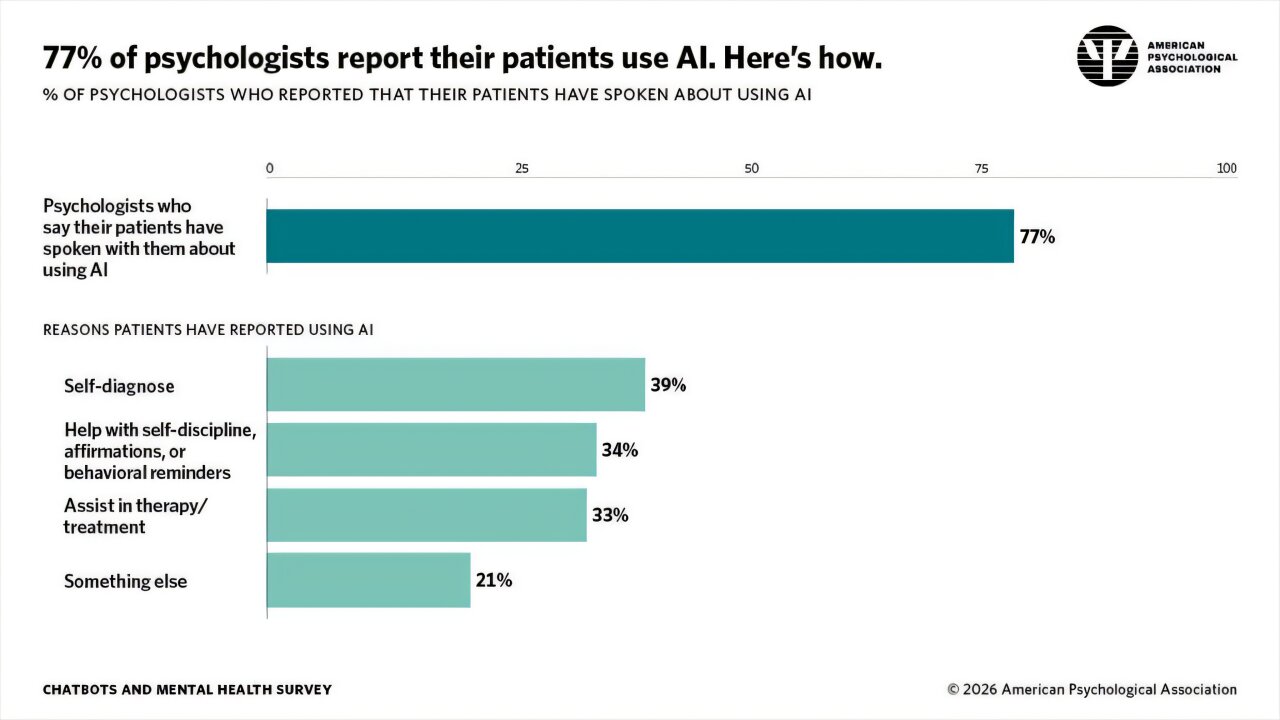
As Americans get lonelier and lonelier, a growing number of people are getting some emotional support from artificial intelligence chatbots — and some mental health experts are concerned.
“The topic of AI for therapy [and] emotional support companionship is coming up a lot,” says Leanna Fortunato, a licensed clinical psychologist and director of quality and health care innovation for the American Psychological Association. “Anecdotally, providers are talking about it, and we know from the research that people are using AI tools for that kind of support more and more.”
Some chatbot users accidentally fall into mental health-related conversations — by complaining about a stressful day to a digital entity that’s guaranteed to listen, for example. Others may seek mental health advice from an AI chatbot that isn’t a licensed professional, but is less expensive than a therapist, Fortunato says.
In a health research survey of more than 20,000 U.S. adults, 10.3% of participants said they used generative AI daily. Of that group, 87.1% of them reported using the tech for personal reasons including advice and emotional support. The study was published on Jan. 21 and conducted by researchers from institutions including Massachusetts General Hospital, Weill Cornell Medicine and Northeastern University.