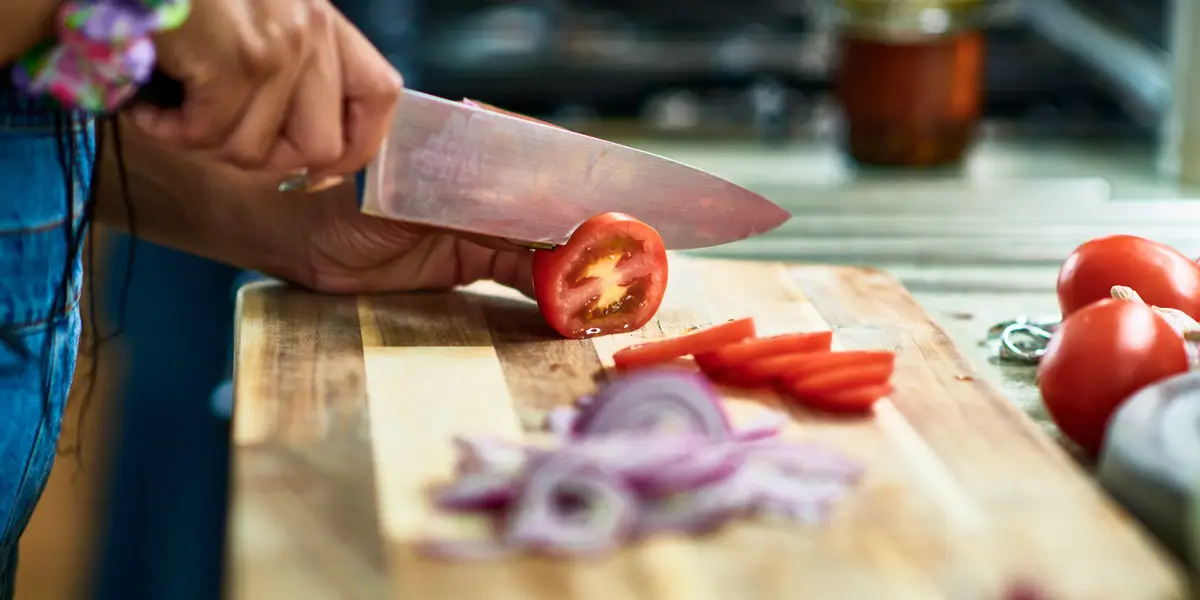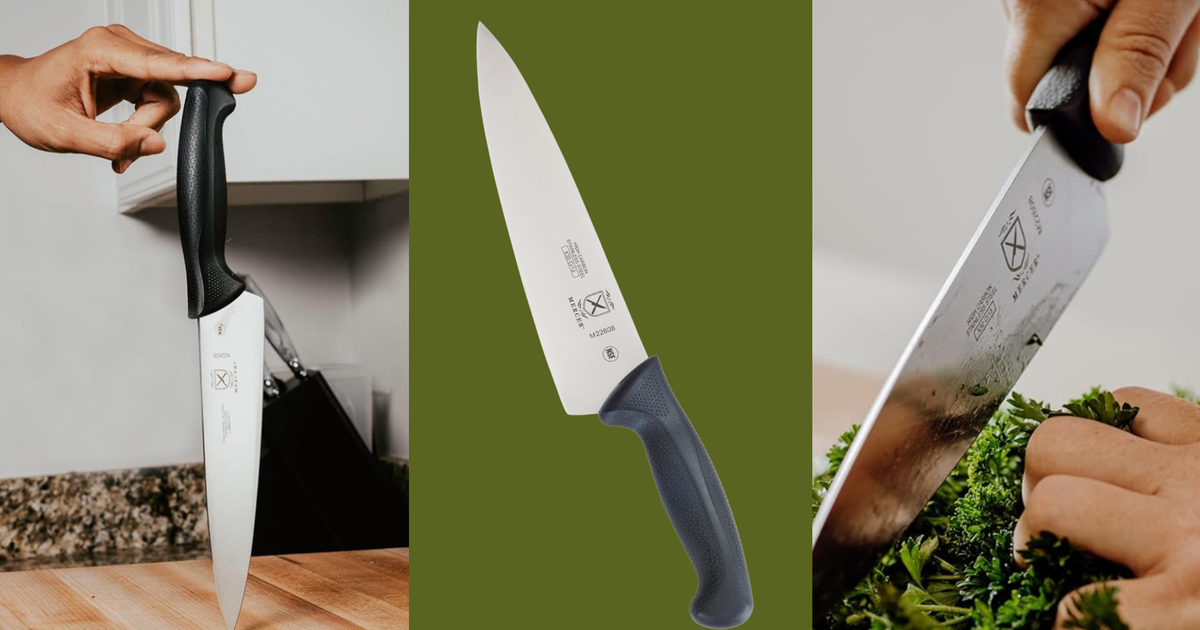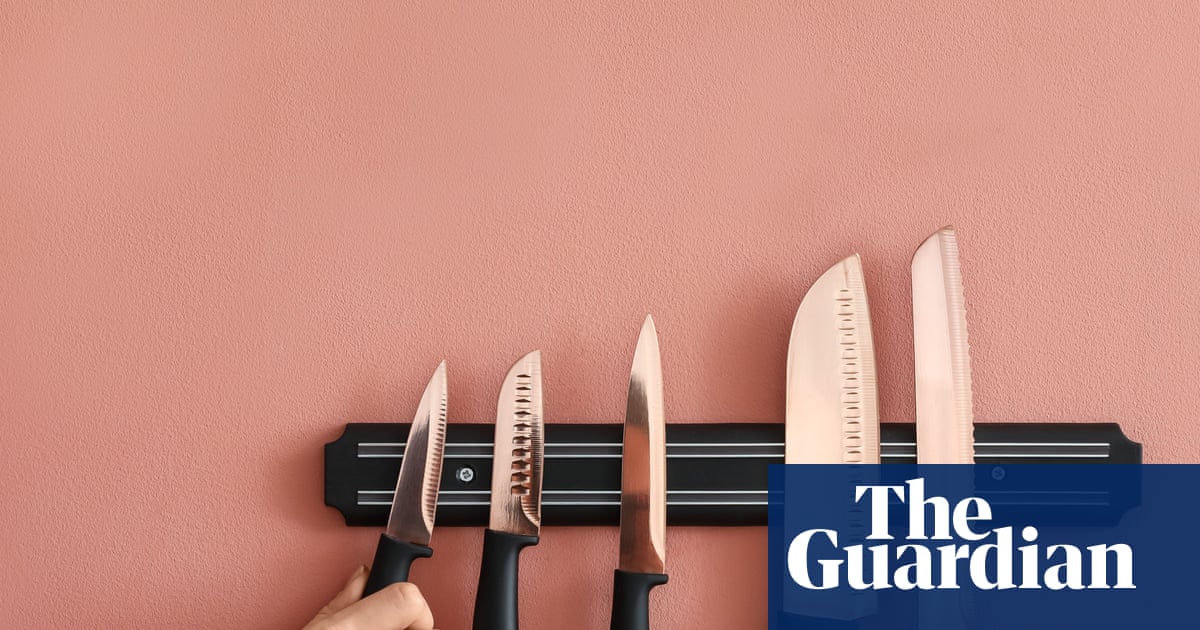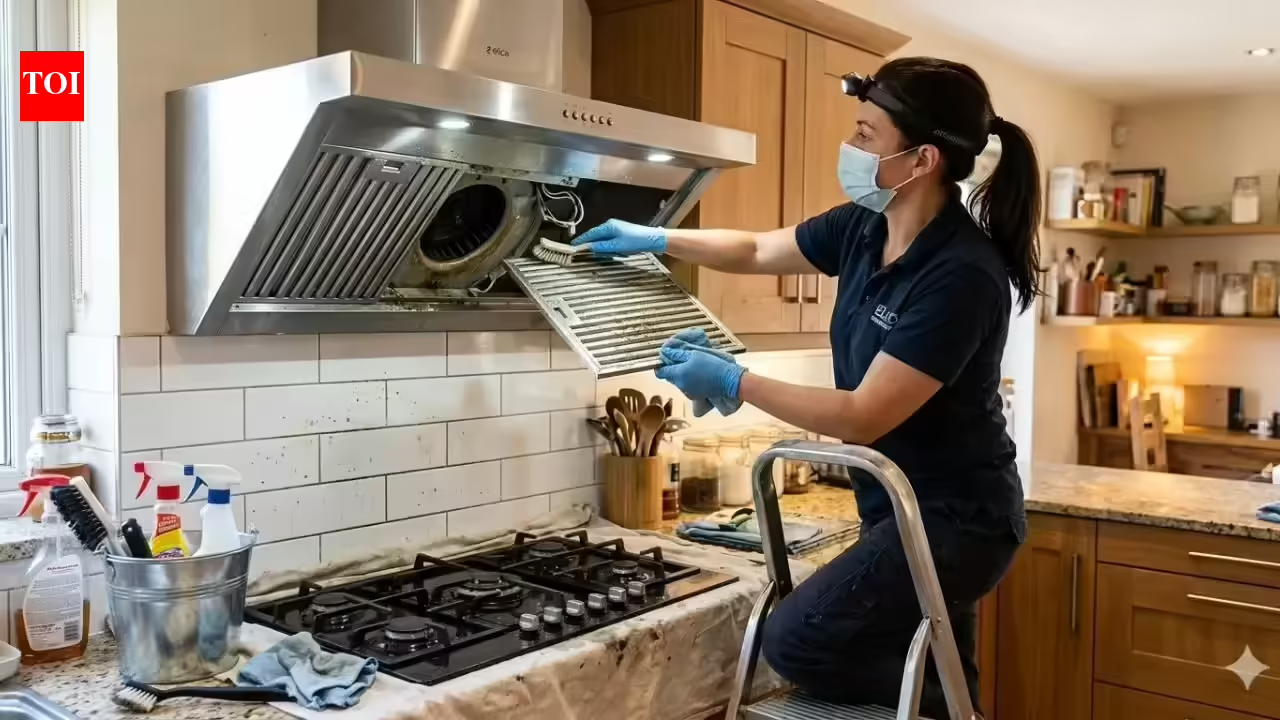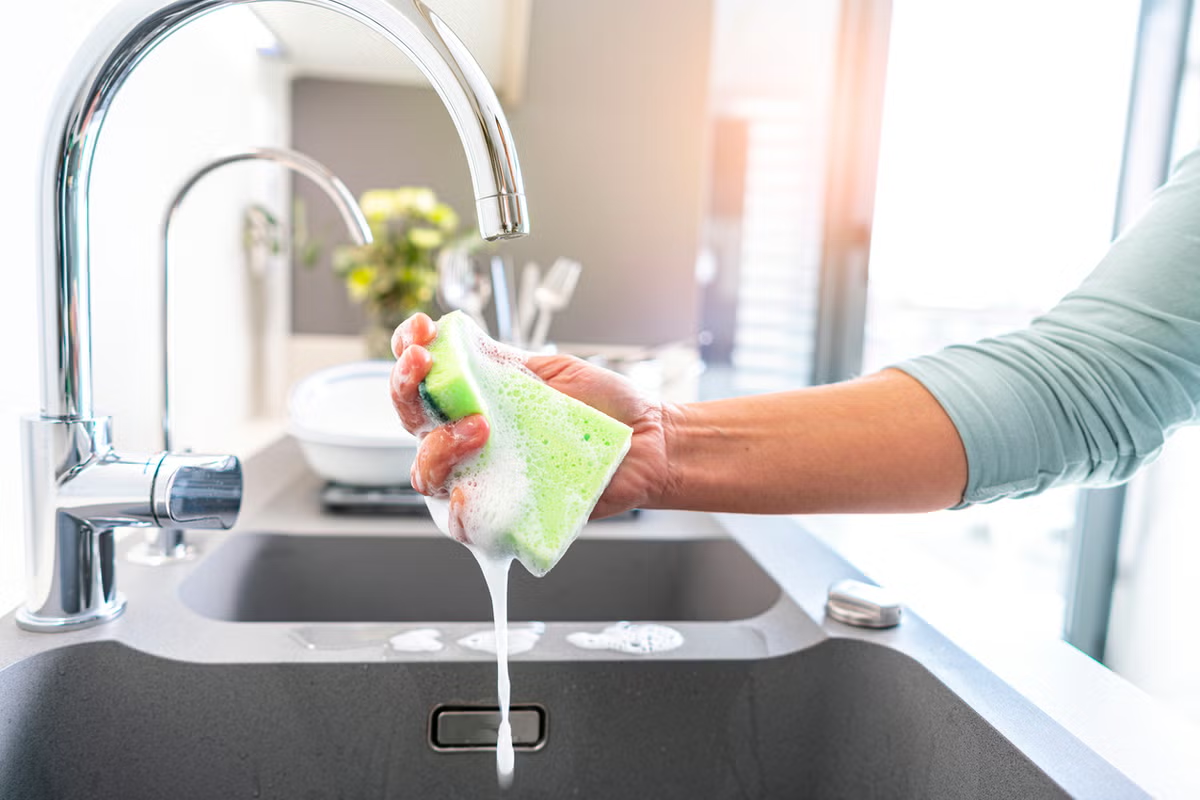
After years of using parchment paper in the broiler, I’m a little embarrassed to admit I only recently learned that’s a big no-no when it comes to kitchen safety. For the similarly uninformed, that’s because parchment paper is typically heat-resistant up to about 420 degrees Fahrenheit, while the broiler can reach 500 degrees or more. I’m relieved I never caused a kitchen fire! (And a quick but important aside: Parchment paper and wax paper may look similar, but are not interchangeable. Wax paper can be used for food prep and storage but is not suitable for cooking that requires heat, as it will melt and could even catch fire.) This revelation got me thinking about other common kitchen habits that could have similarly dire consequences. I reached out to several experts to find out which risky mistakes home cooks make all the time and how to avoid them. 1. Not drying your cutting board, hands or knife before prepping food.Los Angeles chef and culinary educator Mary Moran said she got her worst kitchen injury while cutting apples that were soaked in lemon water with wet hands and a wet cutting board. “I was moving fast and not drying my board, hands and knife. The water caused my knife to slip, and I sliced the tip of my finger and had a noticeable scar,” she said.Getty ImgesNever cut wet fruit, as it can slip on the cutting board.To help prevent a similar injury in your kitchen, keep a clean dish towel or paper towels nearby to dry hands, knives, cutting boards and produce before getting to work prepping your ingredients.2. Leaving cooking equipment unattended.By far, the leading cause of home cooking fires is unattended cooking, said Susan McKelvey, communications manager of the National Fire Protection Association.“Which is why it’s so important to not leave the kitchen when you’re cooking, especially when you’re cooking or frying food on the stove,” she said. While this may sound like simple advice, it can be difficult to follow in practice because “life is so busy and we’re often trying to accomplish many things at once,” McKelvey noted.If you are baking, simmering or roasting a dish, the organization advises you to check on it regularly and stay in the house until it’s done.Setting a kitchen timer is essential to ensure you don’t get distracted and forget that your appliances are on and in use. And remember to promptly turn off those appliances when you’re finished cooking, too. Know that cooking in general (and using the stove, in particular) when you’re really tired or after you’ve been drinking alcohol or using other substances can be very dangerous or, in some cases, deadly. “More than one-quarter of the people killed by cooking fires were asleep when the fatal injury happened,” McKelvey said. In the event of a kitchen fire, the NFPA recommends getting everyone out of the house quickly, closing the door behind you to contain the blaze, and calling 911.If you’re dealing with a small grease fire, you can put a lid over the pan and turn off the burners. For an oven fire, they suggest turning off the appliance and keeping the oven door shut. 3. Using a dull knife.It may seem counterintuitive, but cutting with a dull blade can be far more dangerous than cutting with a sharp one. “When the blade isn’t sharp, more force is needed to cut, increasing the risk of slips and potential injuries requiring stitches,” Mary Donaldson, food safety program educator at Michigan State University Extension, explained to HuffPost. “Using a knife sharpener can turn even the cheapest knives into highly effective tools. Although a sharp knife can still cause injuries, it makes cutting easier and reduces the effort needed to slice. Ideally, the hand guides the knife, and the sharp blade does the work.” Marco Vacca via Getty ImagesNever keep your potholders or kitchen towels hanging above or near your stove where they can catch fire.4. Leaving flammable items near the stovetop.Another common but risky kitchen blunder? Leaving things like dish towels, oven mitts, paper towels and food packaging too close to the burners, where they can easily ignite. “Combustible materials such as wrappers, potholders or clothing that have been left by or come too close to hot cooking equipment represents a leading factor in home cooking fires,” said McKelvey.That’s why it’s crucial to keep your cooking area clean and clear of debris. Also, avoid wearing clothing with loose sleeves and tie back long hair while cooking. 5. Resting your knife where it can easily be knocked off the counter. Where you place your knife when you’re not using it can pose danger, Moran said, “not only for yourself but for others in your household.” Most people put the knife to the left or right side of the cutting board — or even rest it on the edge of the counter — where it’s all-too-easy for a hand or an arm to accidentally knock it down. “And in the worst-case scenario, it can pierce through your clothing or shoe,” Moran said. Or worse, your foot (this is why many chefs wear steel-reinforced clogs).6. Soaking sharp kitchen tools in the sink.Knives, pizza cutters, mandolins or anything with a blade that needs to be cleaned should be hand-washed as soon as possible — not just tossed in a sudsy sink to be dealt with later. “Soaking poses a safety hazard, as submerged knives in soapy water are accidents waiting to happen,” according to a blog post on the Primeaux Kitchen Knives website. Reaching into a sink where sharp objects may be hidden among the dishes and suds could land you in the emergency room with a nasty hand injury. (Not to mention, soaking your knives can damage them over time.)And while you can’t prevent every potential accident while cooking, equipping yourself with this knowledge will help make your kitchen a safer place.
6 Common Kitchen Mistakes That Can Be Legitimately Dangerous
You'll think twice before ever soaking your knife in the sink again.
981 words~4 min read