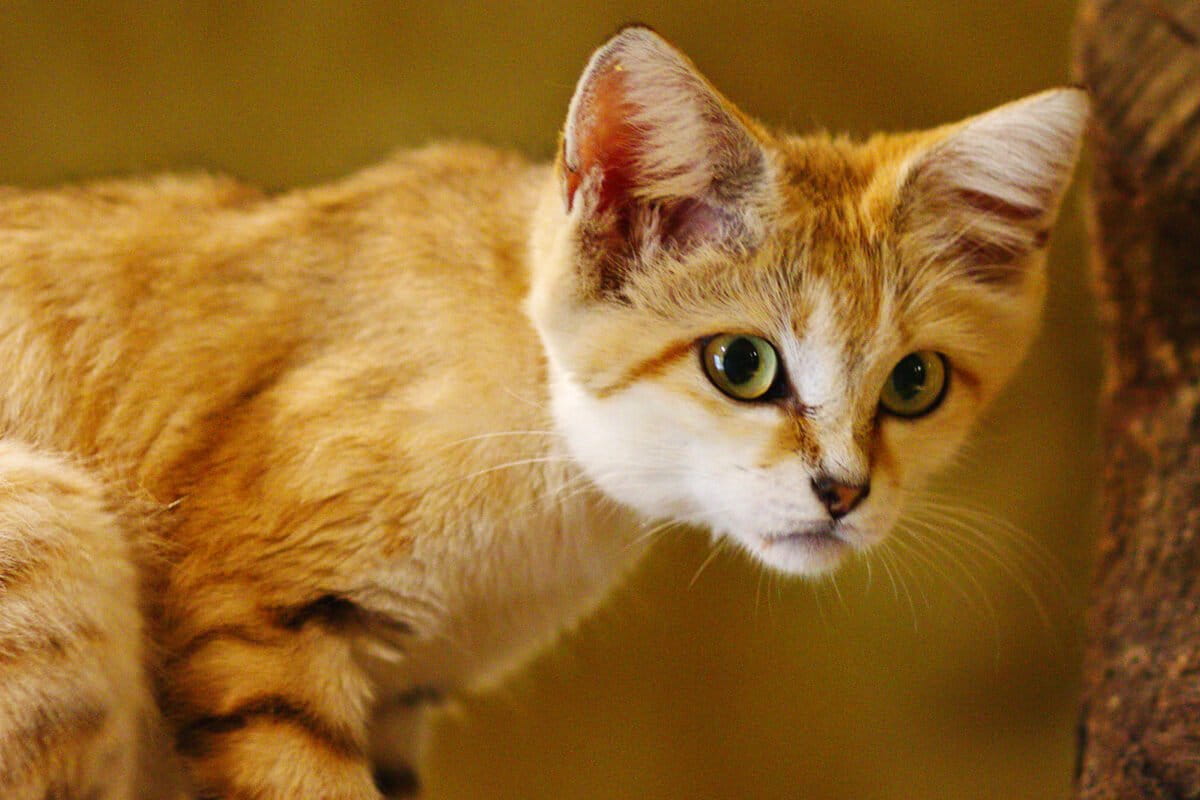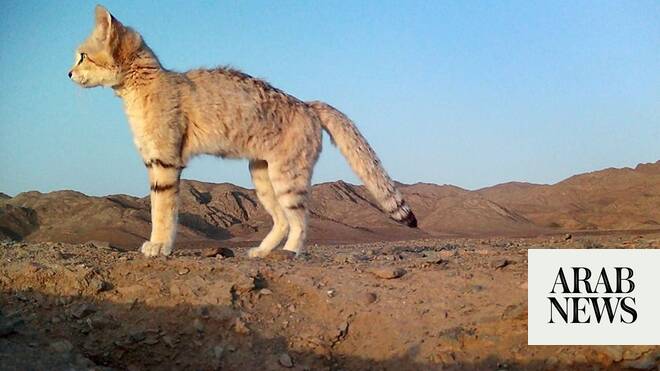
JEDDAH: A Saudi Arabia royal reserve has deployed and retrieved GPS tracking data from collars on six sand cats (Felis margarita), the first time the technology has been used for the species globally.
The Prince Mohammed bin Salman Royal Reserve in northwestern Saudi Arabia safely captured, collared and sampled six individuals, combining GPS tracking and genomic analysis to produce the most comprehensive scientific dataset assembled for the species to date.
Undertaken in partnership with the Royal Zoological Society of Scotland’s WildGenes laboratory, the work enabled the development of a high-quality reference genome.
This provides new insight into the species’ population structure and evolutionary relationships, strengthening recent publications indicating that the sand cat comprises two subspecies rather than four.
In line with Institutional Animal Care and Use Committee best-practice standards, three male and three female sand cats were safely captured by reserve ecologists, assessed by experienced veterinarians and fitted with custom-designed lightweight GPS collars.