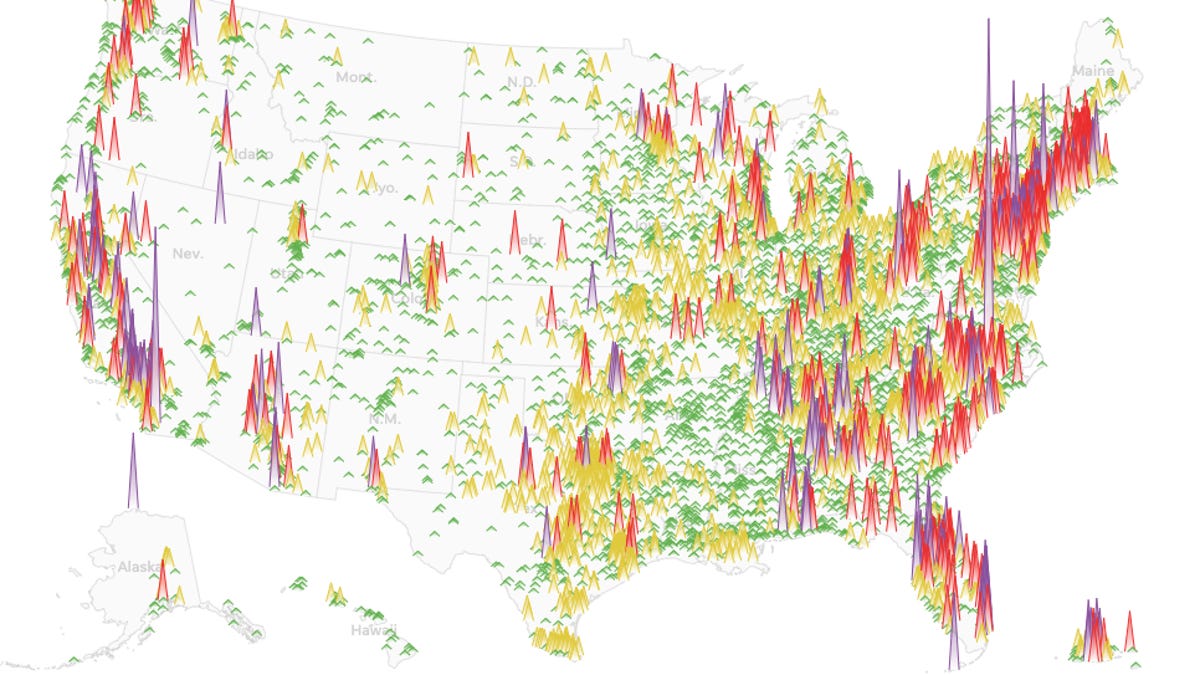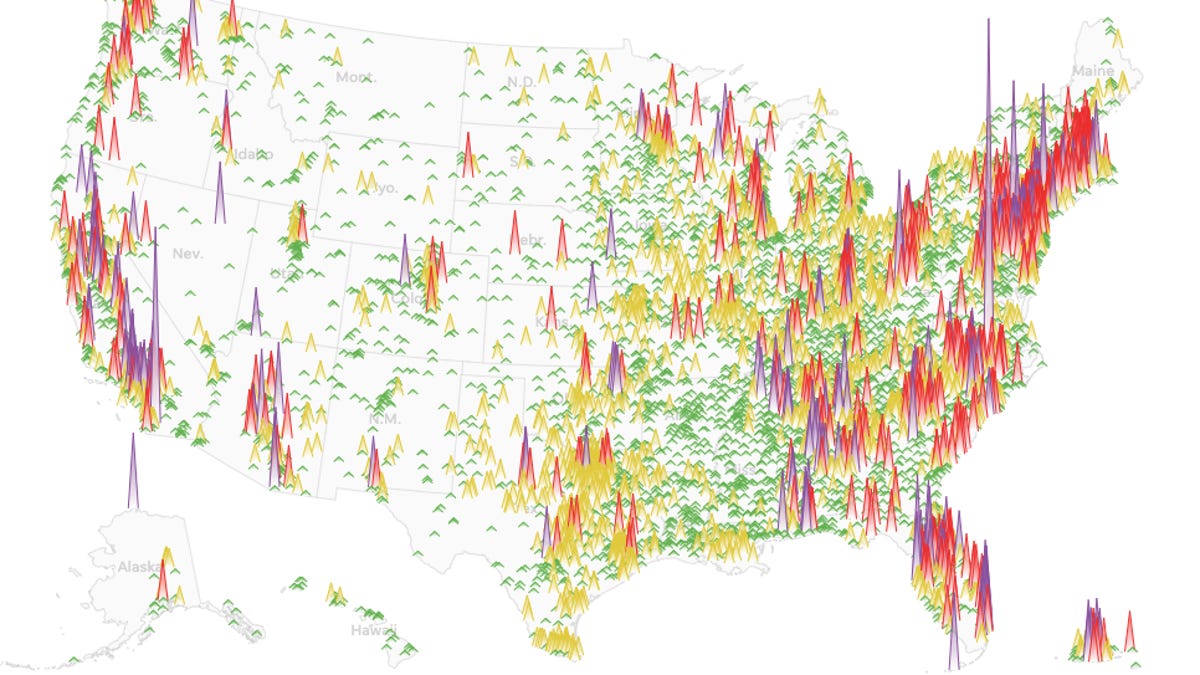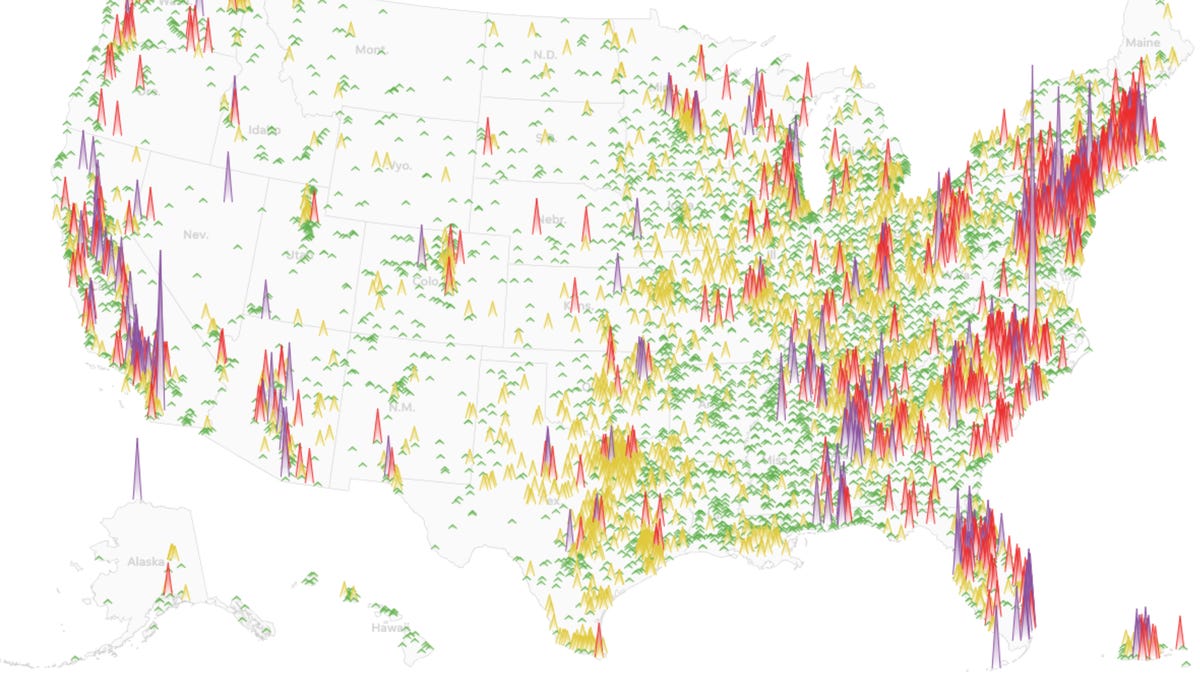
Recent tests have detected toxic “forever chemicals” in public drinking water systems serving at least 151 million people, roughly half of all Americans who rely on these utilities to deliver clean water.
The U.S. Environmental Protection Agency released new records Feb. 12 of water samples collected over the last three years. Many of these detections were for PFAS, or per- and polyfluoroalkyl substances, the EPA doesn’t currently limit, or the measurements didn’t exceed limits the agency approved in 2024 for two types of PFAS.
However, more than 1,050 water systems reported average PFAS levels above the EPA’s new limits. Collectively, these systems provide drinking water for at least 52 million people, or more than 1 of every 7 Americans.
Click on a system in the map below to review its PFAS measurements. You may also enter an address in the search box to locate the nearest water systems. Don't see a map? Click here.
Since World War II, manufacturers have developed thousands of variants of PFAS to repel liquids and resist heat, which also makes the chemicals difficult to destroy. Whether people are exposed through products like stain-resistant fabrics or nonstick food wrappers or through contaminated air or water, researchers say the chemicals can accumulate in human bodies over time, increasing the risk of certain cancers.