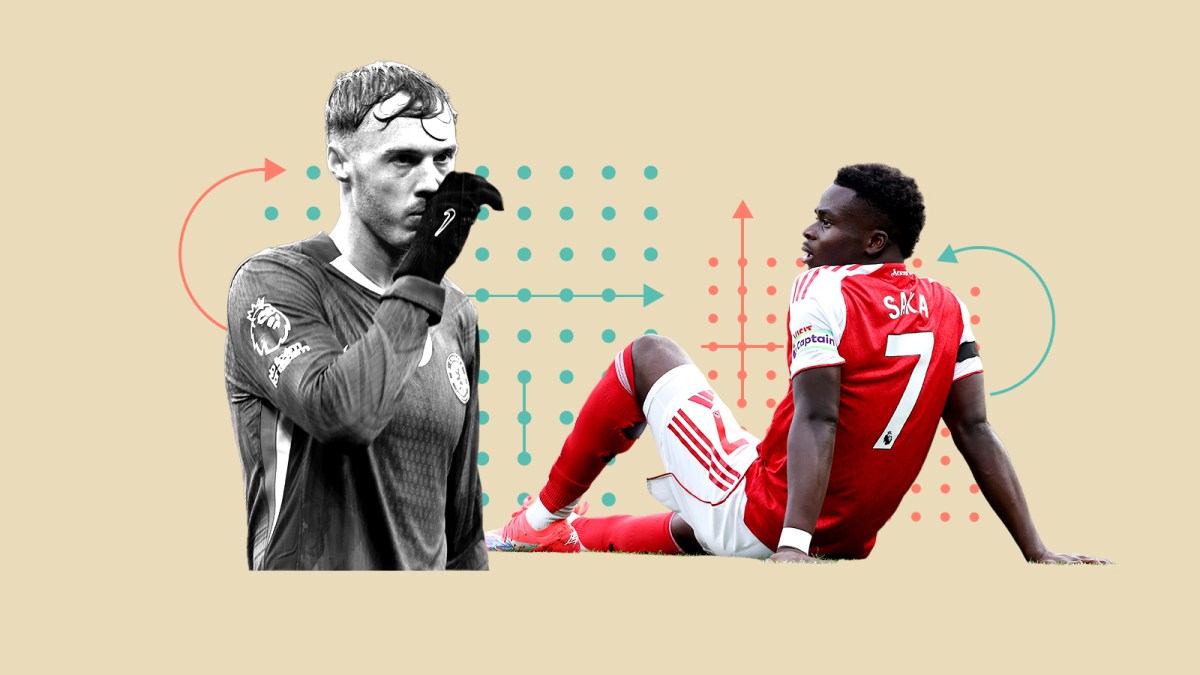
The ever-increasing number of games, combined with financial regulation, has produced flat play on the field but a tighter table overall
A
constant feature of this season has been the background grumble of dissatisfaction. You don’t have to spend long on social media to see moans about the quality of play, the sense that everything has somehow gone backwards since the tactical focus began to shift away from the pure possession and positional football of the peak Pep Guardiola years to something more direct and focused on set plays.
And yet, as we enter the run-in, there appears to be a proper Premier League title race. There is an extremely competitive battle to finish in the top five and qualify for next season’s Champions League and, although Wolves and Burnley are probably doomed, there are four teams scrapping to avoid that last relegation slot with another three glancing a little nervously over their shoulders.
The two strands, of course, are not unrelated. The reason this is such a competitive season is that everybody is flawed. But this is how it’s supposed to be. The days of a Manchester City or a Liverpool reeling off win after win and accumulated points totals in the high 90s are over, and were a historical aberration. Whether it’s Arsenal or Manchester City who win the league, the likelihood is they’ll do so with about 85 points. Does that mean they’re worse than those champions who got in the high 90s? Perhaps, but the fact that it will probably take around a point a game to avoid relegation this season suggests also an improvement throughout the division.