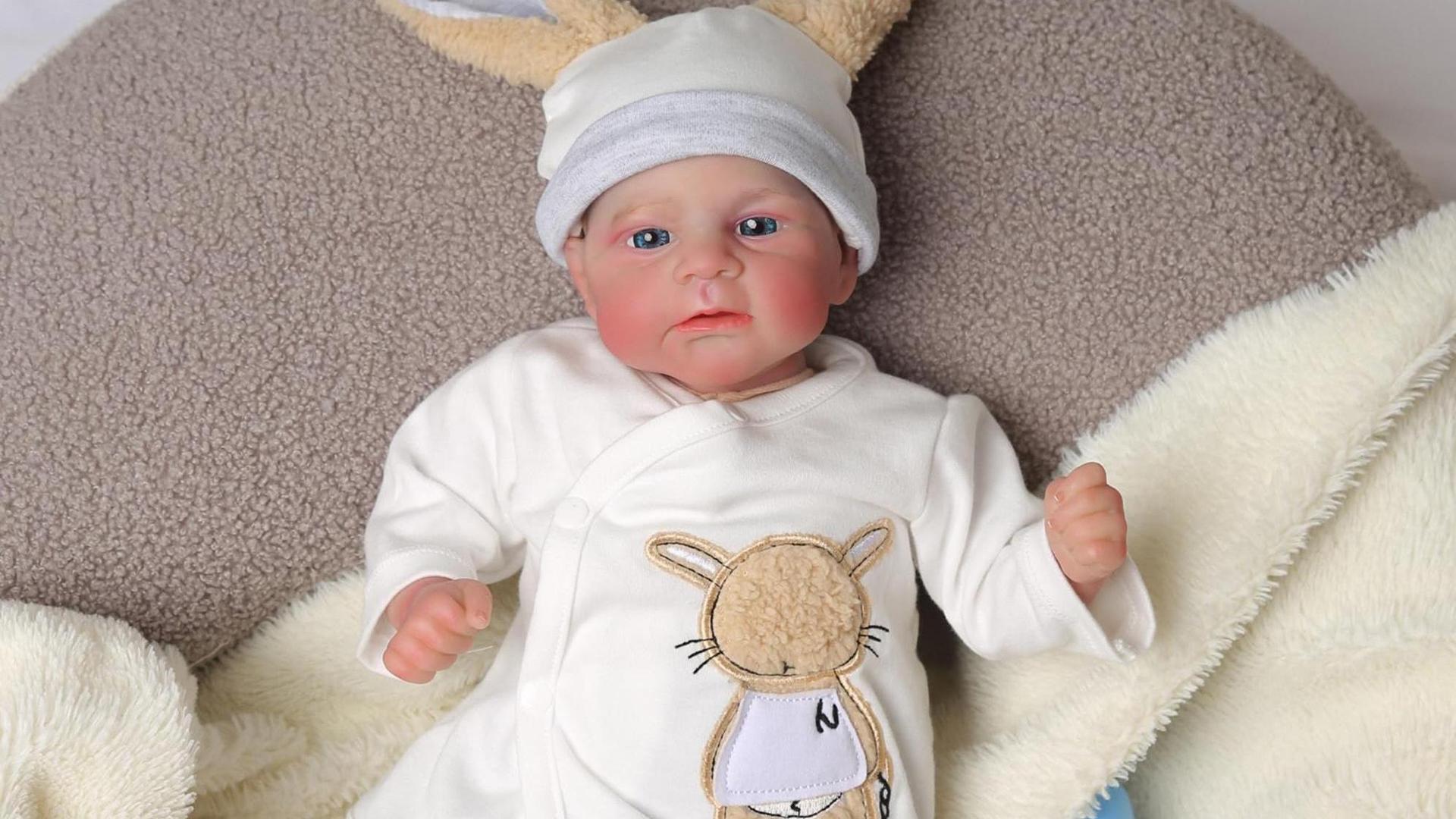
Dolls that look like real babies – complete with tiny veins and folds of skin – can be endearing yet deeply unsettling. In the Netherlands, however, there are tens of thousands of ‘reborn’ doll enthusiasts
“I
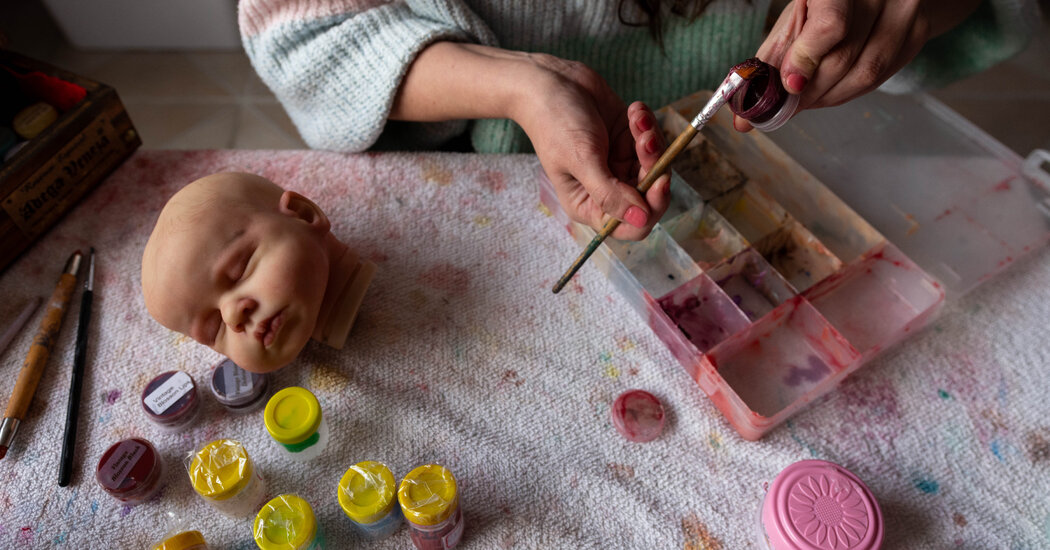
t’s a doll,” Ineke Schmelter, 71, often says as she walks down the street with a pram and someone peers fondly under the hood, asking: “How old is the baby?” Then she pulls back the blanket and reveals the doll. She points out the craftsmanship – the little veins, the creases in the skin – and explains that it can take as many as 20 layers of paint to achieve such a lifelike finish. Sometimes, though, she can’t be bothered with the long version – the explanations, the strange looks. “As if I’m not quite right in the head.” Then she just says: “Two months,” and keeps walking.
Ineke Schmelter in the kitchen with her reborn baby Ronin
Schmelter is one of many reborn doll lovers: dolls so realistic they are almost indistinguishable from real babies. She bought her first around four years ago, when she retired and didn’t know what to do with her free time. She had spent her whole working life with babies and children. First as a nurse in hospital, later as a maternity nurse. She missed the daily contact: the tiny grabbing hands, that warm little body in her arms. At first she mainly bought old dolls on Marktplaats and restored them, but when she saw a real reborn baby for the first time, she was hooked. She bought her first for €400 (£350) from a collector: a sleeping baby. She now has 10 dolls displayed around her home. The most expensive cost €1,200.