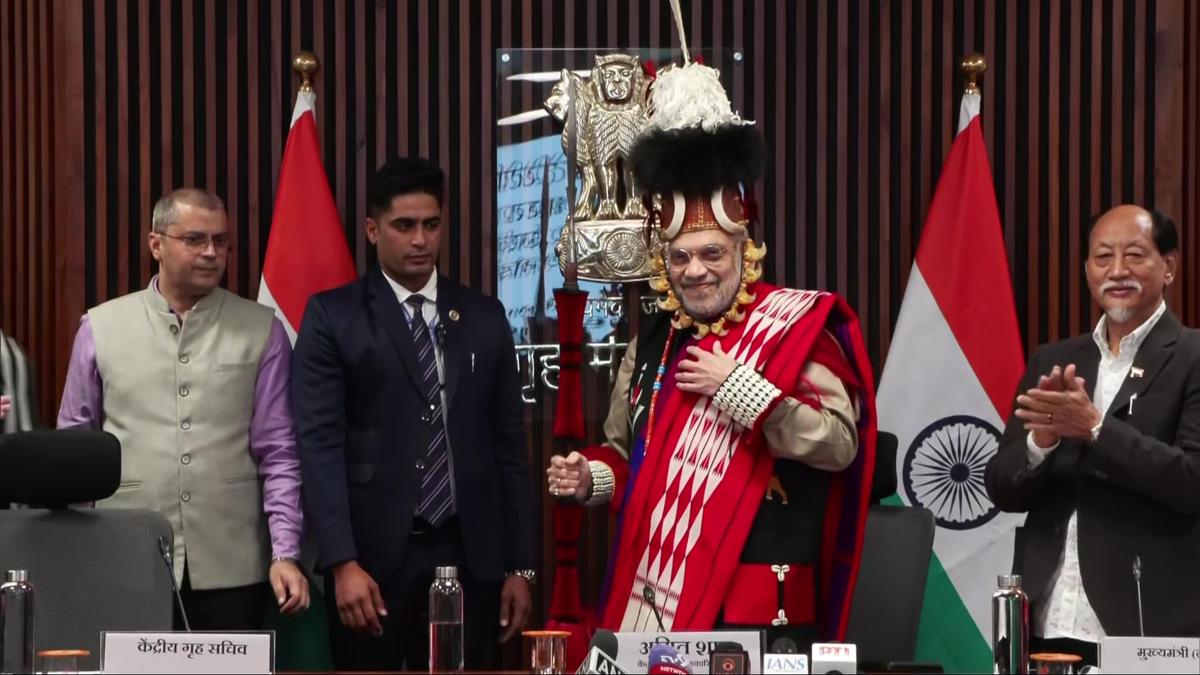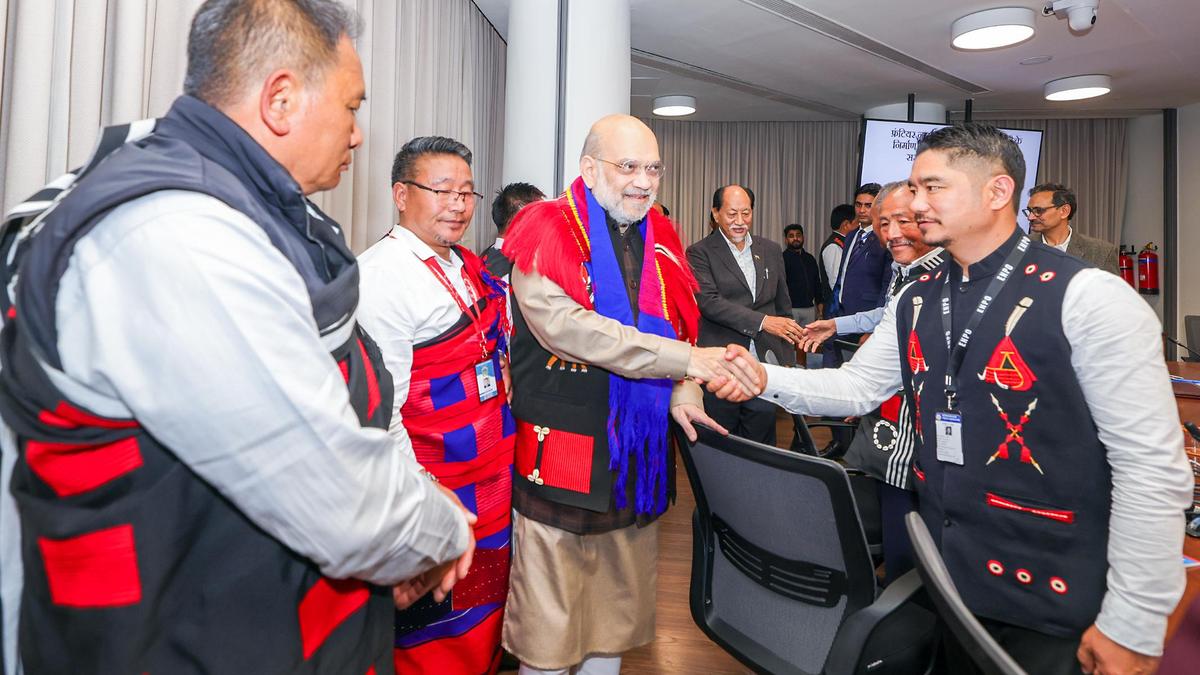
The story so far: On February 5, the Centre signed a tripartite agreement with the Nagaland Government and the Eastern Nagaland Peoples’ Organisation (ENPO) to form the Frontier Nagaland Territorial Authority (FNTA). An experiment in “devolutionary autonomy”, the FNTA offers a high degree of administration and financial autonomy to six “backward” eastern districts — Kiphire, Longleng, Mon, Noklak, Shamator, and Tuensang.
The core demand of the ENPO was the creation of a separate State to be carved out of Nagaland. Its demand for a ‘Frontier Nagaland’ was conveyed in 2010 through a memorandum to the Centre, but is rooted in the policy of the pre-1947 British administration to leave the hills as an un-administered frontier. This lack of governance created a “developmental differential” that postcolonial India struggled to bridge. The eight Naga tribes inhabiting the six eastern districts increasingly began feeling ignored, politically and economically, after Nagaland was carved out of Assam as a State in 1963. The resentment snowballed into a movement for independence from the alleged administrative dominance of the western Naga tribes.