https://arab.news/jc2s6
The relationship between Egypt and Sudan has never been a typical neighborly one. Shared history, the Nile River, deep social and cultural ties, and intertwined security concerns have long made the two countries part of a single geopolitical space. That is why the crisis in Sudan has become more than a foreign policy issue for Cairo — it is a strategic test.
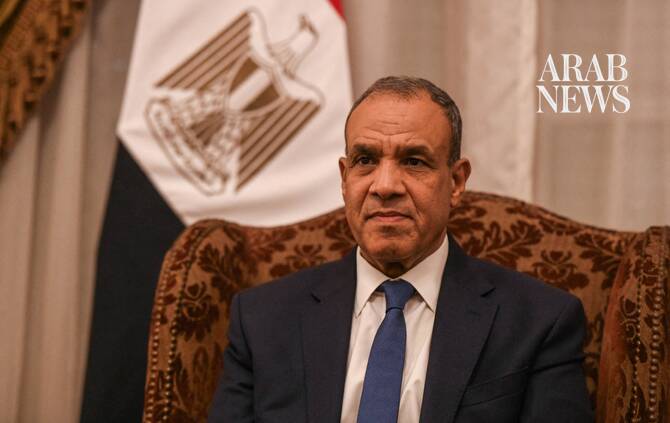
Since fighting erupted between the Sudanese Armed Forces and the Rapid Support Forces, Egypt has moved carefully but firmly. Recent statements by Foreign Minister Badr Abdelatty, delivered under Egypt’s presidency of the African Union Peace and Security Council, were not just expressions of solidarity. They reflected a clear strategic position: Sudan’s stability is inseparable from Egypt’s national security.
From Cairo’s perspective, a fragmented or collapsed Sudan would not remain a domestic Sudanese problem. It would risk opening Egypt’s southern border to instability, arms flows, extremist networks and uncontrolled migration. In Egyptian strategic thinking, that scenario represents a red line.
Egypt-Sudan relations have seen moments of tension over the years, but geography has always imposed cooperation. After the fall of Omar Bashir in 2019, Egypt focused on preserving Sudan’s state institutions. Cairo’s long-standing doctrine in regional crises is consistent: the preservation of the state structure takes priority over factional competition.