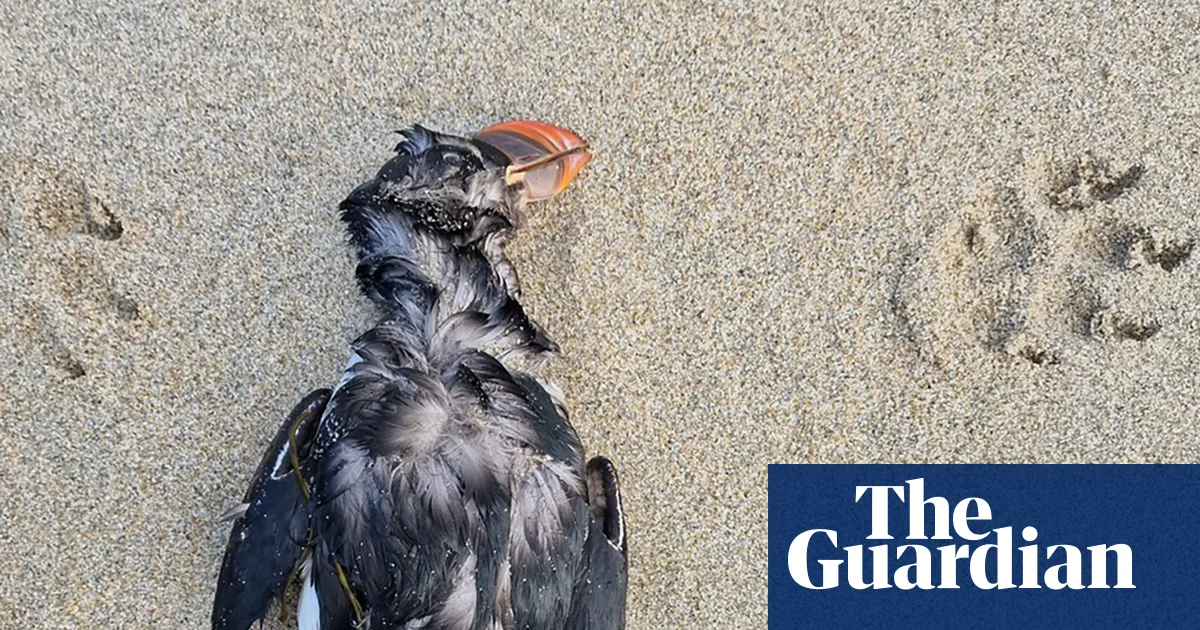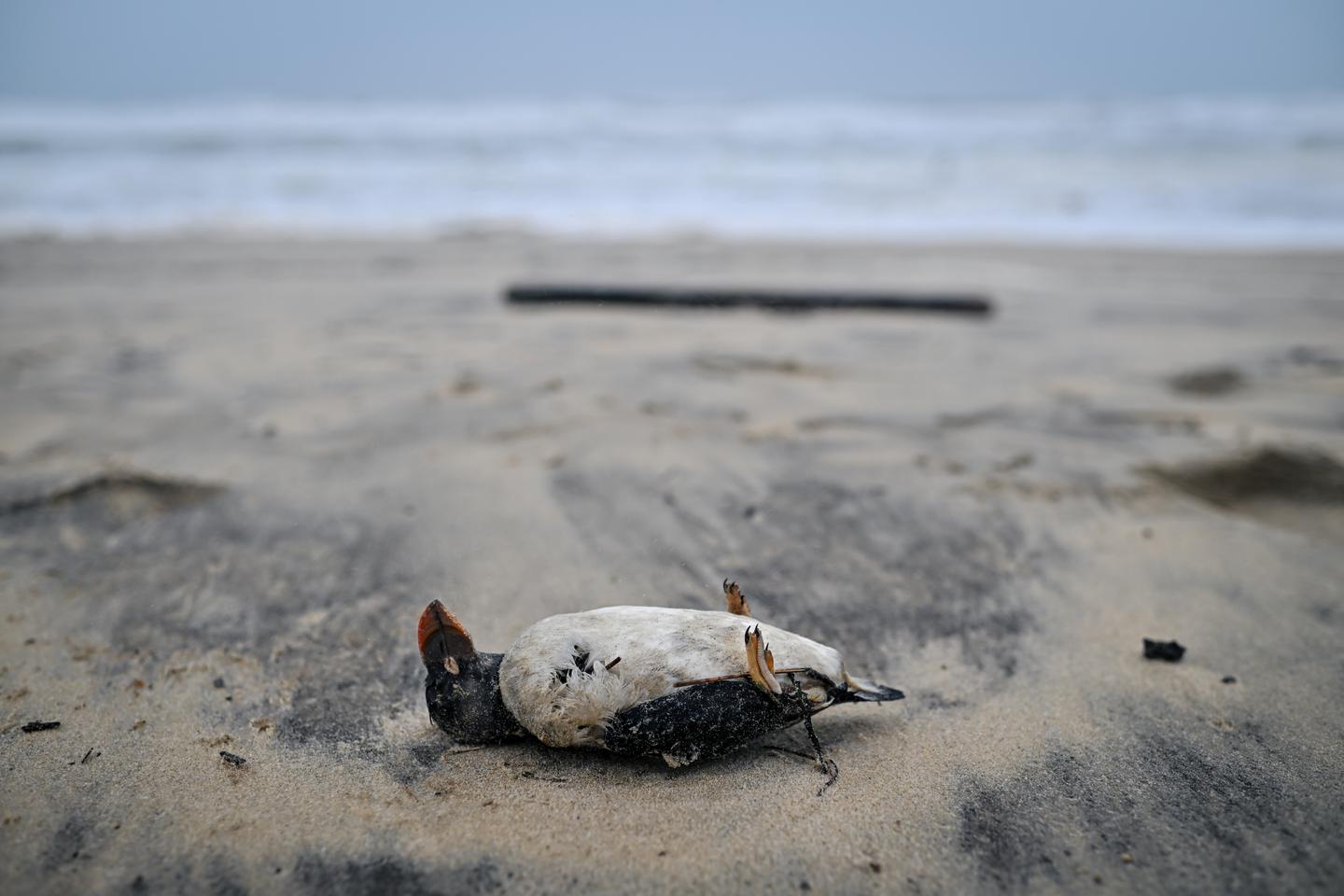
A dead puffin on the south beach of Mimizan, France, February 15, 2026. UGO AMEZ FOR LE MONDE
On Mimizan beach, the wind seemed as if it would never stop sweeping across the waves, almost as if it was crashing them against the sand, which in places was itself carried off by gusts. Rain fell heavily on this stretch of the coastline in southwestern France, where only a few walkers braved the elements. Storm Nils had passed through, leaving damage everywhere. The eyes of those out in these conditions were inevitably drawn to odd little dark spots at regular intervals, which could have easily been mistaken from afar for clumps of seaweed.
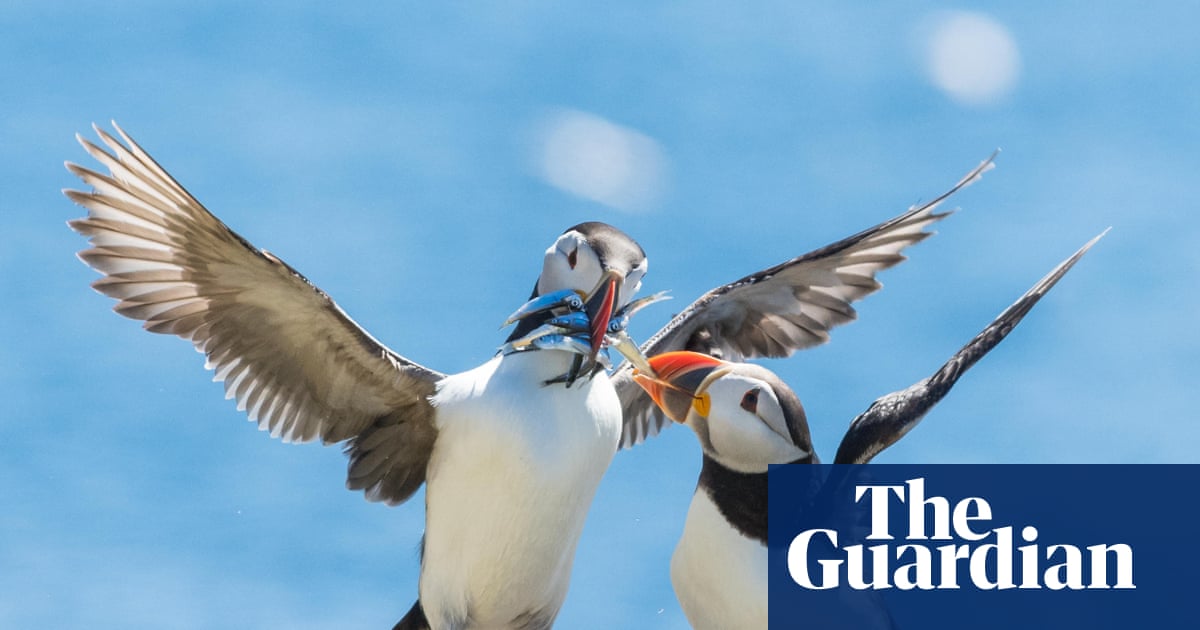
Only up close could one see that they were birds, more precisely, Atlantic puffins: Their black and white feathers, webbed feet and colorful beaks left no room for doubt. Along the three kilometers of this single Mimizan beach on Sunday, February 15, more than 100 puffins were found stranded, already dead or too weak to take flight again.
"Now imagine that along the entire Atlantic coast! Thousands have died in recent days. We haven't seen such a massacre since 2014," sighed Gabriel Jegou, caretaker and spokesperson for the Paloume association, a wildlife rescue group whose local center near Mont-de-Marsan was currently overwhelmed. More than 200 birds had been brought to him within 72 hours. "And out of those 200, 190 are puffins," of which 110 were still alive as of Sunday, Jegou added.