Yann Legendre Opinion Opinion Opinion United States United States United States Interview by Claire Legros Published on February 16, 2026, at 8:30 pm (Paris) Subscribers only InterviewIn an interview with Le Monde, the historian said that Donald Trump's narrative of a white America radiating power is intended to erase the complexity of a multicultural past shaped by violence and struggles for emancipation. Agnès Delahaye, a professor of American civilization at Université Lumière-Lyon-II, specializes in the history of colonial America. As part of the America 2026 research project – a consortium of European, North American, South American and Japanese scholars – she has been studying the role of the American Revolution in the history of the continent. On the occasion of the 250th anniversary of US independence, her new book, A qui appartient le 4 juillet ? L'indépendance américaine et sa mémoire ("Who Owns the Fourth of July? American Independence and Its Memory") explores how the past is instrumentalized for political purposes in the United States and shows how the Trumpist vision of a golden age of revolutionary America clashes with social-historical findings. In a March 2025 executive order aimed at taking control of museums and libraries in Washington, Donald Trump declared that he wanted to "restore truth and sanity to American history." Is that what inspired your book? Yes, because in the face of revisionism, it is important to restore history in all its complexity, so we can understand the tragic events currently affecting the United States. Donald Trump's project represents a historical revision of the democratic progress achieved since the American Revolution, and he makes no secret of it. During his first term, he had already assembled a commission to rewrite the nation's history. The "1776 Commission" developed a simplistic and linear narrative of the US: a white, capitalist America, a beacon of liberty shining over the rest of the world. That narrative runs counter to everything American social history has taught us. You have 83.12% of this article left to read. The rest is for subscribers only.
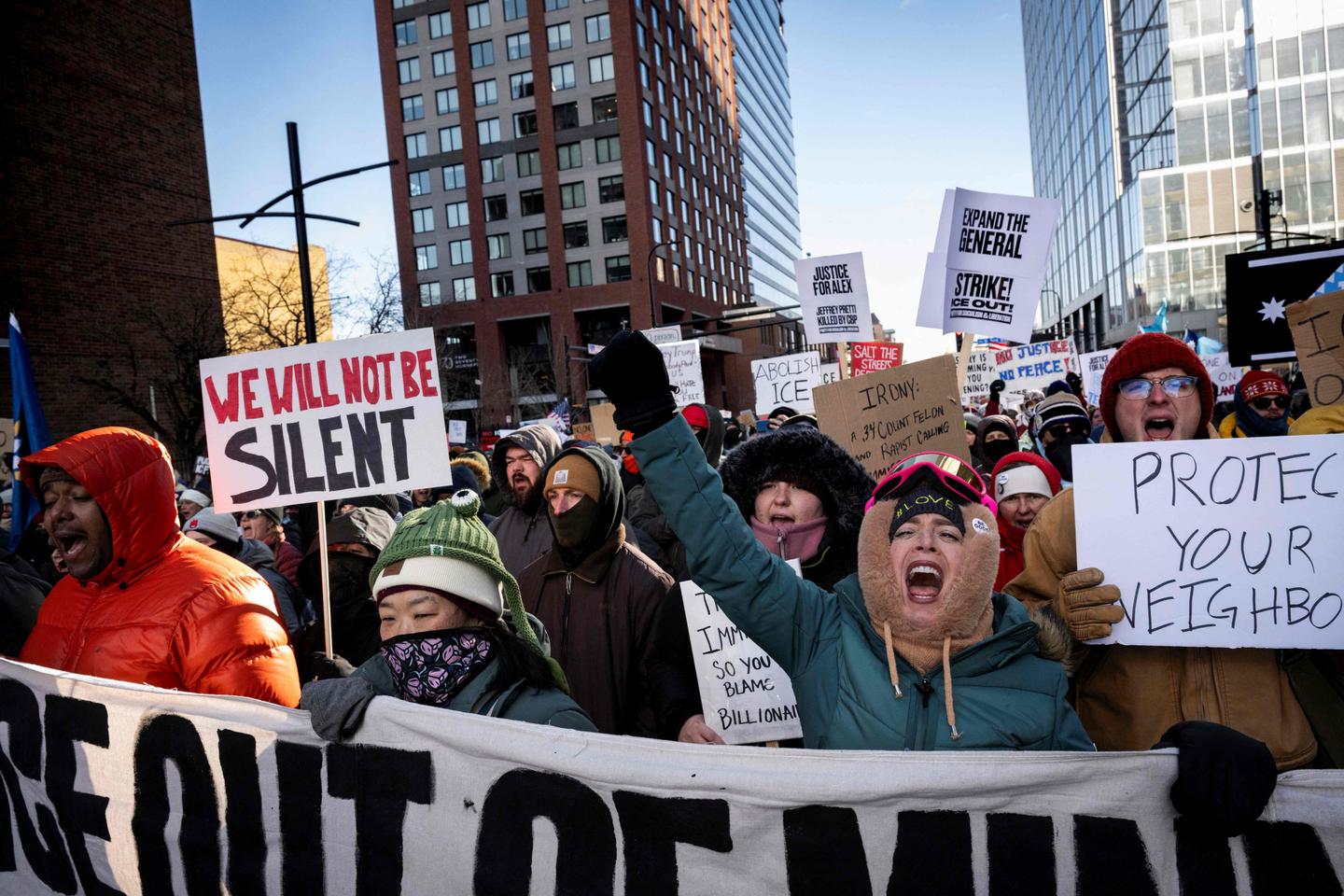
Agnès Delahaye, historian: 'The Minneapolis protests are part of the major historical social struggles in the US'
In an interview with Le Monde, the historian said that Donald Trump's narrative of a white America radiating power is intended to erase the complexity of a multicultural past shaped by violence and struggles for emancipation.
339 words~2 min read