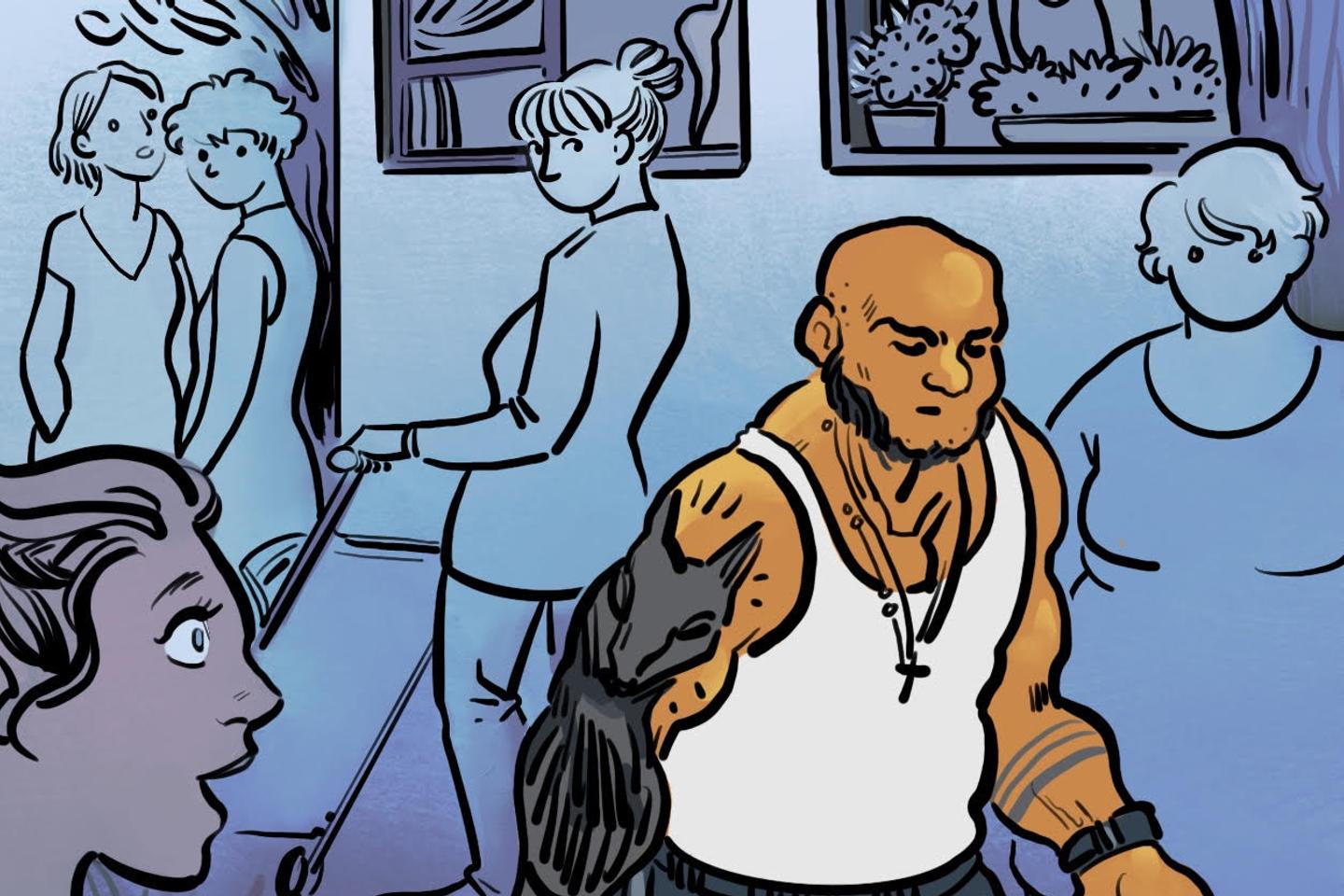
This scene plays out so many times: A woman is out at a bar when a man approaches her and acts in a manner that makes her uncomfortable. She tries to get him to go away, but he doesn’t take the hint. She quickly scans the room looking for help, but everyone else drinks, chats and goes about their night.
Many women have stories of an unwanted encounter, whether it’s at school, at work or out at a party. And they’re often left to fend for themselves while bystanders — especially men — look away, scroll their phones or pretend not to notice, taking part in what’s called “the bystander effect.”
“The bystander effect describes the general tendency for people to be less likely to speak up or act in a group setting when more people are present in the situation,” Catherine Sanderson, a professor of psychology at Amherst College and author of “Why We Act: Turning Bystanders Into Moral Rebels,” told HuffPost.
While both men and women can fall victim to being bystanders, a 2022 systematic review found that women are more likely to intervene in these kinds of situations than men. Another study from 2016 concluded that different masculine norms may influence men’s willingness to intervene, such as confusion over what’s acceptable behavior or fear of what their social peers may think if they spoke up.