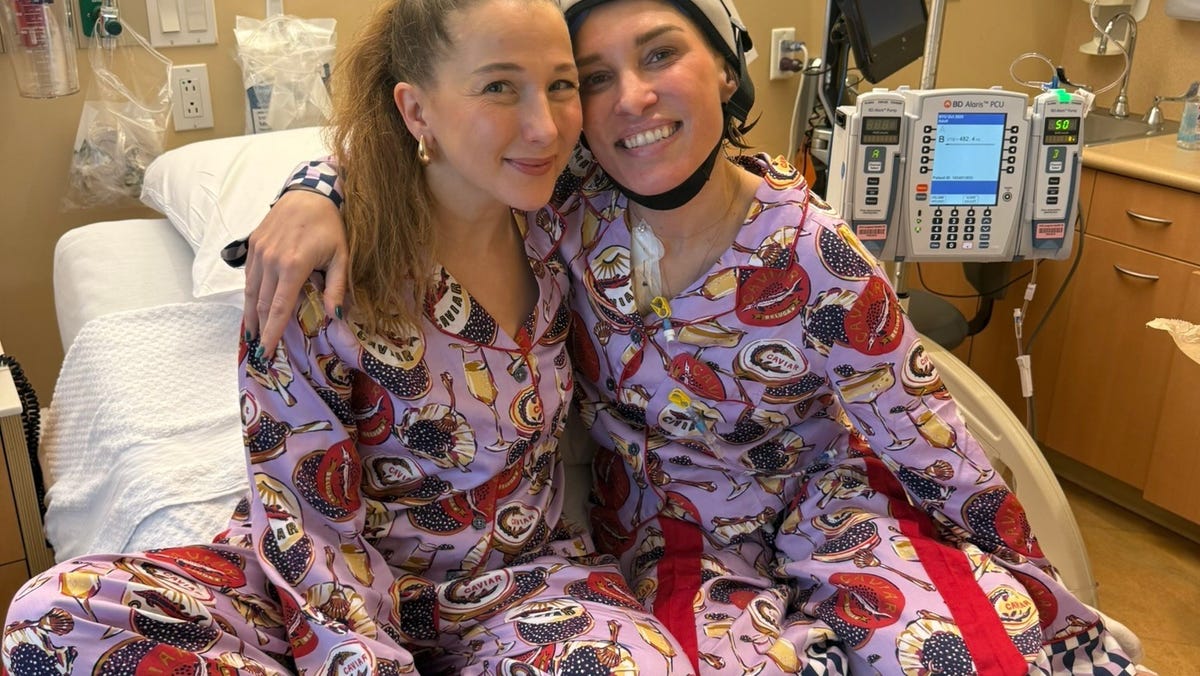
Jennifer Taylor's breast cancer story started like thousands of other women: by finding a lump.
Her doctor guessed it was hormonal but sent her for a mammogram and an ultrasound just to be sure. In the days leading up to her mammogram appointment, Taylor's nerves kicked in. She called up her best friend, Adrien Finkel, and asked: "It's probably nothing, but will you just come with me, because I don't want to go by myself?"
On the brink of 40 and at the tail end of a devastating breakup, Finkel had just upended her life in Los Angeles and moved cross-country with her two dogs to start fresh in New York City, where Taylor and her family live. She didn't have a job yet. It was an easy yes.
"My husband was upset that I wanted Adrien to come," Taylor said. It turned out to be good that she did, though, because men weren't allowed in the back rooms where she anxiously awaited the results.
Taylor might be on to something. Though an American Perspectives Survey in 2021 found that more than half of Americans go to their partner first when they have a problem, 16% said they go to a friend first. Several studies over the past 20 years have found that having good friends helps people live longer and contributes to better mental health outcomes. In 2016, a study of breast cancer patients found that women who had more social connections were less likely to suffer cancer recurrences and less likely to die from breast cancer than women who did not have a significant support system. The findings affirmed a similar study in China in 2011.