https://arab.news/8byyz
As countries across the Middle East and North Africa region increasingly seek strategic autonomy, a delicate balance must be struck between enhancing local production capabilities and engaging in international partnerships.
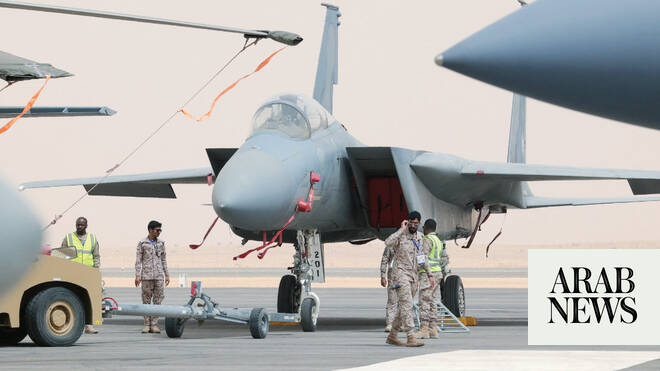
As regional militaries gathered for the World Defense Show in Riyadh this week, it was clear that dependence on foreign powers, especially in sectors critical to their security and technological future, was the ultimate strategic priority. This drive is often coupled with a desire to diversify partners, with some turning toward emerging industry players like China and Russia. However, while such diversification may appear to offer new opportunities, it carries significant risks that could affect these nations’ long-term autonomy and security.
Historically, MENA countries have forged close partnerships with Western nations, particularly the US, the UK and European NATO members. These long-standing ties have been foundational in shaping the region’s security architecture.
According to Ilja Mazanek, a director at CSG, one of Europe’s fastest-growing defense companies, “international partnerships are shaping how local production is built in practice. Given the scale of Saudi Arabia’s industrial ambition and the depth of Europe’s defense expertise, European-Saudi cooperation has become an essential pillar of defense capability development.”