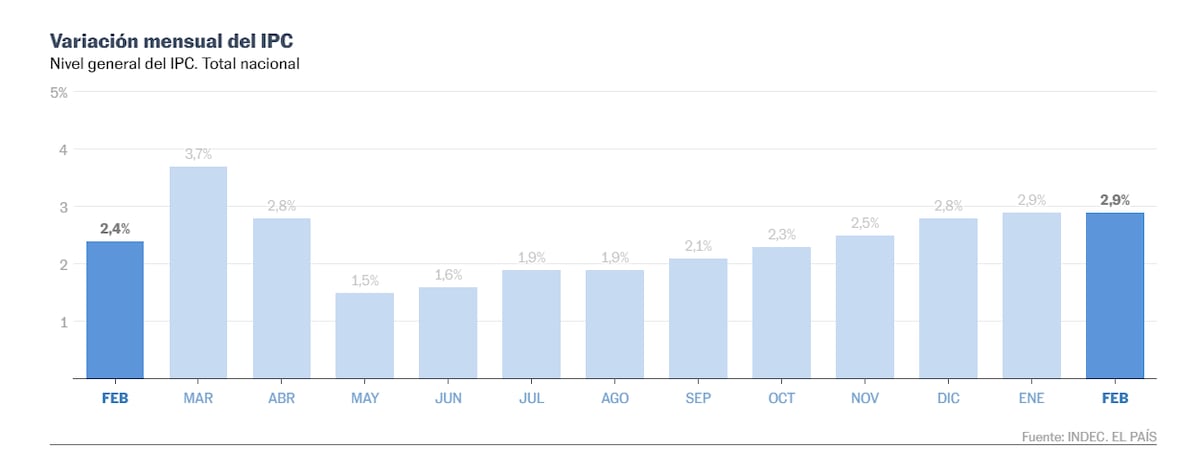
Inflation in crisis-prone Argentina accelerated more than expected and for a fifth straight month in January, the country’s statistics agency said Tuesday, a closely watched report whose outdated methodology in recent days stoked political turmoil and created a headache for libertarian President Javier Milei.
Consumer prices rose 2.9% last month compared with December, said the statistics agency known by its Spanish acronym INDEC, largely owing to increases in the prices of food, restaurants, hotels and utility bills.
Economists say that the formula that INDEC used to calculate the inflation rate still underestimates real price rises in a country reeling from Milei’s harsh austerity program that his close ideological ally, U.S. President Donald Trump, has backed with $20 billion and championed as a model for downsizing federal bureaucracy.
After months of mounting pressure, Milei’s government said it would redo the index used in the official inflation reports, which is currently based on consumption habits from 2004 and reads like a time capsule: Cigarettes, newspapers, DVDs and landline phones are considered key to the “basket” of goods and services consumed by the population.
The old formula not only fails to reflect how much Argentine households spend on present-day staples like Netflix subscriptions and iPhones, experts say, but also underrepresents the costs of public services like health care and electricity that have skyrocketed as Milei slashes subsidies. Rent has also shot up as Milei unwinds price controls.