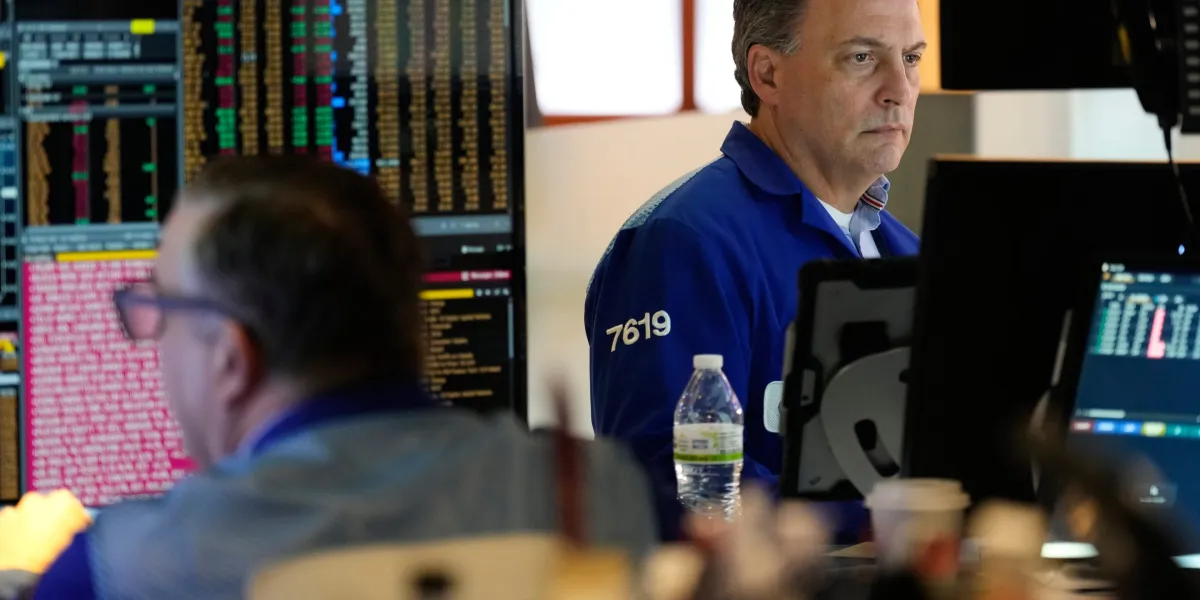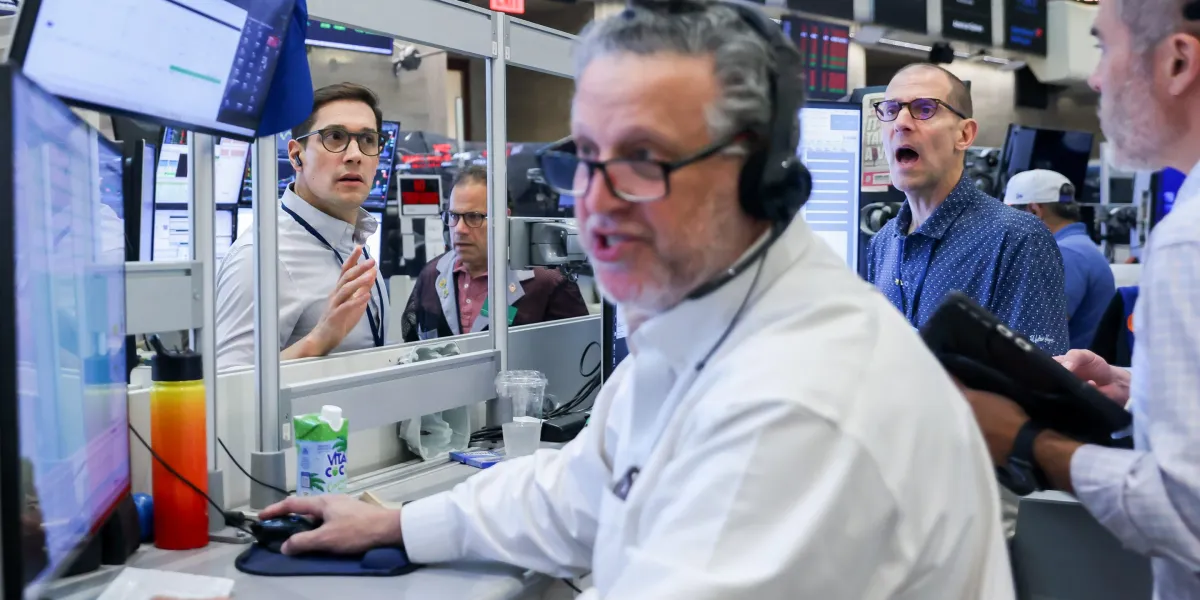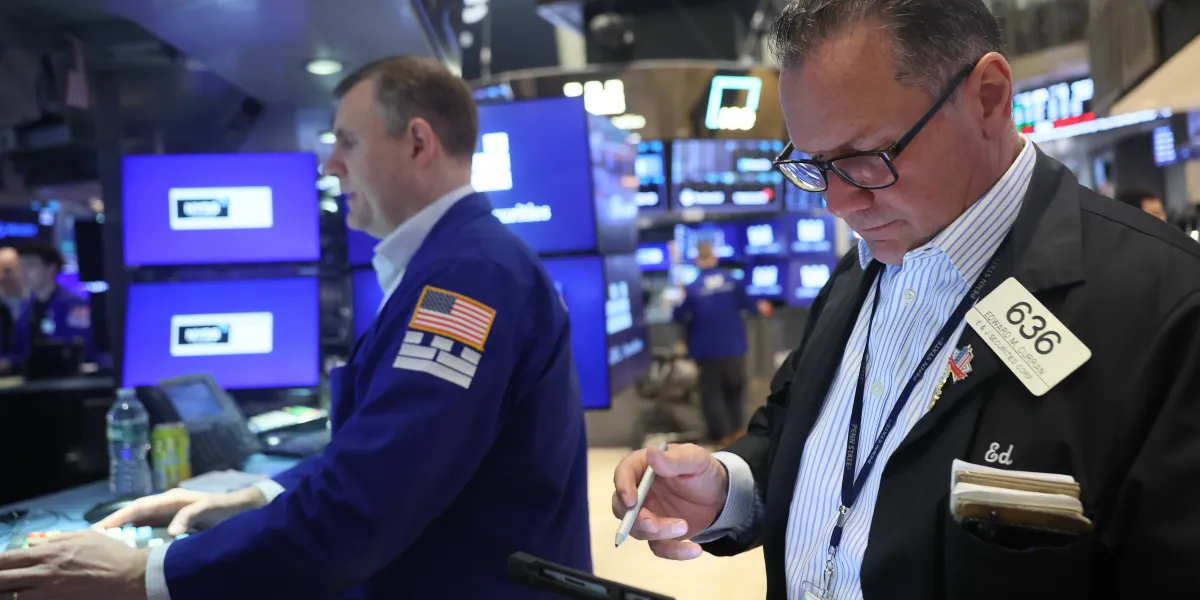
S&P 500 futures were up 0.18% this morning before the opening bell in New York after the index closed up 0.47% yesterday, leaving it just a tick below its all-time high. Traders bought up stocks after most companies in the S&P reported that they had beaten consensus earnings estimates so far.
The contrast between this week’s bullish rally and last week’s AI-induced selloff could not be more stark. To put it in perspective, $2 trillion was wiped off the market cap of software companies last week, which traders thought might be decimated by AI companies replacing them.
“Software has undergone the largest non-recessionary 12-month drawdown in over 30 years (-34%), wiping out ~$2 trillion of market cap from the peak and reducing its weight in the S&P 500 from 12.0% to 8.4%,” according to Dubravko Lakos-Bujas and his colleagues at J.P. Morgan. “This was largely driven by mounting concerns over the disruptive impact of new LLM [large language model] capabilities and further exacerbated by aggressive de-risking and extreme technical positioning that has pushed sentiment to deeply pessimistic levels.
“The market is pricing in worst-case AI disruption scenarios that are unlikely to materialize over the next three to six months. Enterprise software remains deeply embedded across the corporate landscape, underpinned by multi-year contracts and high switching costs that provide a significant buffer against near-term displacement. Importantly, emerging evidence suggests that AI is more likely to be additive to software workflows in the near term rather than a substitute,” he told clients in a recent note.